Severe weather is one of the few operational problems in contract security that hits every post you have at the same time. A callout affects one site. A tornado warning, an ice storm or a tropical system affects your whole book of business in a metro, along with the roads your relief drives on. A severe weather protocol that exists only as a paragraph in the employee handbook will not survive that. What survives is a plan built around a single question: at any moment during the event, can you say where every officer on shift is and whether they are safe?
This is operational guidance, not legal advice. Employer obligations around employee safety, pay during weather events, mandatory evacuation orders and what you may require of staff vary by state and jurisdiction and by the terms of your client contracts. Confirm your policy with counsel before publishing it.
Watch, warning, and the decision each one triggers
Terminology matters because it is the trigger language your officers will hear on a phone alert at 0200. In general usage, a watch means conditions are favorable for the hazard and people should be prepared; a warning means the hazard is occurring or imminent and people should act. Always follow the official wording from the National Weather Service and local emergency management for the specific event rather than a paraphrase — including any wording your local office uses for particularly dangerous situations.
The operational point is to attach a decision to each level in advance, so nobody is improvising while the sky turns green.
Watch stage. Confirm which posts sit in the affected area. Confirm every officer on shift has a charged phone and knows the shelter location for their site. Confirm the next two shifts of scheduled officers by name and check their travel exposure. Stage anything you will not be able to get later: fuel, water, batteries, flashlights. Notify client contacts that you are tracking it.
Warning stage. Officers move to shelter per site instructions. Outdoor posts and vehicle patrols come inside. Roving supervisors stop moving. Accountability check-ins go to a short, fixed interval. Non-essential tasks — tours, gate checks, anything that requires being outside — stop, with the client informed that they have stopped.
After. Nobody resumes outside work until a supervisor has assessed the site: downed lines, standing water, unstable structures, broken glass, gas smell. Damage assessment is a documented task, not a walk-around.
Write it out because the warning-stage decision — telling officers to stop patrolling and take shelter — is the one people hesitate on, since it feels like abandoning the service the client is paying for. Make it a company decision taken in advance, not a judgment call an officer has to defend at 0200.
Shelter is a site-specific fact, not a policy statement
“Take shelter in an interior room on the lowest floor away from windows” is fine as a principle and useless as an instruction to an officer standing in a specific building at 0200. The post orders need the actual room.
Walk each site and write down: the shelter location, the alternate if the first is locked, how the officer gets in if it is badged after hours, where the flashlight is, and where the site’s own emergency supplies live. Then verify the officer can actually get there. A shelter room behind a door that locks on a schedule is not a shelter.
Some hazards need different answers and it is worth naming them separately. Tornado and high wind push you inward and downward. Flooding pushes you upward and, more importantly, pushes you to leave early — nobody should be driving a patrol vehicle into moving water for any client under any contract, and that should be stated in exactly those words. Lightning ends outdoor posts, period. Extreme heat and cold are slower hazards that need hydration, rotation and shelter access rather than a single sheltering event.
Accountability: the part that actually fails
The thing that goes wrong in real weather events is not that officers get hurt sheltering. It is that dispatch loses track of people.
Cell networks congest or drop. Officers move to interior rooms with no signal. Power fails and the site phone dies with it. Someone’s shift ended but they could not leave, and nobody recorded that they stayed.
Design accountability so that silence is loud. Before the event, freeze a roster: every officer on shift, their post, their phone, their vehicle, and one out-of-area emergency contact. During the event, run named roll calls at a fixed interval, and record who answered and who did not — a roll call nobody writes down is a roll call nobody can act on. Assign one person the sole job of tracking that list. Not the dispatcher who is also fielding client calls; a second person, whose only output is a current list of who is accounted for.
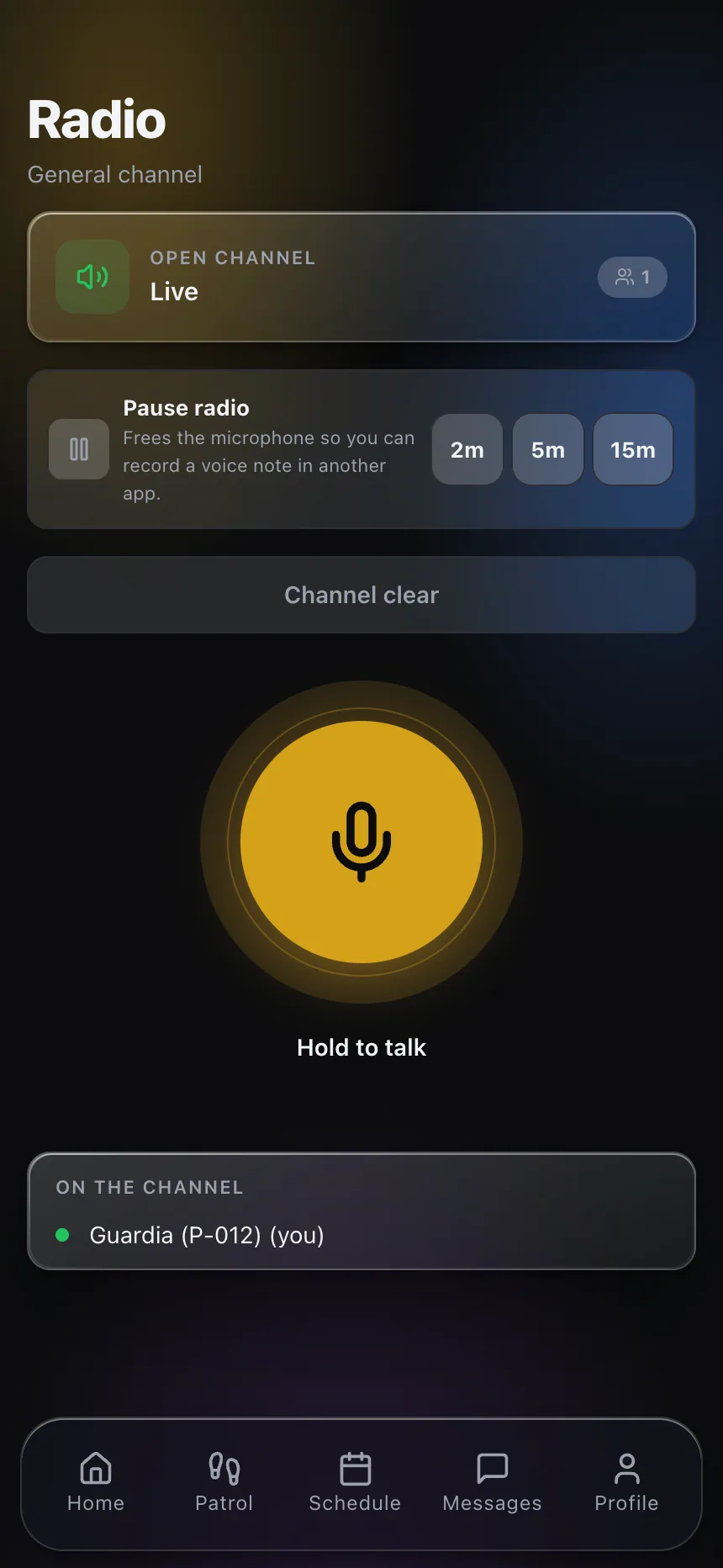
Have a fallback channel and tell everyone what it is before the storm. If the primary radio channel is unreachable because the officer’s data connection is down, the fallback might be SMS, which sometimes gets through when calls do not.
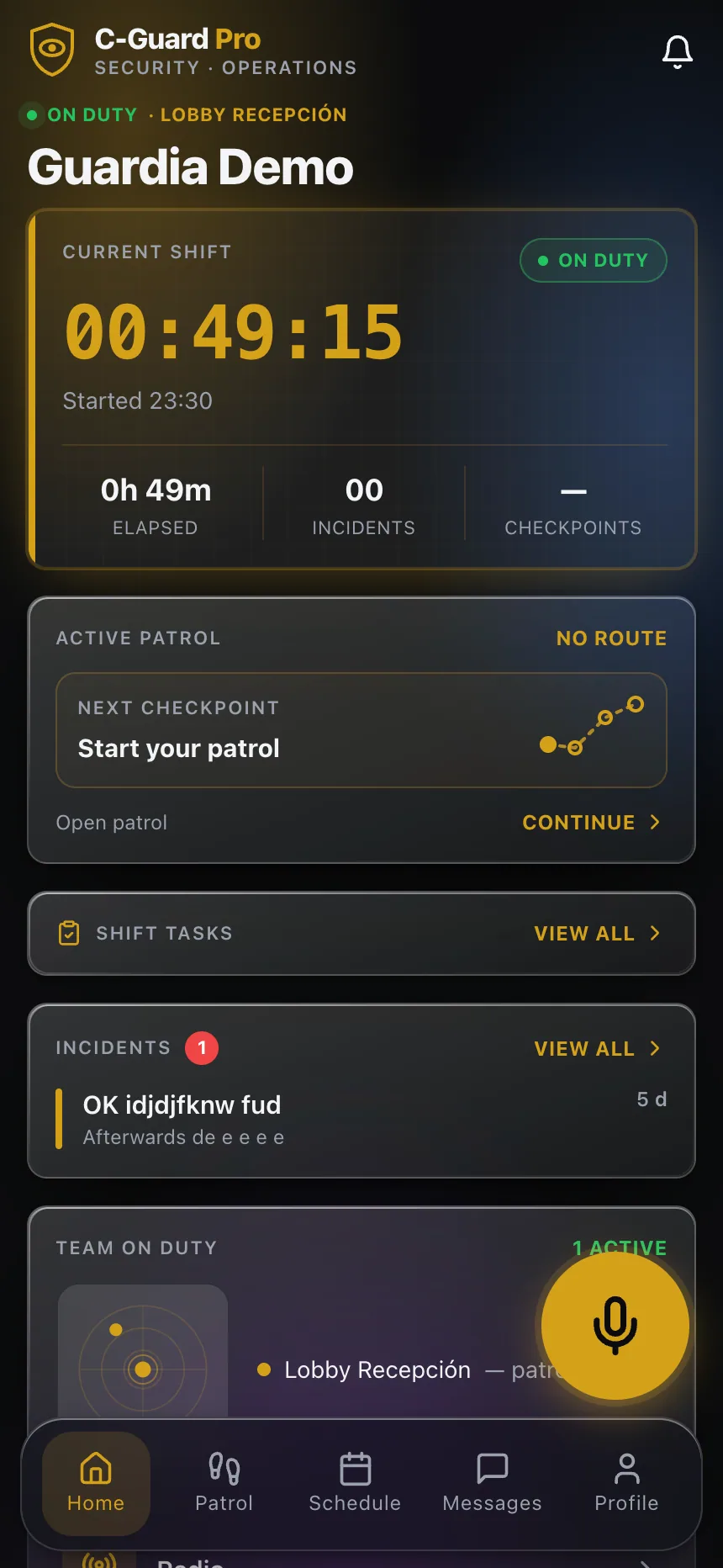
Knowing where an officer’s last activity was recorded turns an unaccounted-for person into a search area rather than a metro-wide problem. Location tied to field activity is not a safety guarantee — signal, battery and indoor coverage all fail exactly when you need them — but the last known point is worth a great deal to whoever has to go look.
Relief logistics when the roads close
This is the piece that separates companies that handle weather from companies that talk about it. Sheltering is a few hours. Relief is a few days.
The predictable failure is a night-shift officer who cannot be relieved because the incoming officer cannot reach the site, and who then works far beyond their shift because leaving would abandon the post. That officer is now a fatigue hazard, an overtime cost, and a person whose family is calling your office.
Plan for it with a few concrete moves. Identify which of your officers live closest to each site and treat proximity as a real scheduling attribute — during an event, geography beats seniority. Build a storm roster in advance: who has four-wheel drive, who is willing and able to stay on site overnight, who has caregiving obligations that make them unavailable. Ask before the storm; the answers are different when asked in the middle of one.
Talk to the client about extended-stay arrangements early. Many properties can accommodate an officer overnight — a conference room, a cot, food — and that conversation is far easier in advance than at hour fourteen. Get the coverage expectation in writing too: some clients want the post held through anything, some want it abandoned in favor of life safety, and assuming you know which is how companies end up arguing during a hurricane.
Then plan the schedule itself. Weather events break normal rotations, and the fastest way to compound the problem is to lose track of who has been on post for how long. Working from a live scheduling system rather than a printed sheet lets you see actual hours worked as they accumulate, spot the officer approaching a dangerous total, and record every change you made under pressure.
Communicate with clients before they ask
Send a short notice at the watch stage saying what you are tracking and what you will do at the warning stage. Send another when officers move to shelter, saying explicitly which services are suspended. Send another when normal operations resume, with a damage note for each site.
Those three messages will do more for your reputation than any post-event report. The client’s own leadership is asking what is happening at their properties, and you are the only source of that answer.
Rehearse the severe weather protocol before the season
Pick a month before your region’s typical severe weather season and run a tabletop. Warning issued at 0230 on a Saturday. One officer unreachable. One client demanding the gate stay staffed. One supervisor’s vehicle stuck. Walk the decisions and see where the plan is thin — it is always thin in the same places: the shelter room nobody can get into, the roll call nobody owns, and the relief nobody can reach.
Fix those three and you have a severe weather protocol that works, which is a plan an officer can follow alone, in the dark, at 0230, without calling anyone for permission.
If you want to see how scheduling, live radio and field accountability come together during a disruptive event, explore CGuardPro or get in touch.