A visitor goes down in a lobby. A warehouse worker sits on a pallet holding his chest. A resident’s family member calls the gate because grandma will not wake up. In each case a security officer is the first person there, often by several minutes, and what they do in those minutes shapes everything that follows. Medical emergency response security work is not medicine — the officer’s job is narrow and specific — but it is decisive, and most guard forces train it far less carefully than they train patrol.
This post is operational guidance for security operations. It is not medical or legal advice. Scope of practice, Good Samaritan protections, duty-to-act questions, training requirements and what an officer may lawfully do vary by state, by employer policy and by client contract. Verify your program with counsel, with your training provider and with your client before writing it into post orders.
Medical emergency response security starts with the boundary
The single most useful thing a company can give officers is a clear, short statement of what they are expected to do and what they are expected not to do.
Most contract security programs land somewhere near this line. Officers recognize an emergency, summon professional help, control the scene, provide only the care they are currently certified to provide, and hand off cleanly to EMS. They do not diagnose, do not administer medication — including a patient’s own — do not move a patient except away from immediate ongoing danger, and do not decide that an ambulance is unnecessary.
That last one deserves emphasis because it comes up constantly. A person who has fallen and is embarrassed will often insist they are fine. Client managers sometimes lean on officers to avoid calling for a “minor” event that generates paperwork. An officer is not qualified to overrule an apparent need for evaluation, and should not be placed in a position where they feel pressure to. Write it into the post orders so the officer can point at a rule instead of arguing.
Certification level matters here too. If a client’s post orders assume medical capability, the staffing plan and the training budget have to match the assumption.
The first sixty seconds
Scene safety first, without exception. An officer who becomes a second patient has made the situation worse and removed the only responder present. Look for the thing that caused it: live electrical, a running machine, a vehicle, a spill, a fall hazard, an aggressive person still nearby. In an assault or an active threat, the officer’s role is not to render aid in the line of fire.
Then get help moving before doing anything else that takes time. The most common mistake at this stage is sequencing — an officer kneels, starts assessing, spends ninety seconds trying to figure out what is wrong, and only then reaches for a phone. Call, or have a specific bystander call, immediately. “You, in the blue jacket, call 911 and come back and tell me you did it” works far better than “somebody call 911,” which reliably produces nobody calling.
Call 911 directly. Not the client’s internal number, not your own dispatch first, not the property manager. Internal notification comes after, and running it first inserts minutes into the only part of the timeline that cannot be recovered. If the client has an on-site medical team or an occupational health nurse, the post orders should say explicitly whether they are called in addition to 911 — never instead of.
Then provide care within your training. Then, and only then, notify dispatch.
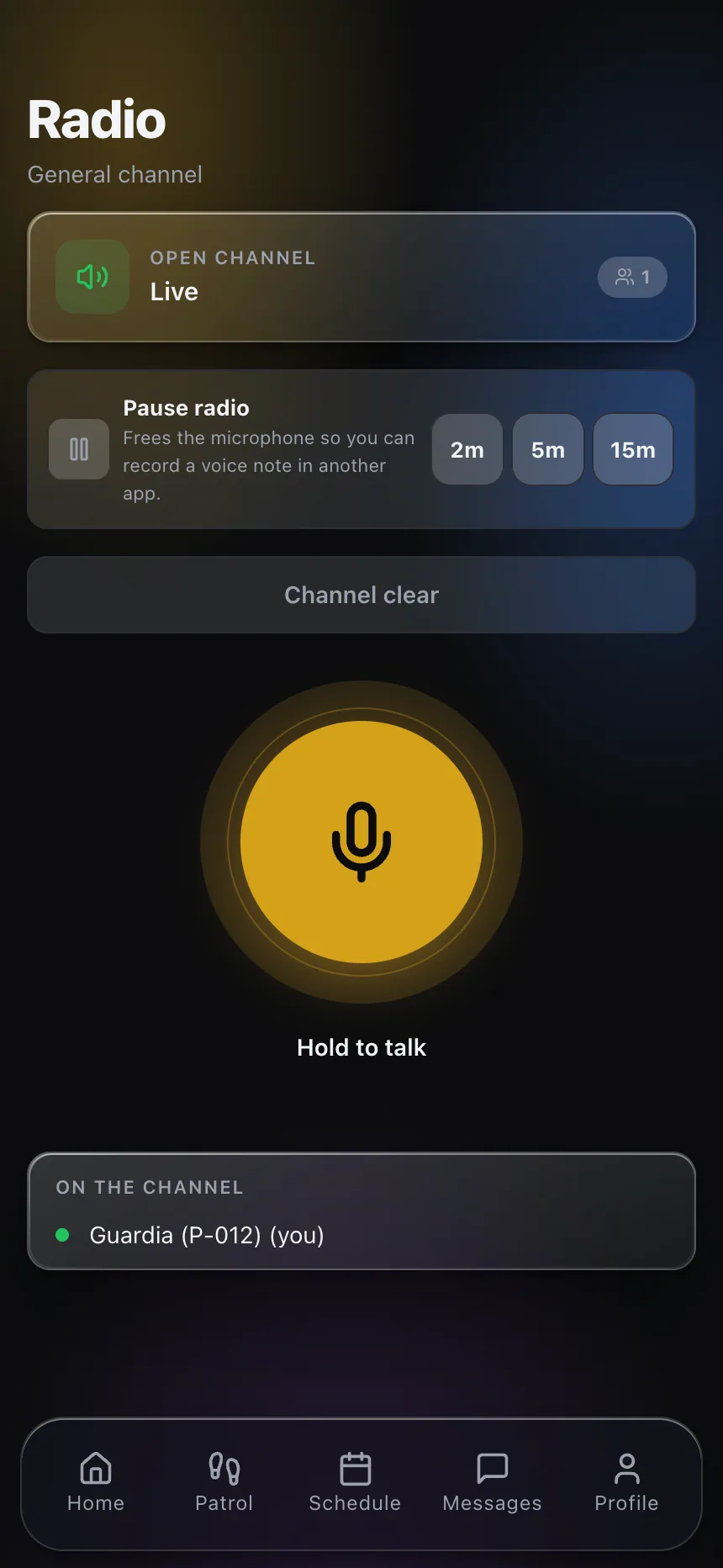
A live push-to-talk channel is genuinely valuable here, because the officer can keep both hands on the patient while telling dispatch what is happening. Typing a message while performing compressions is not a thing that occurs.
Talking to the dispatcher
Give the address the way the emergency dispatcher’s system understands it, which is usually the street address, not the building name your client uses internally. “Riverside Tower” means nothing to a unit from a neighboring jurisdiction. Have the actual civic address, cross streets, and the correct entrance printed on the post orders where an officer can read it aloud without looking anything up.
Stay on the line if the dispatcher asks you to. They give instructions — compressions, positioning, AED use — and following them is correct even if it conflicts with a half-remembered class. Do not hang up to make another call.
Directing responders is the part only you can do
This is where a security officer contributes something nobody else can. On any campus larger than a single storefront, the difference between an ambulance arriving at the property and paramedics reaching the patient can be several minutes, and those minutes are on you.
Plan it as a role, not as a reaction. Someone meets the units. Someone holds the elevator. Someone props the doors and disables the badge readers on the path if the site requires them. Someone clears the corridor and moves the crowd back. Someone stays with the patient. On a solo post it is a set of instructions given to bystanders and client staff, which is why officers should practice it out loud in training.
Know the physical constraints in advance, because you will not solve them live. Which elevators fit a stretcher. Which doors are wide enough. Where the freight entrance is. Which stairwells are dead ends. Whether the gate arm has a manual release and where the key is. Whether the loading dock is chained at night. Every one of those has delayed a real response somewhere, and every one is answerable during a site walk on a quiet Tuesday.
Also know where the AED is, whether it is checked, and whether its pads are expired. A wall cabinet with a dead unit in it is worse than an empty wall, because everyone believes it works.
After EMS takes over
The officer’s role shifts to scene and information. Preserve the area if the event may become a claim or an investigation — a fall on a wet floor, a machine injury, an assault. Note who was present. Secure the patient’s belongings and document that you did, with a witness if possible.
Then notify the internal chain, and notify the client’s designated person even at 0300; discovering a serious medical event from a rumor the next morning is how account relationships end. Then write it down while it is fresh.
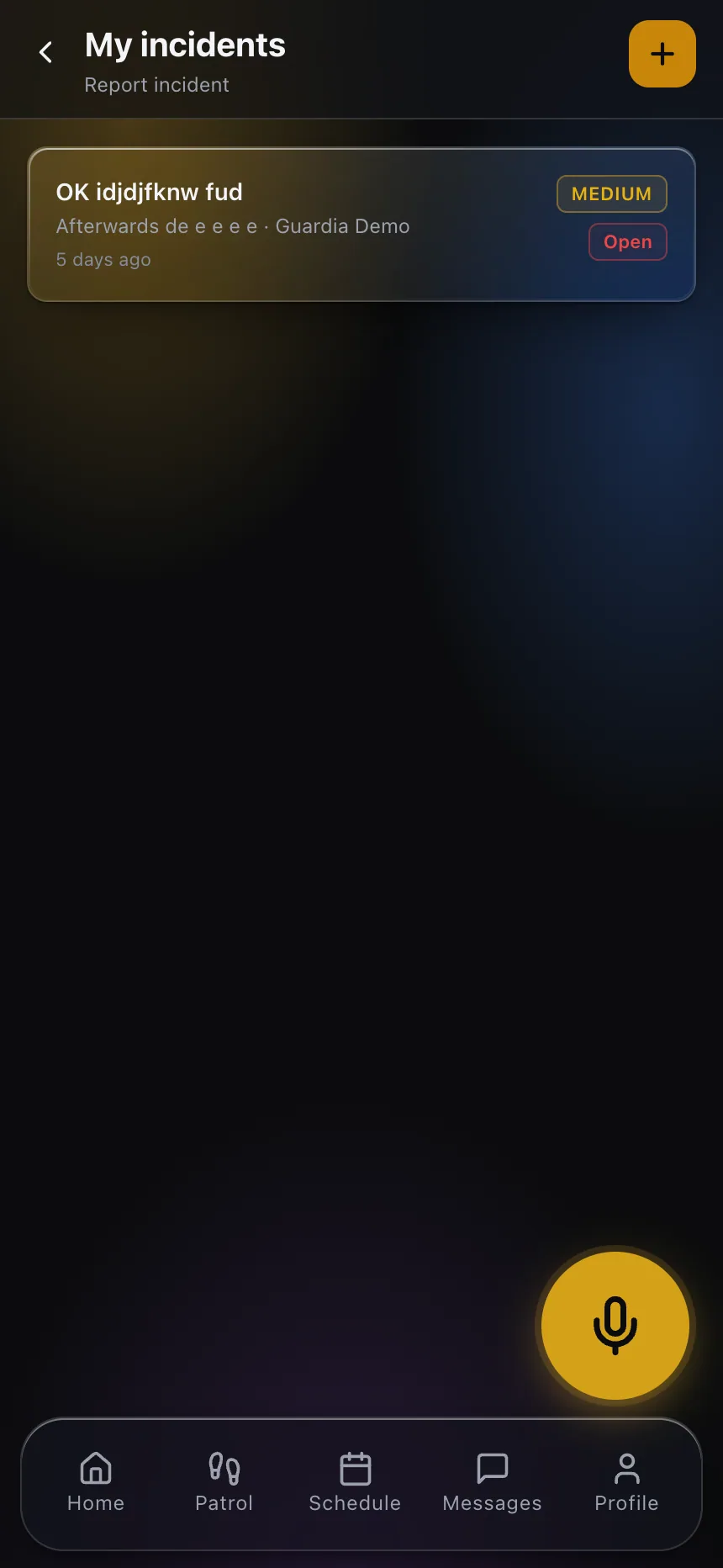
Filing from the officer’s phone at the post beats reconstructing at end of shift, because the times will be right and the sequence will be right. Both matter enormously in a medical report.
What the documentation must and must not contain
Record times precisely: time discovered, time 911 called, time care began, time EMS arrived on property, time EMS reached the patient, time of departure. Times are the spine of any later review, and they are the first thing anyone asks for.
Record observations, actions and statements — what the officer saw and did, what witnesses said in their own words, who was notified, which unit responded and any run number offered.
Do not record a diagnosis. Do not speculate about cause. Do not editorialize about whether the person should have been doing what they were doing. And be deliberate about medical detail: an officer’s report may end up in more hands than a medical record would, and privacy expectations around health information are significant. Capture what the operation needs — the event, the response, the timeline — without turning the daily activity report into a clinical narrative. Where your client is a healthcare facility or the person is an employee, additional privacy rules may apply; that is a question for counsel and for the client, not for the officer at 0300.
Debrief, then fix something
Every medical call is free information about the site. Within a few days, walk it with the officer and the supervisor: what was slow, what was locked, what could not be found, what the post orders got wrong. Then change one concrete thing — an address correction, a gate key location, an AED check added to the tour route, a marked entrance for EMS.
Officers also need the human part of the debrief. A serious call, especially one that ends badly, stays with people, and a supervisor who asks how someone is doing a week later will keep officers who would otherwise quietly leave.
If you want to see how live radio, incident reports and notification hold together during a real call, explore CGuardPro or get in touch.