The route on the post orders is the same one the day officer walks. The property is the same shape. Everything else is different. A night perimeter patrol asks an officer to detect things they cannot see, on a body that is fighting its own circadian rhythm, on a property where there is usually nobody else to notice if something goes wrong. Companies that run the identical route with the identical expectations across day and night shifts are, in effect, running the night shift without a plan.
Detection is not the same problem after dark
During the day an officer scans a fence line and takes in a hundred feet at a glance. At night, with a flashlight, they take in a cone. Everything outside that cone is unobserved, and the officer’s own night vision is destroyed by their own light source every time they use it.
That has concrete consequences for how you design the route:
Speed has to drop, or the route has to shrink. A perimeter that takes twenty minutes in daylight cannot be covered to the same standard in twenty minutes at 3 a.m. If the tour window is identical across shifts, you are asking for a faster walk and worse observation. Either lengthen the window at night or cover less per lap and more laps.
Sightline checkpoints stop working. A checkpoint placed where an officer can see the whole yard is useless when the yard is dark. Night routes need points closer to what they are meant to verify.
Light discipline matters. Officers should be taught to use the light deliberately — sweep, then move — rather than walking with it on continuously, which both announces their position from a long way off and keeps their eyes permanently adapted to bright light.
Look for what light reveals rather than what shape reveals. Reflective surfaces, glass, chrome, eyes, the glow of a phone screen. At night, a phone screen in a parked car is visible far further than the car is.
The false calm
The most dangerous thing about a quiet site is that it is quiet almost every night. Human attention degrades under low stimulus far faster than under load. An officer four hours into an uneventful overnight on a property where nothing has happened in six months is not lazy — they are experiencing a normal physiological response, and no amount of exhortation in a briefing fixes it.
What does help is structure that gives the shift texture:
Vary the route between tours. Alternating direction and sequence costs nothing and forces the officer to think about where they are rather than run on autopilot. It also removes the fixed schedule that anyone watching the property has been learning.
Give the tour tasks, not just points. A checkpoint that requires a condition observation — check the gate chain, read the meter, photograph the compound — engages attention in a way that a scan does not.
Break the sit. If the post includes a static period, define when it ends. Officers who sit for three hours will not walk well in the fourth.
Schedule against fatigue where you can. The hours before dawn are the hardest, and they are also when unstaffed properties are most exposed. If the site gets more than one tour a shift, weight coverage toward that window rather than spreading it evenly.
Lighting checks are part of the patrol, not a favor to the client
On a night route, lighting is both a security control and a documented condition. Every fixture out changes the coverage of the site, and the officer walking the perimeter is the only person who will ever see it.
Make it a standing checklist item with a location and a photo. Then track whether it gets repaired. A perimeter light that has been out for three months is a finding worth escalating in writing — it is the difference between a service that reports conditions and one that merely observes them.
Also note what has changed rather than only what is broken. New shadows from a stored trailer. A tenant’s temporary construction fence creating a blind corridor. A tree that has grown into a fixture. These are the things that make a route designed in spring wrong by autumn.
Communications and check-in cadence
This is where the night shift diverges most sharply from the day shift, because during the day there is almost always someone else on the property. Overnight there frequently is not.
Set an expected check-in interval and treat a missed one as an event. The point is not compliance. The point is that if an officer falls in a stairwell, breaks an ankle in a drainage ditch, or is confronted at the back fence, the elapsed time before anyone notices should be measured in minutes and not hours. A check-in cadence turns silence into a signal.
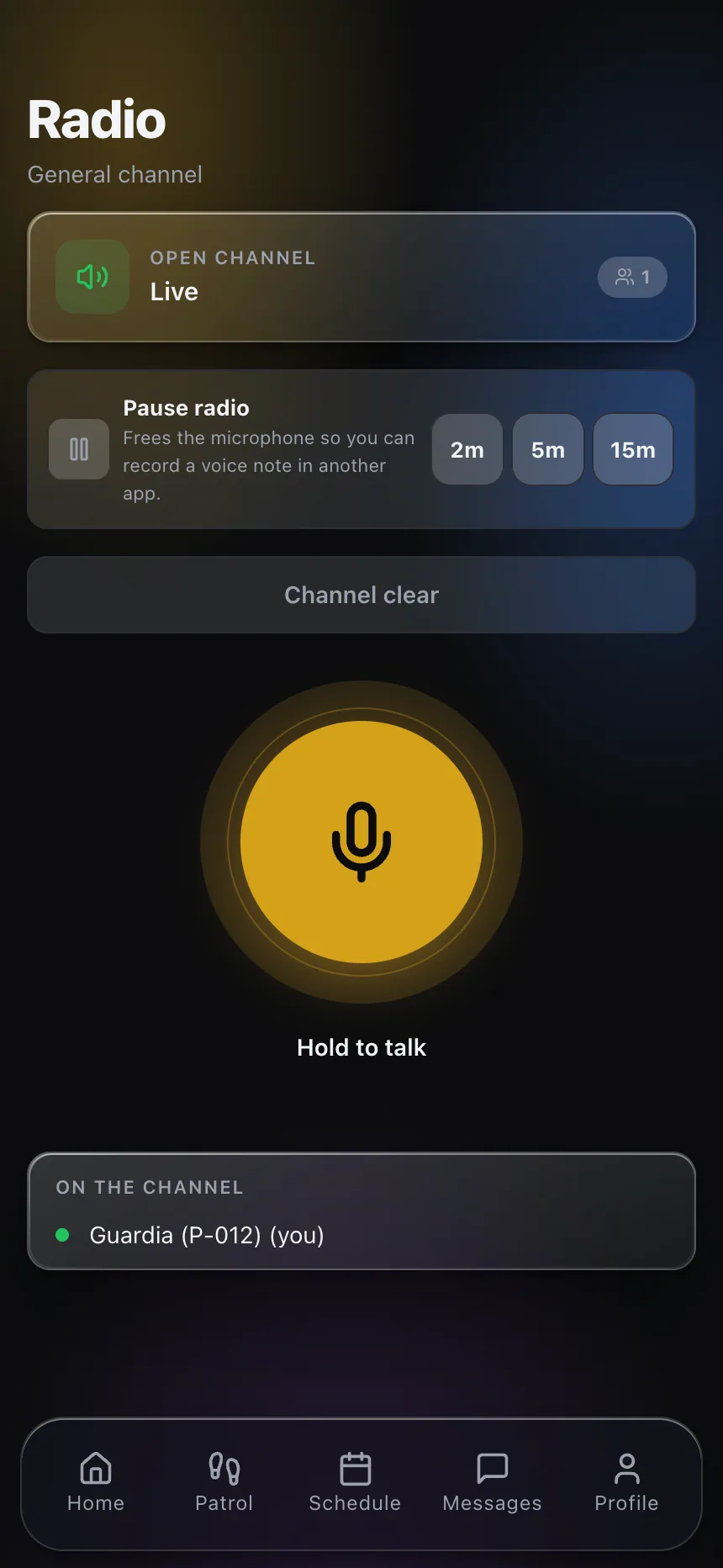
Choose a channel that works with one hand and a flashlight. A phone call requires an officer to stop, look at a screen and dial. Push-to-talk in the app is a single press, works across sites and vehicles, and lets dispatch hear the officer’s voice — which conveys more than a text ever will about whether things are fine.
Map the dead zones before you rely on any of it. Every property has places with no usable signal — the basement, the far corner of the yard, inside a metal structure. Walk them, write them into the post orders, and define where the officer goes to reestablish contact so nobody has to guess.
Make summoning help require nothing. In the situation that actually matters, an officer will not be able to explain themselves. A panic alert that reaches dispatch and the field supervisor with the officer’s position, without requiring a conversation, is the baseline for any single-officer overnight post.
Supervision at 3 a.m.
Night shifts are chronically under-supervised for the obvious reason: supervisors are people too. The consequences are predictable — the overnight force develops its own norms, and management discovers them after an incident.
Two things close most of the gap without staffing a supervisor all night.
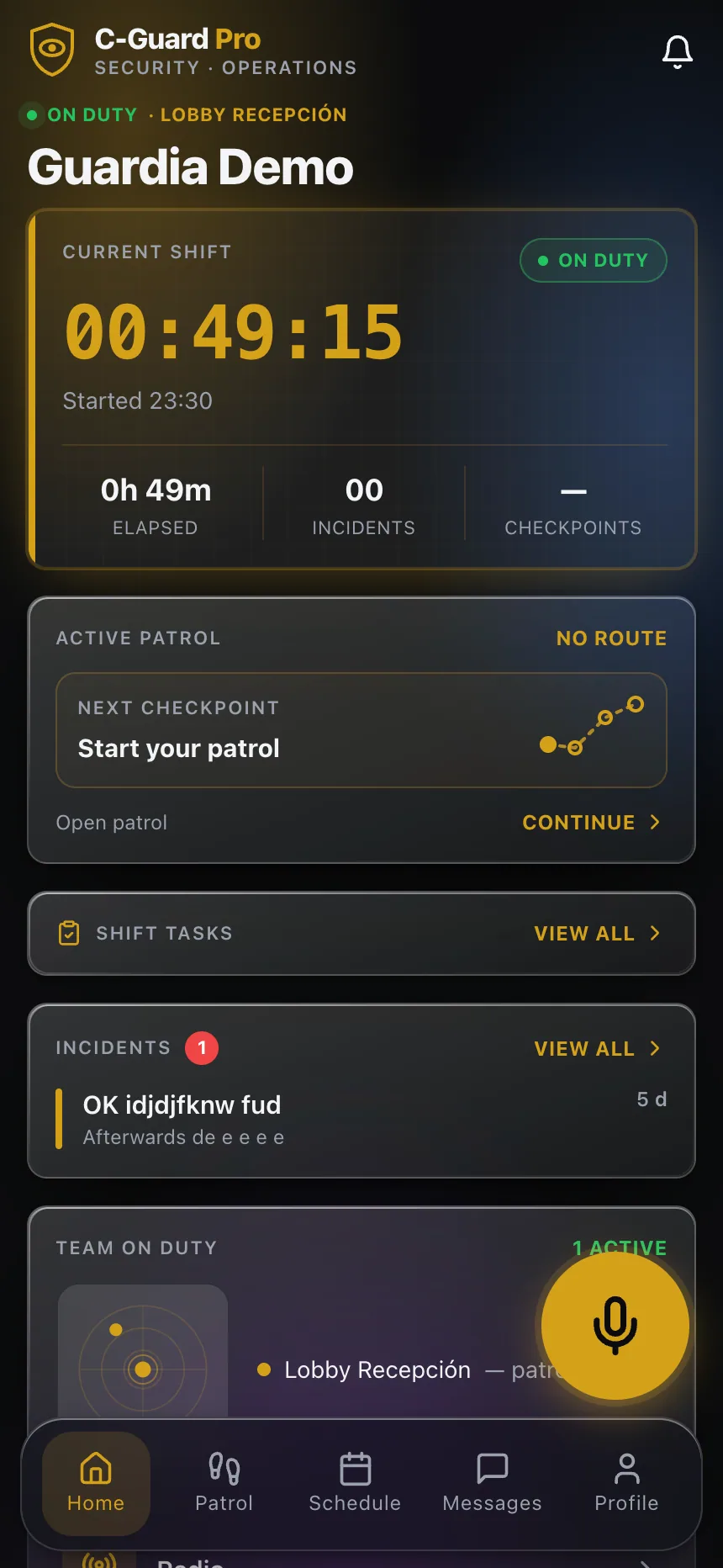
Live visibility for dispatch. Knowing which officers are on post, whether tours are progressing and where people are located means the overnight can be watched from one place. GPS position tied to tour records is not about surveillance of the officer; it is about someone knowing where a lone worker is at 3 a.m., which is a welfare function first.
Unannounced night visits, at a real cadence. A field supervisor who only appears on day shift is telling the night force that nobody is watching. A ride-along on the overnight, occasionally, does more for standards than a month of memos — and it is also the only way management ever discovers that the route as written cannot actually be walked in the dark in the time allotted.
What to write into the post orders specifically for nights
Most post orders are written for the day shift and silently inherited by the night shift. Make the differences explicit:
- Night tour windows, which should differ from day windows if the route is the same.
- Lighting inspection as a named task with a reporting path.
- Check-in cadence and what happens when one is missed.
- Signal dead zones and the designated contact-recovery locations.
- Approach and non-approach rules — what an officer observes and reports rather than confronts when alone.
- Weather and terrain hazards that only matter in the dark: unlit stairs, drainage, uneven surfaces, ice.
- Gate and access procedures for after-hours deliveries or contractors, which are a common overnight surprise.
The underlying point
A night perimeter patrol is not a day patrol with a flashlight. It is a job with different detection limits, a different fatigue profile, a different supervision picture and a different risk to the officer. The companies that treat it as its own assignment — with its own route timing, its own communications plan and its own post orders — produce better coverage and lose fewer people to a shift nobody enjoys working.
If you want to see how tour timing, radio and officer safety fit together for an overnight post, explore CGuardPro or get in touch.