A parking structure concentrates almost every risk a security company gets sued over into one poorly lit concrete box: vehicle break-ins, assaults in stairwells, slip-and-fall on wet ramps, damage claims from cars that were already dented, and the officer’s own safety in a place where radio and cellular signal go to die. A serious parking garage patrol is not a lap around each level with a flashlight. It is a structured sweep with a documentation habit, because the garage is where “we patrol regularly” gets tested against a specific night at a specific hour.
Why the garage is different from the rest of the property
Three structural features drive everything.
Sightlines are terrible and concealment is everywhere. Columns, ramps, low ceilings, and rows of vehicles that are themselves hiding places. A person standing between two SUVs on a dim level is invisible from thirty feet.
The population is transient and anonymous. Nobody in a garage has to explain why they are there. There is no receptionist and no badge check. That is exactly why offenders like them.
Everything in it is an insurance claim waiting to happen. A pothole, a dripping pipe over a walking surface, a burnt-out fixture, a bollard someone backed into. Property managers know this, which is why documentation of garage conditions is worth more to them than almost anything else your officers produce.
The sweep, level by level
Approach each level with a plan, not a lap
Enter the level at a consistent point, then work it in a way that puts you in sightline of the concealment spots rather than driving down the center aisle. That means walking at least part of every level. A garage patrol conducted entirely from a vehicle sees the aisles and nothing else — not the space between cars, not the recessed doorway, not the person crouched at a wheel well.
Vary which end you start from between tours. A structure is one of the easiest environments to observe a patrol pattern from, because someone sitting in a parked car can watch you do the whole thing.
The checklist per level
- Vehicles with signs of entry. Glass on the ground, a window down that should not be, a door ajar, a trim panel pried. Photograph and log; do not touch.
- Vehicles that do not belong. Same car, same level, day after day. Vehicles backed into a corner spot with a view of the ramp. Occupied vehicles at unusual hours.
- Concealment check. Behind columns, in stairwell alcoves, in the gaps at the ends of rows, under the ramp overhangs.
- Fluid on the deck. Oil, coolant, water from a leak above. This is both a slip hazard and evidence of something failing.
- Obstructions and debris. Abandoned property, shopping carts, construction material.
- Signage and striping. Missing fire lane markings, a bent accessible-parking sign, a wheel stop out of position.
Stairwells and elevator lobbies get their own attention
These are the highest-risk locations in the structure and the ones officers most often shortcut. A stairwell is only patrolled if it is traveled, top to bottom, at least once per shift — walking up two flights and turning around is not a stairwell check.
What to look for: doors that do not latch, doors propped, evidence of habitation, lighting out on a landing, standing water, and anything blocking egress. In the elevator lobby, check the emergency call station if one is present and note it if it is unresponsive. Elevator lobbies are also the natural place for visible presence, because they are where people are most exposed.
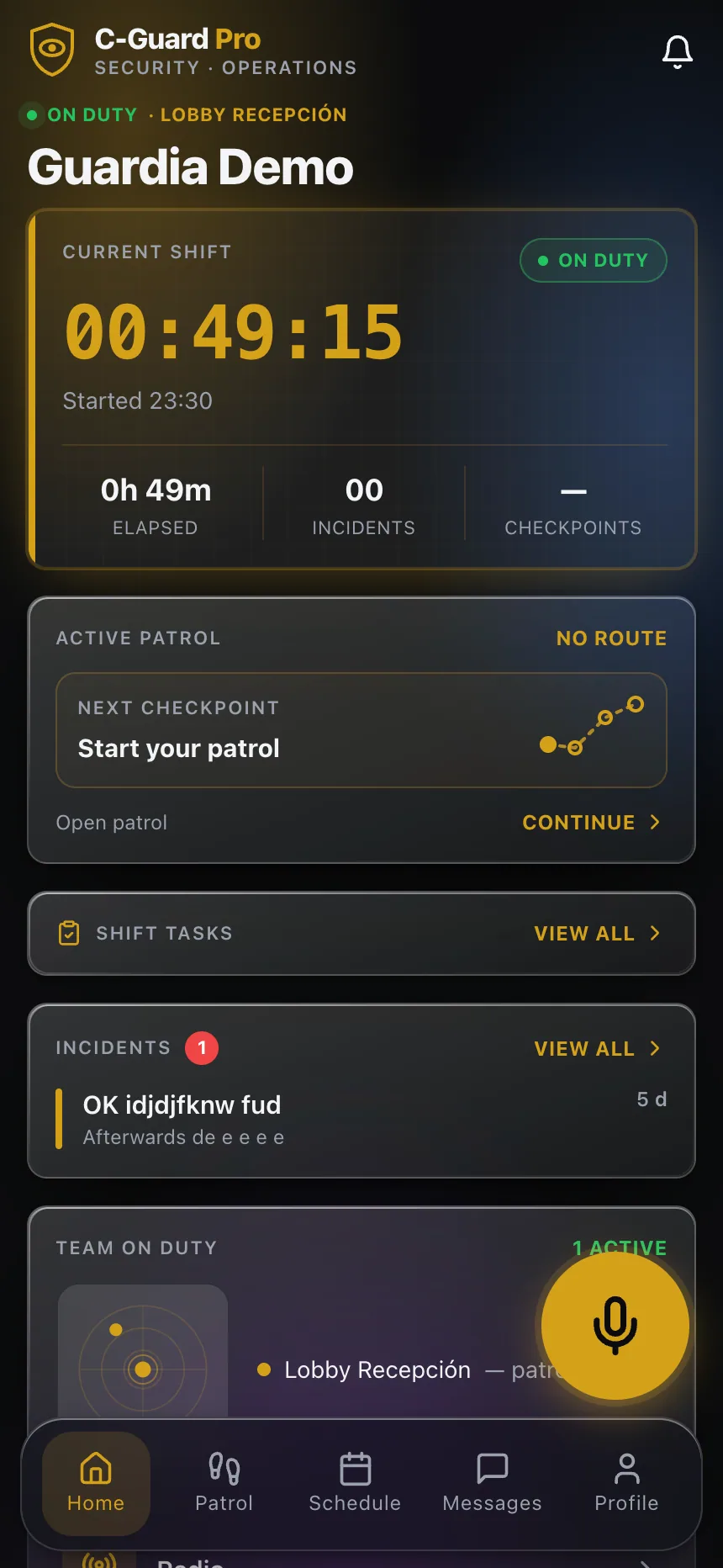
Place checkpoints at both ends of each stairwell so the record shows the officer traveled it, not just entered it.
Lighting: the item worth being pedantic about
Lighting is the single most consequential physical condition in a parking structure, and it fails gradually — one fixture at a time, in places nobody drives.
Make it a standing item, not an ad-hoc observation. Every fixture out gets logged with its level and location, ideally with a photo showing the resulting dark area rather than the dead fixture itself. Then track whether it gets fixed. A recurring list of the same out-of-service fixtures month after month is a serious finding, and it is your client’s problem to solve — but only if you have put it in front of them in writing, repeatedly, with dates.
That paper trail cuts both ways, and it is worth being clear-eyed about it. Documenting a hazard your client never fixed creates a record. Not documenting it does not make the hazard disappear; it just removes your evidence that you did your job. The professional position is to report consistently, in writing, and escalate when nothing changes.
Incidents that turn into claims
Garages generate a specific and predictable set of claims, and the way your officers handle the first ten minutes determines how they resolve.
Vehicle damage allegations. Someone returns to a scraped bumper and reports it as having happened on site. Your officer’s job is to document conditions as found, note the time, photograph the vehicle and the surrounding area, and record who reported it and when. Never speculate about cause in the report and never accept liability on the client’s behalf.
Break-ins. Document without disturbing. Note the vehicle, the apparent method, the location, and the time discovered — and, critically, the time of the last patrol pass that covered that spot, which will be requested.
Slip, trip and fall. Condition, weather, lighting at the location, whether the area was signed or coned, medical response offered, witnesses. Photographs of the surface before anyone cleans it up.
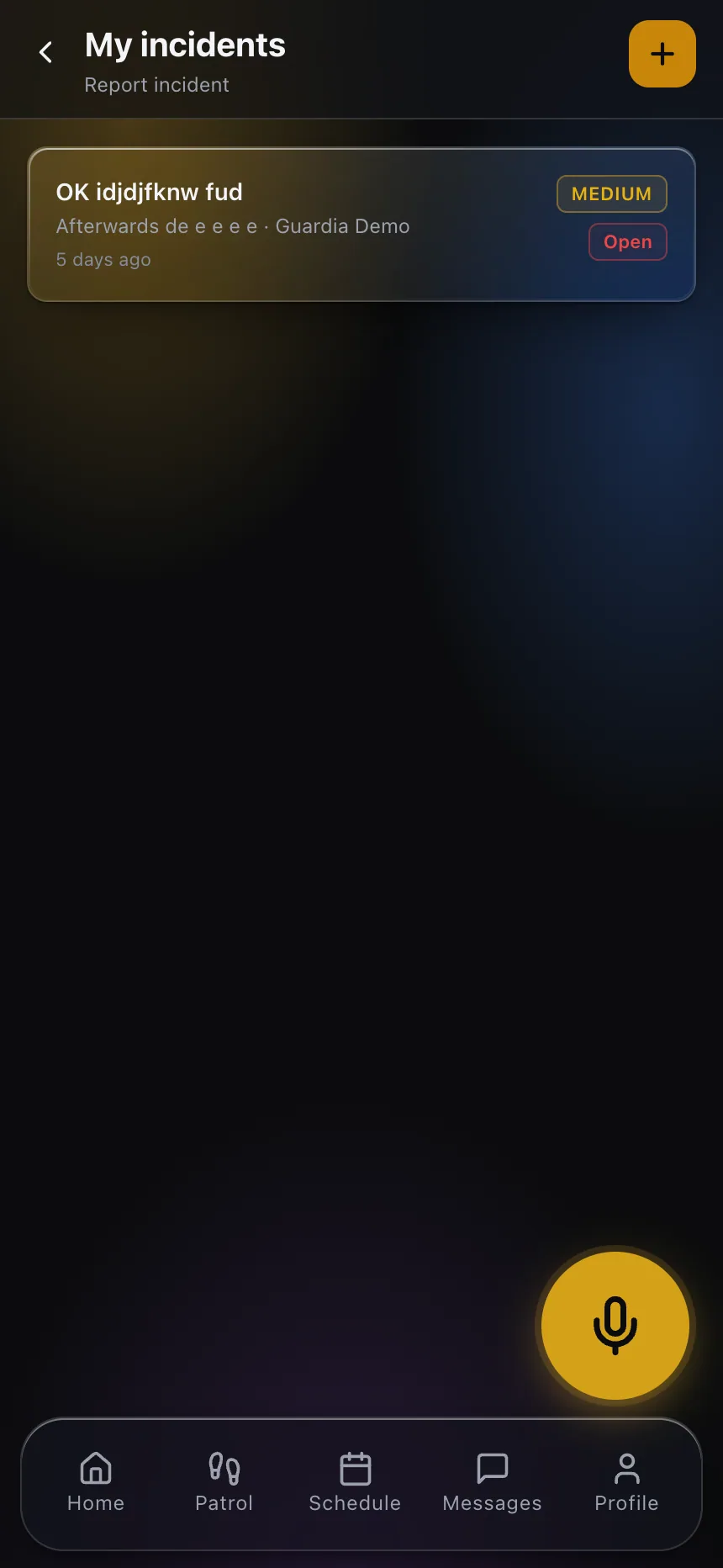
Person in distress or a confrontation. Officer safety governs. A garage is a poor place to be alone with an escalating situation, which is why the officer needs a way to summon help that does not require them to make a phone call. A panic button in the mobile app that raises dispatch and the field supervisor with the officer’s position is a meaningful difference in an environment where nobody is going to hear a shout.
Each of these should be filed as a structured incident report from the location, in the moment, with photos attached — not reconstructed at end of shift.
Officer safety in the structure
Do not let this be an afterthought.
Signal dead zones. Lower levels and interior stairwells frequently have no usable coverage. Map them, write them into the post orders, and define where the officer goes to reestablish contact.
Check-in cadence. If the garage is a single-officer post, an expected check-in interval means a silence is itself an alert rather than something discovered later.
Approach discipline. Officers should not be walking up to occupied vehicles alone at 2 a.m. as a matter of routine. Observe, report, and let the decision to approach be a deliberate one supported by dispatch.
Vehicle positioning. If the officer uses a patrol vehicle, where they leave it matters. Blocking a ramp creates a hazard; parking somewhere they cannot get back to quickly creates another.
Making the record usable
Every item on the checklist above is worth capturing only if it can be found again. Free-text notes buried in a shift log cannot be counted, trended or produced on request.
Two habits fix this. First, capture observations at the location as structured daily activity reports with photos, so a lighting failure on level three is a line item rather than a sentence. Second, tie the sweep itself to checkpoints placed at the stairwell ends and level entries, so the pattern of coverage is visible and the “when was the last pass” question has an answer that does not depend on memory.
The garage will eventually produce the incident that puts your documentation in front of someone hostile. The checklist is how you make sure that day is boring.
If you want to see how sweeps, incident reports and officer safety tools work together in one system, explore CGuardPro or get in touch.