Every owner who has ever lost money on an account learned how to price security guard services the same way: by discovering, six months in, that a cost they never put in the model was eating the whole margin. Usually it is not one big thing. It is holiday premium, plus the training hours nobody billed, plus the supervisor’s windshield time, plus the two shifts a week that get covered at overtime because the schedule was built one officer short.
Pricing is not a market question first. It is an arithmetic question first and a market question second. If you cannot build the rate from the bottom, you cannot tell whether the market rate is a rate you can survive at.
A note before the mechanics: wage-and-hour, overtime, paid-leave and payroll-tax obligations vary by state, city, industry and contract type, and some public and prevailing-wage work carries additional requirements. Nothing here is legal or tax advice. Confirm what applies to you with your payroll provider, your insurance broker and counsel before you build a rate model on it.
Start at the bottom: what does an hour of coverage cost you?
Build in layers. Each layer is a real cash cost that exists whether or not you remembered it when you quoted.
Layer one — the pay rate
What the officer earns per hour on that post. Not your average pay rate across the company. The rate for this post, because posts are not interchangeable: an armed post, a post requiring a specific certification, a post with a difficult client, a post at an inconvenient location and hour — each carries a different pay rate if you want it staffed by someone who stays.
The most common pricing mistake is modeling a post at the rate you wish you could hire at rather than the rate the local labor market is actually clearing. Overnight weekend coverage in an unpleasant location does not staff at the same rate as weekday lobby work, and pretending otherwise produces a contract you cannot fill.
Layer two — labor burden
Everything that rides on top of the wage and moves with it:
- Employer payroll taxes
- Workers’ compensation premium, which is rated by class and by payroll and differs sharply between armed and unarmed
- Unemployment insurance
- Health benefits, if offered, and any employer contribution
- Paid time off, sick leave and any leave you are obligated to provide
- Holiday premium where you pay it
Burden is the layer people underestimate because it is invisible in the moment. It also has a property worth understanding: most of it is a function of wages, so it scales with the pay rate.
Layer three — the cost of the officer existing
Costs per officer rather than per hour worked, which have to be spread across billable hours:
- Uniforms and replacement
- Licensing, permits, background checks and drug screening
- Training hours — orientation, site-specific, recurring, and any state-mandated hours, which vary by jurisdiction
- Equipment: radio, phone, flashlight, duty gear
- Recruiting cost per hire, which is a real number and rises with turnover
Training is the one that quietly wrecks models. An officer is paid for orientation hours and produces no billable hours during them, and where turnover is high you pay that cost repeatedly for the same post. Turnover is not just an HR problem; it is a line item.
Layer four — coverage inefficiency
This is the layer almost nobody models, and it is often the difference between a profitable account and a break-even one.
A post that must be covered continuously does not get covered by a tidy set of full-time officers with no gaps. Somebody calls out. Somebody quits mid-schedule. Somebody takes leave. The hours still have to be filled, and filling them costs more than the base rate does — through overtime premium when an officer picks up beyond the weekly threshold, through the field supervisor standing a post, through paying a premium to get someone in at short notice.
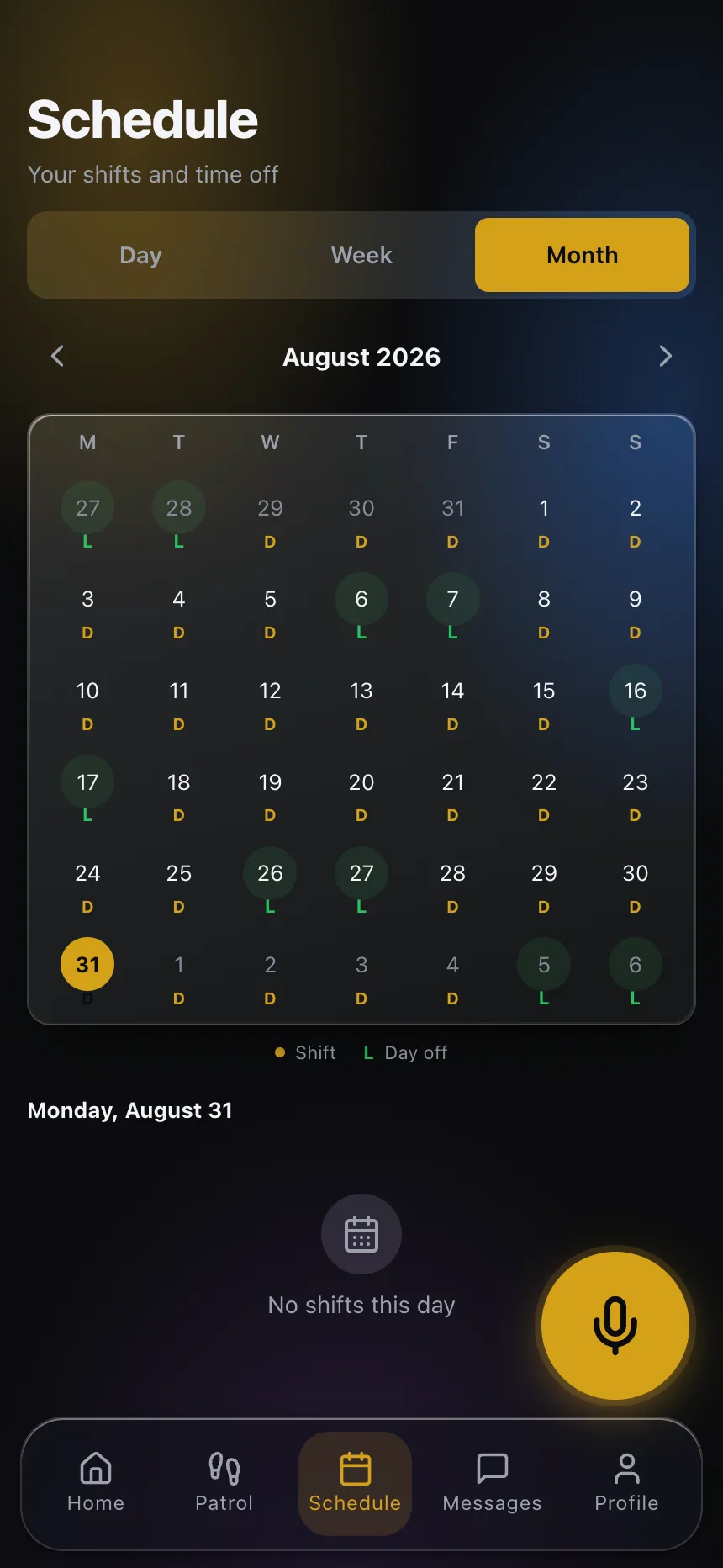
The way to handle this in a model is not to guess. It is to measure your own history: for accounts of similar shape, what share of billed hours ended up at premium cost? Your own scheduling and timekeeping records contain that answer for your own operation. Use your numbers, not somebody’s rule of thumb — the whole point is that this figure differs wildly between a well-scheduled company and a badly scheduled one.
Layer five — supervision and account management
The field supervisor’s salary, vehicle, fuel and time. The account manager’s time. The dispatcher who answers at 3 a.m. These do not appear on a timesheet for the client’s post, but they are consumed by that account, and a client who demands weekly meetings and immediate escalation consumes materially more of them than one who wants a monthly email.
Allocate supervision by consumption, not evenly. Otherwise your easy accounts subsidize your difficult ones and you will never know which is which.
Layer six — general and administrative overhead
Office, insurance beyond workers’ comp — general liability, auto, professional and any errors and omissions coverage — payroll processing, accounting, legal, software, sales, and the owner’s own compensation if it is not already in there. This is a company-level pool spread across billable hours.
Layer seven — margin
Margin is not what is left over. It is a decision made before the quote, and it should differ by account. An account with a demanding client, a difficult labor market, a long term without escalation, or slow payment terms carries more risk and should carry more margin. An account that is easy to staff, pays on time and gives you volume can carry less.
Adding it up, and the multiplier trap
Add the layers per billable hour and you have a floor. The bill rate is the floor plus margin.
Many companies shortcut this with a multiplier applied to the pay rate. Multipliers are a useful sanity check and a terrible pricing method, for one structural reason: the layers do not all scale with wages. Burden does. Uniforms, licensing, supervision and G&A largely do not. So a single multiplier is only correct at one pay rate, and it becomes progressively wrong as you move away from it — over-pricing high-wage posts and under-pricing low-wage ones.
Build the rate from the layers. Then check it against your multiplier and investigate any large gap. The gap is usually telling you something true about the account.
Where the model meets reality
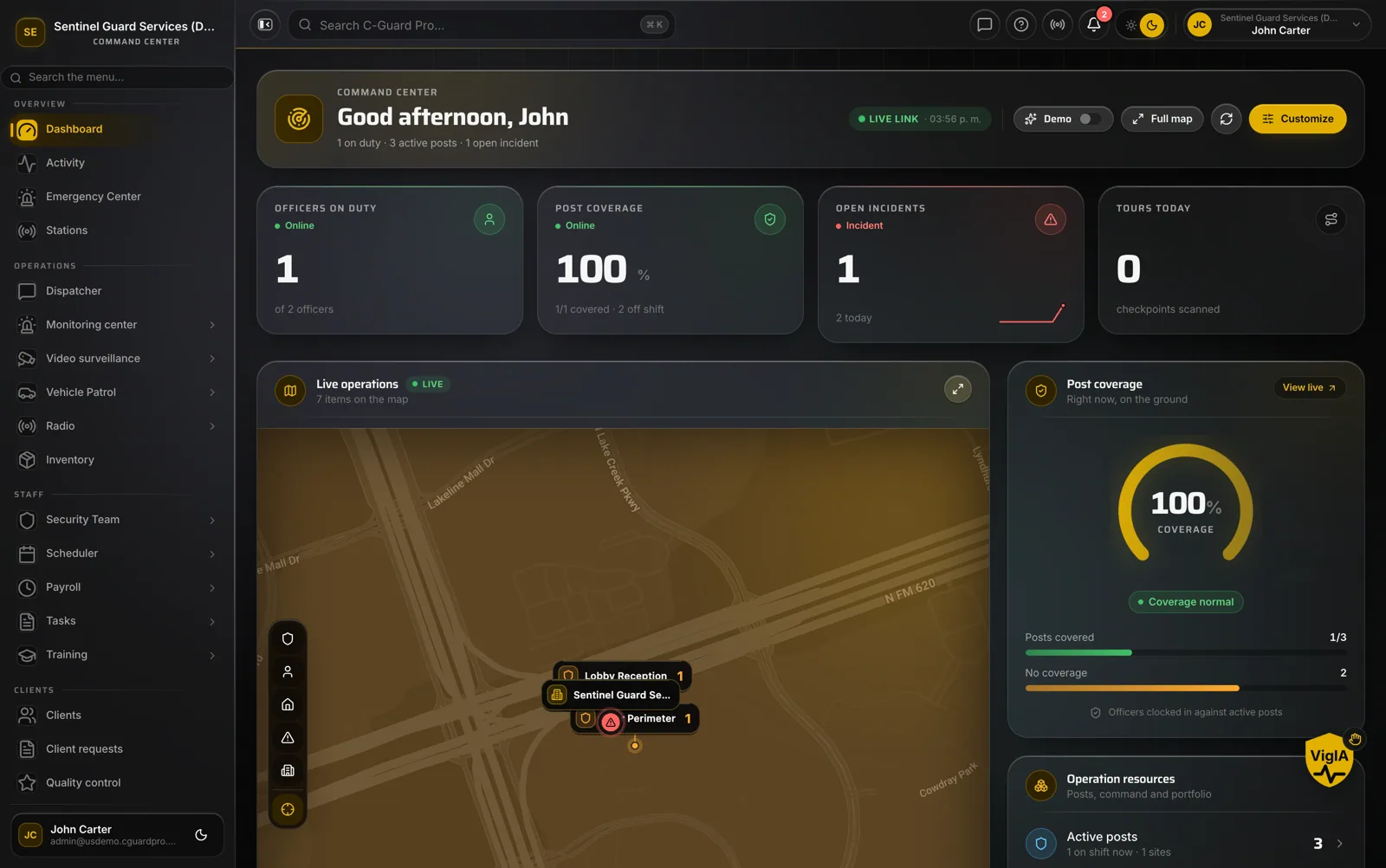
A rate model built at proposal time is a forecast. The account either performs to it or it does not, and you find out through actual hours: what you scheduled versus what was worked, what was straight time versus premium, how many supervisor hours the account consumed, how much unbilled time it generated.
That comparison is only possible if hours are captured accurately in the first place. Rounded timesheets, buddy punching and hours reconstructed at the end of a pay period do not just cost payroll dollars — they destroy the feedback loop that would tell you your pricing model is wrong. Verified time and attendance at the post, tied to the schedule, is what makes the model self-correcting.
Review each account against its model on a regular cycle. Accounts drift, and scope creeps — the extra walkthrough, the special event, the “can your guy also handle the packages.” Each addition consumes hours the rate did not price.
Escalation is part of pricing
A rate quoted today is a rate for costs today. Wages move. Insurance renews. Minimum-wage floors change in some jurisdictions, and sometimes on schedules set years in advance. A multi-year contract with no escalation mechanism is a bet that none of that happens.
Two options are both legitimate: an annual escalator stated in the contract, or an explicit right to reopen rates when a defined cost driver moves. What is not legitimate is silence, because silence means you either eat the increase or have an uncomfortable conversation with no contractual footing.
When to walk
The discipline that makes pricing real is being willing to lose the bid. If a prospect’s target is below your modeled floor, there are exactly three honest responses: reduce scope so the hours cost less, explain what the difference buys and let them decide, or decline.
The fourth response — quote it anyway and hope — is the one that fills a company with accounts that cannot be staffed properly, which produces turnover, which produces overtime, which makes the account lose more money than the model said it would. Underpriced accounts do not fail quietly. They fail by consuming the supervision and recruiting capacity that your good accounts needed.
Knowing how to price security guard services well is mostly the discipline of counting every layer honestly and then trusting the number enough to say no.
If you want to see how scheduled hours, verified time and account activity feed back into the numbers, explore CGuardPro or review plans and options.