Ask ten contract security companies what their field supervisors do and you will get ten answers that all sound like “they check the posts.” Ride along with those supervisors for a week and you will find something else entirely: they are delivering uniforms, covering callouts, driving keys across town, sitting a post for four hours because nobody else answered the phone, and getting to maybe two of the eight sites they intended to visit.
The security field supervisor is the most leveraged position in a guard company and the most consistently misused. When the role works, quality holds across accounts the owner never visits. When it does not, the supervisor becomes a very expensive relief officer with a company vehicle, and the accounts drift until a client complains.
The job is two jobs, and they fight each other
A field supervisor has a proactive job and a reactive job.
The proactive job is post visits, coaching, inspections, post order verification, equipment checks, meeting the client contact face to face, and knowing which officers on the route are one bad week away from quitting. It is scheduled, it is boring, and it is the entire reason the position exists.
The reactive job is callouts, incidents, alarm responses, client complaints and emergencies. It is urgent, it is visible, and it eats the proactive job alive. Every time a supervisor covers a shift because nobody answered the callout list, three post visits do not happen. Nobody notices the missing visits — there is no complaint, no email, no immediate consequence. So the reactive job wins, week after week, until the supervisor is functionally a floater and the accounts are running unsupervised.
The fix is not telling supervisors to be more disciplined. It is structural: separate the two jobs, or at minimum protect the proactive one with a hard budget. Some hours are inspection hours and are not available for coverage. If that means you occasionally miss a fill, then you have discovered your real problem — the callout list is too thin, which is a scheduling and staffing problem, not a supervision problem. Solve it in the schedule, not by burning the supervisor.
The ratio question
Everyone wants a number: how many posts per supervisor? There is no honest universal answer, and anyone who gives you one without asking about your accounts is guessing. What actually determines the ratio is a handful of variables you can assess directly.
Geographic density. Eight posts inside a four-mile radius is a completely different job from eight posts spread across a metro area with an hour of highway between the far ends. Windshield time is the hidden cost of supervision, and it is not linear — it compounds when traffic is bad, which is when your visits are most likely to get cancelled.
Shift coverage. A supervisor who only works days is not supervising your graveyard posts. Overnight is where the failures happen and where the least supervision exists. If you run 24-hour accounts, the ratio has to account for the fact that the same headcount now has to cover three times as many shift instances.
Account complexity and risk. A single unarmed lobby post at a low-risk office building needs a visit cadence measured in weeks. An armed post at a high-risk facility, a hospital, or a site with active labor tension needs far more attention, and the client expects to see the supervisor.
Force tenure. A route of officers who have all been on their posts for two years is close to self-managing. A route with three new hires in the last month is a full-time job.
Build the ratio bottom-up from those four factors, and revisit it whenever the account mix changes. A company that grows by adding scattered single-post accounts will hit a supervision wall long before a company that grows by adding posts to existing sites.
What a post visit is actually for
A post visit that consists of pulling into the lot, waving at the officer and driving off is worse than no visit, because it creates a record of supervision that did not happen.
A real visit does five things:
Verifies the officer is where they should be, in the condition they should be in. Uniform, alertness, sobriety, equipment on the belt. Uncomfortable to say out loud, but this is a core function.
Tests knowledge, not attendance. Ask a question from the post orders. “What do you do if the fire panel goes into trouble?” “Who do you call if someone is trapped in the elevator?” If the officer cannot answer, that is not a discipline moment — it is a training gap you just found before the client did.
Checks the site, not just the officer. Lights out in the parking structure, a gate that no longer latches, a camera pointed at a wall, a fence line that has been cut. The officer may have reported it three times and heard nothing back. The supervisor is the person who can escalate it to the client with credibility.
Reads recent reports with the officer. Not to criticize the writing, but to close the loop: “You wrote up the propped door twice last week — did anything change?” Officers stop writing things down when writing them down produces no result.
Asks how they are doing. Half of turnover is preventable and shows up in conversation weeks before it shows up in a resignation. Commute got longer. Childcare fell through. The client contact has been rude. A supervisor who hears it early can often fix it with a post swap.
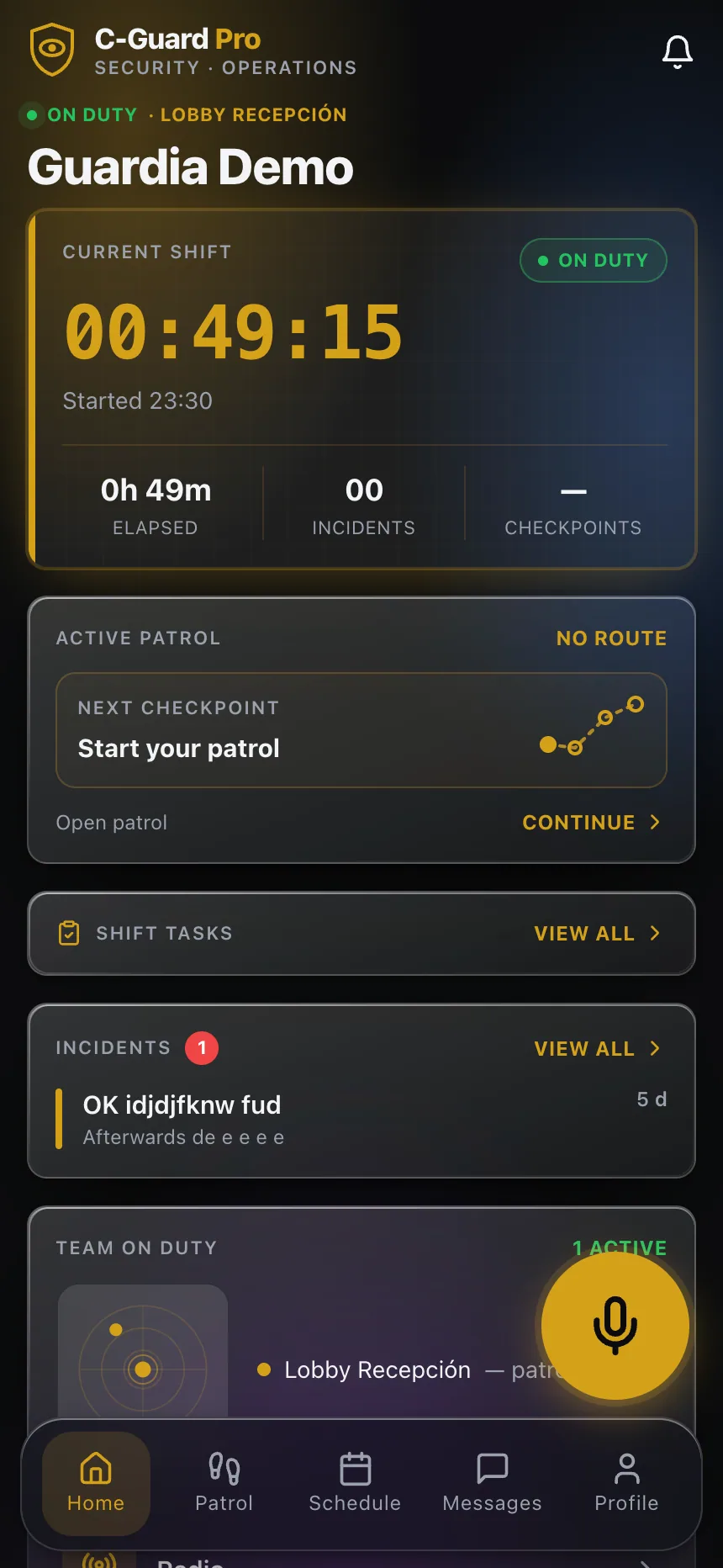
Turning windshield time into documented supervision
Here is the part that separates a supervision program from a supervision belief. If the visit is not recorded, it did not happen — not for the client, not for a claim, not for your own management data.
The old method was a paper visit log left at the post, which nobody read and which lived at the site rather than in the office. The workable modern method is that the supervisor’s visit is captured the same way any other field activity is: with a timestamp, a location, and content.
Scanning a checkpoint on arrival proves presence. A short structured inspection captures the substance — appearance, knowledge check, equipment, site condition, anything flagged. A photo documents the burned-out light or the damaged gate far better than a sentence. And GPS tracking of the supervisor’s own route turns the invisible half of the job into something you can look at: which accounts got visited, which ones have not been touched in a month, how much of the shift went to driving.
That last number is the one that changes decisions. Most companies discover, the first time they can see it, that their supervision capacity is being consumed by geography rather than by supervision. That is a routing problem with real answers: cluster accounts by supervisor, shift a post to a different route, or accept that a remote account needs a local lead officer instead of a driving supervisor.
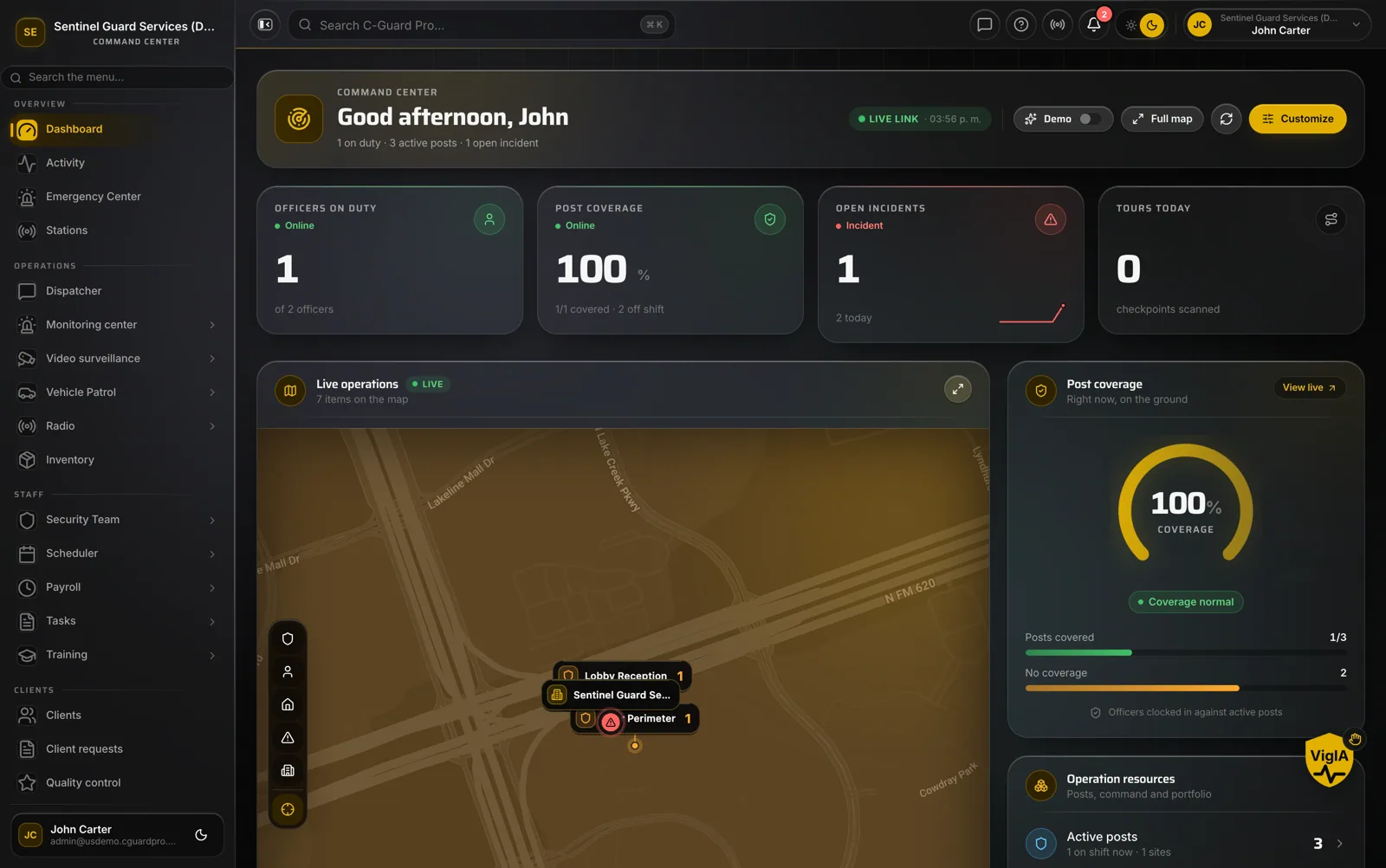
The escalation the supervisor owns
One more function that gets lost: the field supervisor is the first real escalation point for a panic activation or a serious incident. When an officer hits the panic button, the question of who moves and how fast has to be answered before it happens, not during. In practice that means the supervisor’s location and availability need to be known to dispatch at all times, and the supervisor needs to know which of their posts is a genuine emergency and which is a call that dispatch can handle.
A supervisor who is treated as the fallback for everything cannot be the fallback for the thing that matters. Protecting the role is not about making the job easier — it is about making sure that when the real call comes in, someone is free to take it.
Measure the role honestly
Three numbers tell you whether your supervision program is real: visits completed against visits planned, the age of the oldest un-visited account, and the share of supervisor hours spent covering posts. None of them require any new process to collect if field activity is already being recorded. All three will be uncomfortable the first time you look.
That discomfort is the point. A field supervisor role that nobody measures reverts to firefighting within a quarter, every time.
If you want to see how post visits, inspections and supervisor routes get documented in one operation, explore CGuardPro or get in touch.