There is a size at which a guard company stops being able to run on hallway conversations. Below it, the owner knows every post and every officer, and coordination happens because three people sit near each other. Above it, the scheduler is solving a callout the account manager has not heard about, the field supervisor is driving to a site the dispatcher already covered, and nobody finds out until a client calls. A daily security operations huddle is the cheapest fix for that, and the reason it works is not the meeting — it is that it forces the whole team to look at the same information at the same time, every day, out loud.
Why the failure mode is coordination, not effort
Watch a guard company that is struggling to scale and you will rarely find people who are not working hard. You will find work being done twice, decisions made without information that existed elsewhere in the building, and problems that were visible on Tuesday getting addressed on Friday because nobody said them out loud.
Security operations are unusually vulnerable to this because the work is continuous and distributed. There is no natural moment when everyone is present and the state of the business is settled. Shifts overlap, the overnight team hands to the day team, field supervisors are in vehicles, and the client-facing people are off site. Without a deliberate synchronization point, the operation runs on whoever happened to be in the room.
The huddle is that synchronization point. Fifteen minutes, standing, same time every day, same four questions.
The four questions in a security operations huddle
1. What broke overnight?
Not a narrative of the night. Exceptions only: uncovered posts, callouts, panic activations, serious incidents, anything a client escalated. The person who lived through it — dispatcher, overnight supervisor — says it in a sentence each. Everything routine is skipped entirely, and the way you make that possible is by having the routine already documented somewhere everyone can read before they walk in.
2. What is at risk today and tonight?
Look forward, not back. Open shifts still unfilled. Officers approaching an hours threshold that will cause an overtime problem or a rest issue. Certifications expiring. A new post starting, a site with a known problem, a special event, weather. This is the highest-value question in the huddle because it is the only one where the answer can still change the outcome.
3. What did a client say?
Complaints, requests, praise, anything unusual. Account managers hold information that operations needs and operations holds information that account managers need, and in most companies those two groups exchange it accidentally. A daily thirty seconds of deliberate exchange prevents the account review where a client raises something operations could have fixed weeks earlier.
4. Who needs help today?
The unblocking question. A supervisor who cannot reach a client contact. A scheduler who needs a decision about approving overtime. A new officer who needs a ride-along. This is where the huddle earns its keep, because the answer is almost always somebody else in the room saying “I can do that,” which would not have happened otherwise.
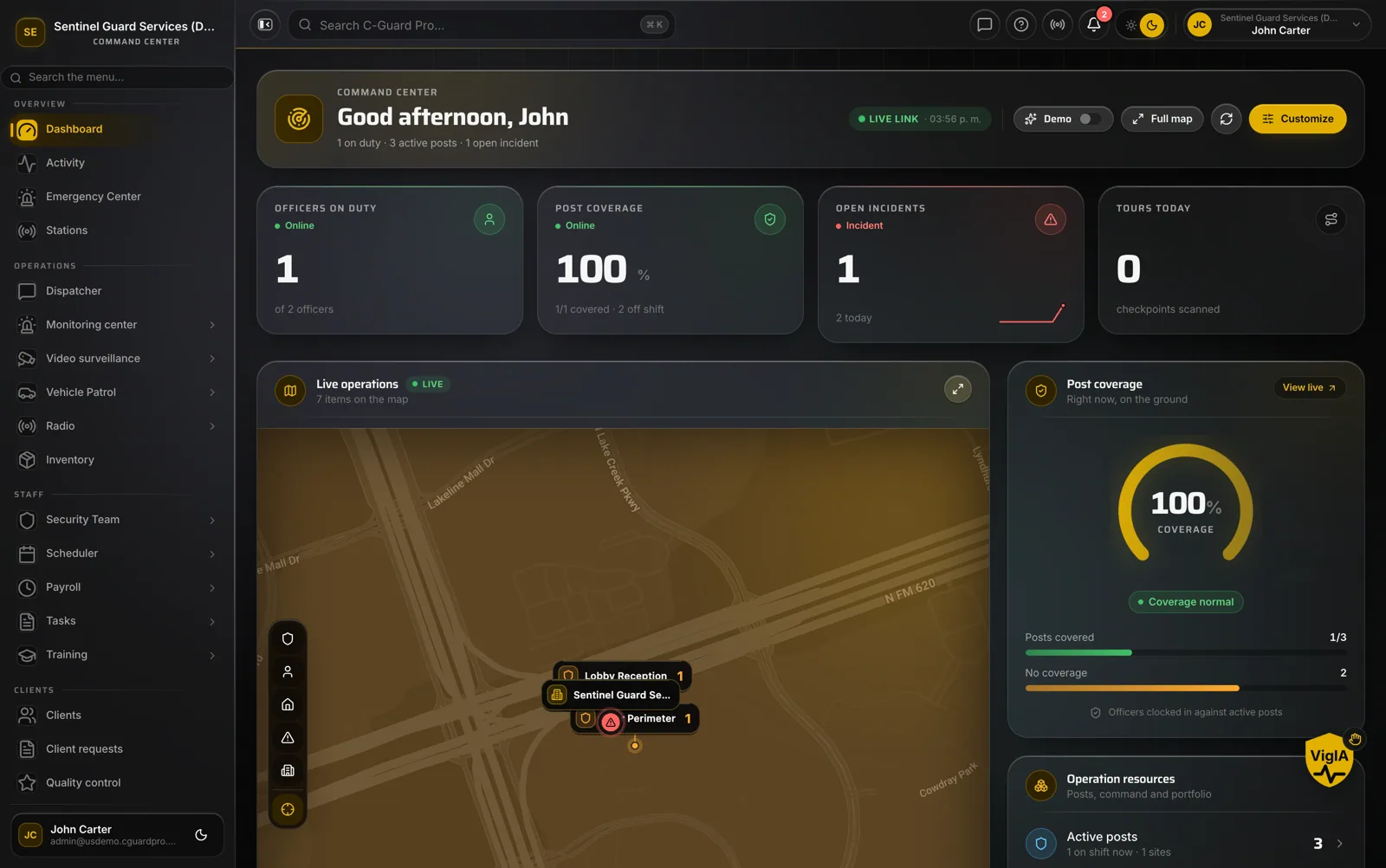
The board everyone looks at
The huddle only works if it is anchored to a shared view. If people are reading from their own notes, the meeting becomes a series of unverifiable claims and it lengthens every week until somebody kills it.
The board should show, for today: coverage status by site, open shifts, exceptions from the last twenty-four hours, and open incidents. Everyone looks at the same screen. Facts come off the board; the conversation is about what to do, not about what happened.
This is what makes fifteen minutes achievable. When the exceptions are already listed, nobody has to recount the night. When open shifts are already visible in scheduling, the discussion is about who is going to fill them, not about which ones are open. The huddle is a decision meeting sitting on top of a record that maintains itself.
It also produces an honest side effect: if the board is wrong, the huddle exposes it immediately, publicly, every day. Teams that huddle on a shared board end up with dramatically cleaner operational records within a couple of months, not because anyone launched a data-quality initiative but because errors become visible in front of colleagues daily.
The rules that keep it from becoming a meeting
Fifteen minutes, timed, ended on time even mid-sentence. The discipline is the product. A huddle that regularly runs long becomes a meeting people dread and then skip.
Standing up, or on a call with cameras on. Physical discomfort is a feature.
Same time every day. Immediately after the overnight-to-day transition is usually right, because that is when the information is freshest and the day is still changeable.
Exceptions only. Anything normal is skipped. If someone reports routine activity, the answer is that it belongs on the board.
No problem solving in the room. This is the rule that fails most often. When a real issue surfaces, the huddle names an owner and a time and moves on. Two people stay after. Everyone else leaves. A huddle where three people watch two people solve a problem has wasted its most expensive resource.
Everyone speaks. If someone has nothing, they say “nothing” and that takes a second. Silence from a role is information — either that role is disconnected from the day’s work or they have stopped participating.
One owner runs it. Usually the operations manager. Not the owner of the company, who should attend and mostly listen, because a huddle the owner dominates turns into a status report performed for the owner rather than a coordination tool for the team.
Who is in the room
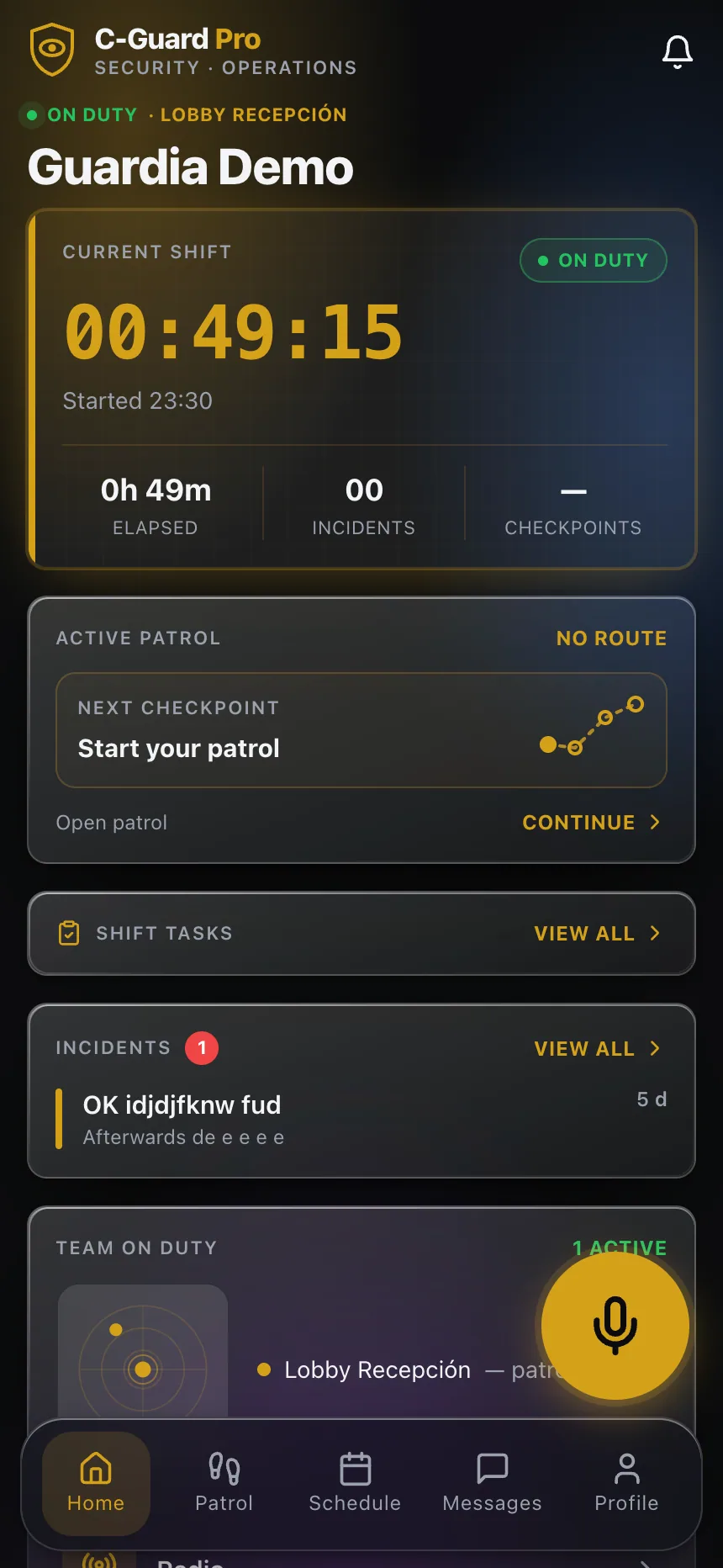
Keep it small and operational: operations manager, scheduler or dispatcher, field supervisors (in person or dialing in from a vehicle), and whoever holds client relationships. That is usually enough.
Field supervisors are the most commonly excluded and the most important to include, because they are the only people who have physically been at the sites. A supervisor who says “the new officer at the north gate is struggling” has just prevented a client complaint, and there was no other mechanism by which that sentence was going to reach the scheduler.
Officers are not in the huddle. Their equivalent is the shift briefing at the post, which is a different thing with a different purpose, and the connection between the two is that decisions made in the huddle should reach the field the same day — through post orders, through dispatch, or through their supervisor.
A weekly companion, not a longer daily
Do not let the huddle absorb weekly work. Trends, client performance reviews, recruiting pipeline, financial results and process changes belong in a separate weekly session, because they need thirty focused minutes and they will destroy a fifteen-minute daily if allowed in.
The daily is about today and tonight. The weekly is about patterns. Keeping them apart is what allows the daily to stay short enough that people keep showing up.
Starting one
Announce it for two weeks as a trial. Same time, four questions, board on screen, fifteen minutes. Run it yourself for the first week, then hand it to the operations manager. At the end of two weeks ask the team whether it should continue — and take the answer seriously, because a huddle nobody values is worse than no huddle.
Expect the first several to run long and feel awkward. Expect people to bring problems rather than exceptions. Both correct themselves once the format is familiar, usually within a couple of weeks, and what you get afterward is a team that knows the same things at the same time and a manager who finds out about risk while it can still be changed.
If you want to see the shared board a huddle runs on — live coverage, open shifts, exceptions and open incidents in one view — explore CGuardPro or get in touch.