The contract is signed, the start date is set, and then the client’s safety manager sends an email with an attachment. Contractor orientation, four hours, must be completed before site access. Badge photos submitted two weeks in advance. Background screening to the client’s standard, which is not your standard. Drug testing through the client’s designated provider. Hard hat, steel toe, high-visibility vest, and a specific class of eye protection. Annual refresher.
None of that was in the bid. All of it is now yours. Client site compliance is the category of obligation that arrives with the account rather than with the regulator, and it is the one most likely to cost you money you did not price, because it scales with turnover and turnover in this industry is not small.
This post is general orientation, not legal advice. What a property owner may require of contractor personnel, what your own obligations are as the employer, and how liability is allocated between site owner and contractor depend on the contract, on state law and on industry-specific regulation that varies and changes. Verify the specifics with counsel.
The obligations that actually show up
The set varies by industry, but the shape repeats. It is worth knowing the full list before you quote, because each item has a cost and a lead time attached.
Site orientation and safety training. Common on industrial, energy, healthcare, port and construction properties. Sometimes a video and a quiz. Sometimes a full day in a classroom, in person, on a schedule the client sets. The critical variable is not the length but the frequency: if it must be repeated annually, and your officers turn over faster than that, you will run this cost continuously.
Badging and credentialing. Photo, application, sometimes a separate background check run by the client or a third-party credentialing service, sometimes a fee, and almost always a lead time measured in weeks. On regulated sites — ports, airports, some federal, healthcare and utility properties — the credential is issued by an authority rather than the client, putting the timeline outside anyone’s control.
Background screening to the client’s standard. Often deeper than your own. Sometimes it disqualifies people your own standard would accept, which means the pool of officers eligible for that account is smaller than your roster and you need to know that before you commit to coverage.
Drug and alcohol testing. Pre-access testing, random pools, post-incident protocols, sometimes through a specified vendor. Random pool participation is an ongoing administrative obligation, not a one-time event.
Health requirements. Common in healthcare. Immunization records, tuberculosis screening, sometimes fit testing for respiratory protection.
PPE and uniform standards. Sometimes a different uniform than your own. Frequently task-specific protective equipment. Fit testing where it applies.
Confidentiality and data handling. Officers see a great deal. NDAs, restrictions on cameras and phones — which can conflict with your own reporting workflow if you have not thought it through — and in healthcare, patient privacy training.
Access and IT rules. Which doors, which keys, which system logins, what may be photographed, whether personal devices are permitted in certain areas at all.
Insurance and contractual terms. Additional insured status, specific limits, waivers of subrogation, indemnity language and audit rights — all of which flow into your operation whether or not anyone there reads them.
The cost nobody prices
Each item above has three separate costs, and bids usually capture only the first.
The direct cost is the badge fee, the test, the equipment. Visible and easy to quote.
The labor cost is the officer’s time completing it. A full-day orientation is a paid day producing no billable hours. If the client will not pay for it — and many will not — it comes out of your margin on every officer you ever assign to that site.
The turnover multiplier is the one that ruins accounts. Onboarding cost is not a one-time expense; it recurs every time you place a new officer. An account with a long orientation and a slow badging process is an account where turnover is disproportionately expensive, and where a single resignation can leave you unable to cover a shift for weeks because nobody else is badged.
That last point deserves emphasis because it is an operational trap, not just a financial one. On a site with a three-week credentialing lead time, your ability to fill a callout is limited to the officers who already hold the credential. If that number is three and one is on vacation and one calls out sick, you have a coverage failure that no amount of recruiting can solve on the night it happens.
The correct response is to deliberately over-badge. Credential more officers than the schedule strictly requires, treat that surplus as the cost of coverage on that account, and price it into the bid. Owners resist this because it looks like waste right up until the night it is the only thing preventing an uncovered post.
Site eligibility is a scheduling constraint
Here is where inherited compliance turns from an administrative topic into an operations one. Every requirement above creates a rule of the form: this officer may work this site only if this condition is currently true.
That is a scheduling constraint, and it needs to live where the schedule lives. The failure mode is predictable — a supervisor filling a callout at 9 p.m. sends the nearest officer, who is not badged for the site, and one of three things happens. They are turned away at the gate and the post goes uncovered. Or a sympathetic guard at the client’s gate lets them in anyway, which is worse, because now your uncredentialed officer is on a site under a contract that says they are credentialed. Or the client’s system logs an access denial and the account manager gets a call in the morning.
The controls that prevent this are unglamorous:
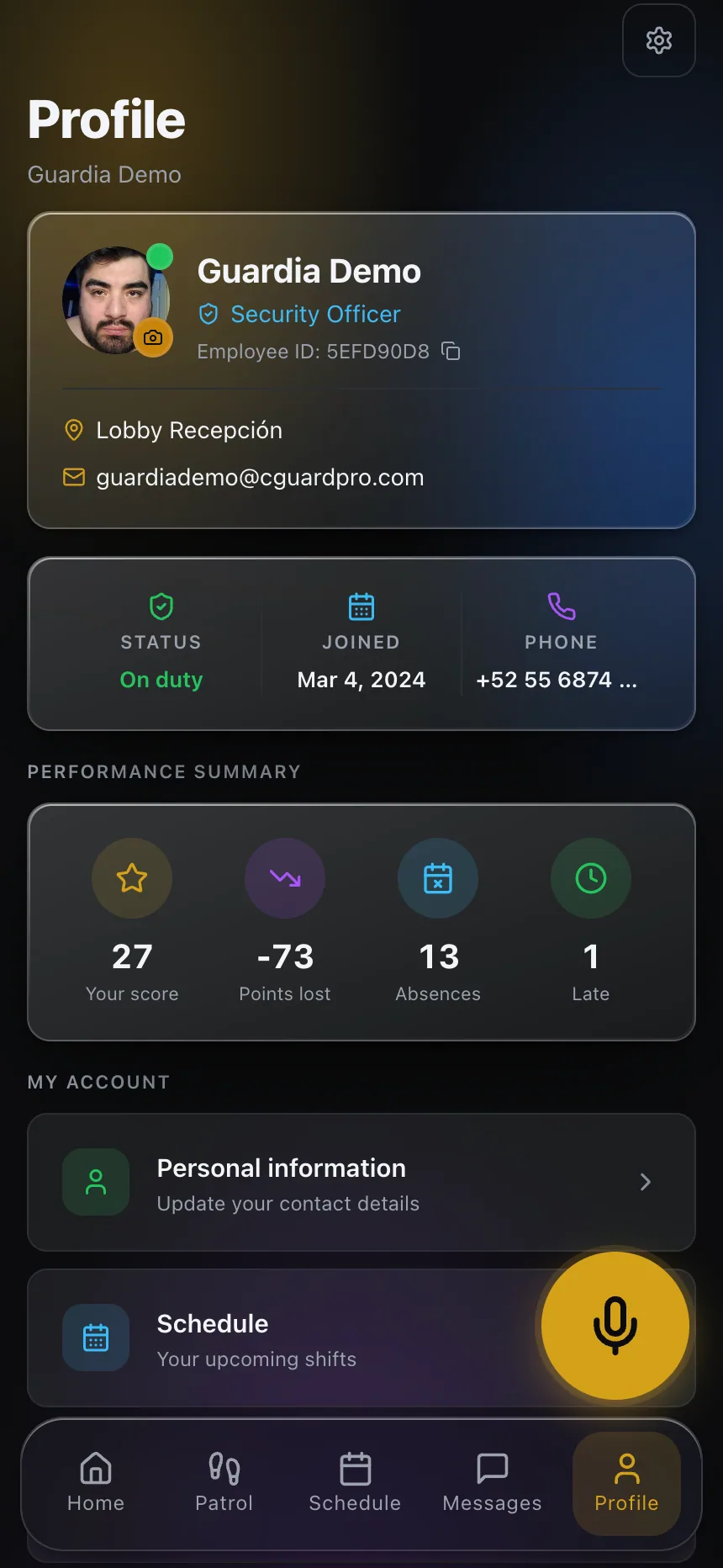
Record site eligibility on the officer, not in a folder. Which sites this person is cleared for, which credentials they hold, and when each expires.
Make the scheduler see it. Scheduling software that knows which officers are eligible for a given post turns the question into a filter rather than a memory test. The person under pressure at 9 p.m. should not be able to place an ineligible officer without knowing they are doing it.
Track expiry the same way you track licenses. Client credentials expire, orientation refreshers come due, and annual health requirements recur. A badge that expires quietly is a coverage failure waiting for a specific date.
Assign an owner per account. Someone who knows the requirements of that site specifically, who maintains the roster of eligible officers, and who is responsible for keeping the surplus above the minimum.
Getting ahead of it during the bid
The best time to deal with inherited compliance is before you have agreed to a rate.
Ask, in writing, during the bid: what orientation is required, how long, how often, and who pays for the officer’s time. What badging is required and what the lead time is. What screening and testing standards apply, through which provider. What PPE is required and who supplies it. What health requirements apply. And what the client expects when no credentialed replacement exists — the honest answer to that shapes your staffing model.
Then put the answers in the agreement. Whether orientation time is billable, whether badge fees are reimbursed, and what the notice period is when the client changes its requirements mid-contract. That last clause matters more than it sounds: clients revise site access rules, and a new requirement imposed with two weeks’ notice can strand your entire roster.
Prove it continuously, not annually
The final piece is evidence. When a client audits — and on regulated sites they do — they will ask who worked which shifts and whether each of those officers was credentialed on those dates. Answering from memory is not an option.
Two records answer it. Time and attendance shows who was actually on post and when. The officer record shows what credentials each held and through what date. Together they produce a defensible answer to a question that is otherwise impossible to reconstruct.
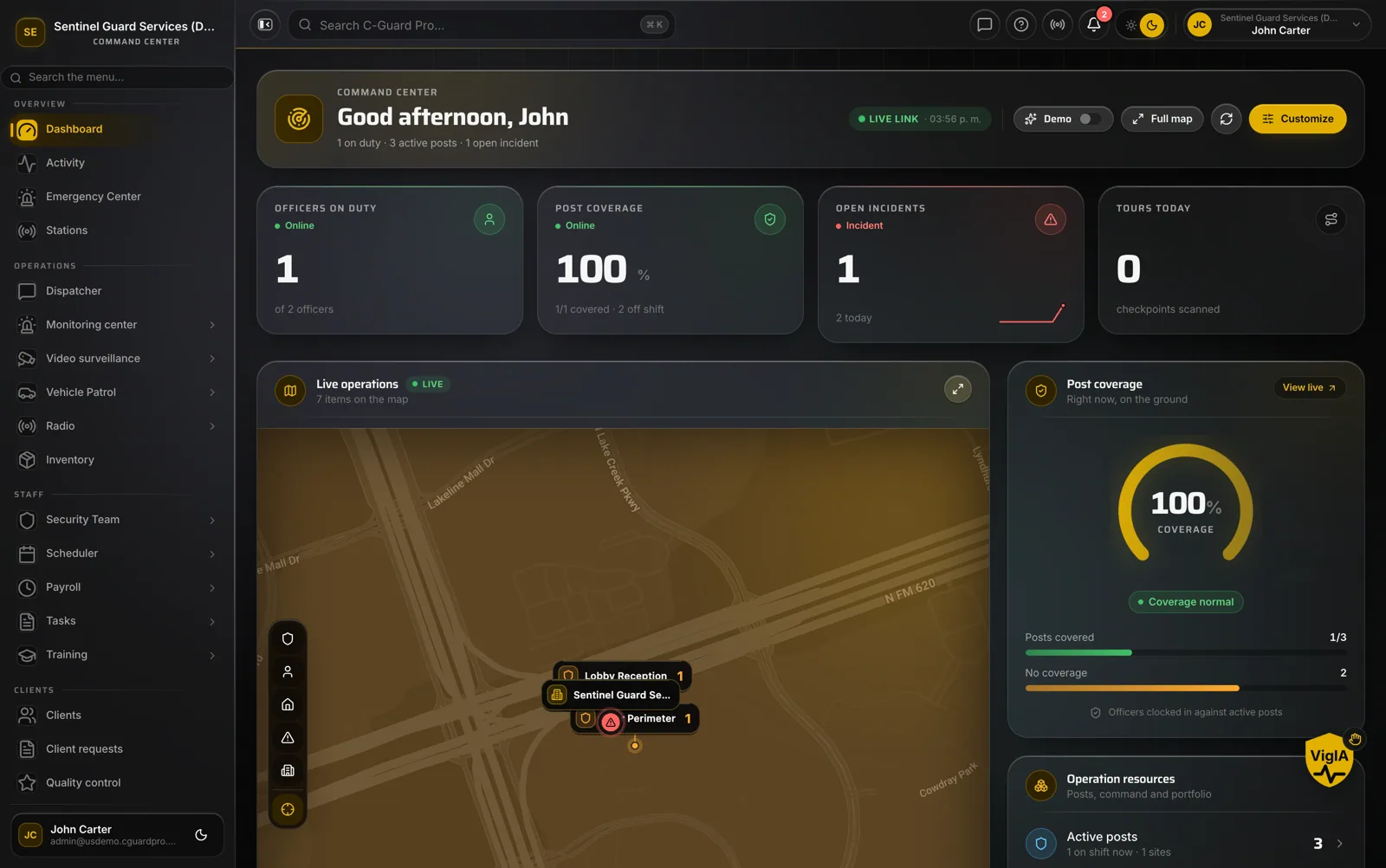
Giving the client visibility into their own coverage through a client portal changes the tone of these conversations entirely. A client who can see nightly activity reports and coverage as it happens is not building a case; they are managing their property alongside you. That is a materially better relationship, and it tends to survive the night something goes wrong.
Inherited compliance is not a burden to resent. Where it is heaviest, it is also the barrier that keeps casual competitors out. Price it honestly, run it properly, and it becomes a reason clients stay.
If you want to see how site eligibility, scheduling and client visibility work together, explore CGuardPro or get in touch.