Nobody loses a security license because they decided not to renew it. They lose it because the renewal notice went to an old mailing address, or the person who used to handle it left the company, or the qualifying manager’s own credential expired three weeks before the company license did and nobody connected the two. Security license renewal is not a paperwork task. It is a calendar discipline, and the companies that treat it as such are the ones that never have to explain a lapse to a client.
This post is general orientation for contract security operators, not legal advice. Licensing requirements — what is licensed, who must be registered, how long a credential lasts, what continuing training is required, and what happens when something expires — vary by state and jurisdiction and change over time. In Texas, the regulator to verify with is the Texas Department of Licensing and Regulation (TDLR). In other states it may be the state police, a department of public safety, a private security board, or a city or county authority on top of the state. Confirm every specific with your regulator and with counsel before you rely on it.
Why a lapse costs more than the renewal ever would
The direct consequence of an expired credential is whatever the regulator decides. The indirect consequences are usually worse and land faster.
Start with the client contract. Most contract security agreements contain a representation that the provider holds and will maintain all licenses required to perform the work, and that officers assigned to the site are properly registered. A lapse is a breach of that representation, whether or not anyone gets hurt. It can hand a client a termination right they were already looking for, and it can be discovered during a routine audit rather than after an incident.
Then insurance. Carriers write policies on the assumption that the insured is a licensed operator performing licensed work. A coverage dispute after a serious incident is the worst possible moment to discover that a credential was expired on the date of loss. Verify with your broker how your specific policies treat licensing status; do not assume.
Then the officer level. If an individual officer’s registration has lapsed, that officer is standing a post they may not be permitted to stand. Every hour they work is exposure, and every DAR they file is a dated record of that exposure. Pull them off post first and sort out the paperwork second — that ordering is not negotiable.
The two clocks you have to run at once
Most operators track the company license and forget that it is the smaller of two problems. There are two separate renewal clocks, and only one of them is annual and predictable.
The company clock
The company clock covers the business entity itself: the license to operate as a contract security provider, whatever registrations the qualifying or designated manager must hold personally, the surety bond and insurance certificates that typically have to be on file, the registered agent and address of record, and any branch office registrations if you operate from more than one location. This clock has a handful of dates on it. It is easy to manage badly because it comes up rarely enough that nobody builds a habit around it.
Two failure modes dominate. The first is address of record: renewal notices, deficiency letters and audit requests go to whatever address the regulator has, and companies move offices without updating it. The second is the qualifying manager. If your license depends on a designated individual holding a current credential, and that individual resigns, retires, or lets their own registration lapse, the company license can be affected. Know who your qualifier is, know when their credential expires, and know what your plan is if they walk out on a Friday.
The officer clock
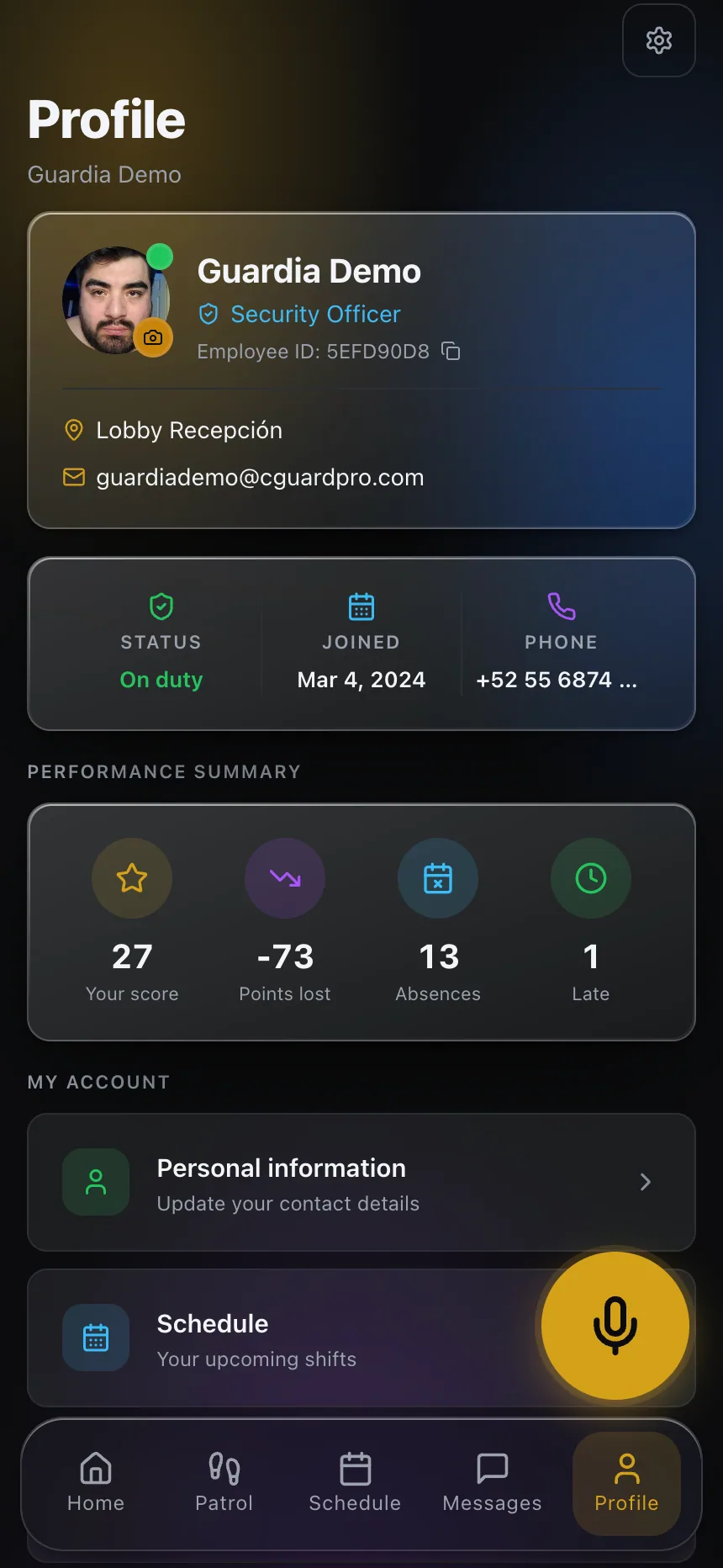
The officer clock has as many dates on it as you have officers, and it never stops moving. Every guard registration, every commissioned or armed endorsement where applicable, every continuing training or requalification requirement, every driver’s license for officers who run vehicle patrol, and every site-specific credential a client imposes on top of the state requirement.
This is where a spreadsheet quietly fails. A spreadsheet tells you a date. It does not tell you that the officer with the expiring credential is scheduled for four twelves next week at your largest account. Renewal tracking only becomes useful when it is connected to the schedule.
Building the checklist that actually holds
A renewal checklist is worth building once and running forever. The structure below is what tends to survive contact with a real operation.
Inventory everything that expires. Not just licenses. Bonds, certificates of insurance, the qualifier’s credential, armed endorsements, first aid and CPR cards, defensive driving certificates, client-issued site badges, TWIC or equivalent port credentials if you work those accounts, and any customer-mandated training. If it has an expiration date and its absence would stop someone from working, it belongs on the list.
Put the owner’s name next to each item. Not a department. A person. “Operations” does not renew anything.
Set three tiers of lead time. A long-lead warning for anything requiring fingerprinting, a background re-check, coursework or a state processing queue — those cannot be fixed in a week. A medium warning for straightforward renewals. A short warning that escalates to a manager. The point of three tiers is that the first one gives you time to act and the last one gives you time to protect the schedule.
Define the hard stop. Write down, in advance, the rule that an officer whose required credential has expired does not go on post. Then make sure whoever builds the schedule can see credential status while they are building it, because the person under time pressure at 5 p.m. filling a callout is not going to open a separate spreadsheet.
Keep the evidence, not just the fact. When a renewal completes, file the actual document — the credential image, the certificate, the receipt — with its issue and expiry dates. In an audit, “we renewed it” is an assertion. The document is proof.
Where the schedule and the credential meet
The reason credential tracking belongs inside your operations system rather than beside it is simple: the moment of highest risk is the callout. A supervisor at ten at night, covering a no-show at an account that cannot go dark, will take the first officer who answers the phone. If nothing in that moment surfaces an expired card, the expired card goes on post.
When credential data sits with the officer record and the scheduling view reads from it, the check happens by default instead of by memory. Guard scheduling software that knows which officers are eligible for which posts turns a compliance question into a filtering question. Client-imposed site requirements can be handled the same way: if an account requires a specific orientation before an officer works it, the schedule should reflect that constraint, not a note in someone’s inbox.
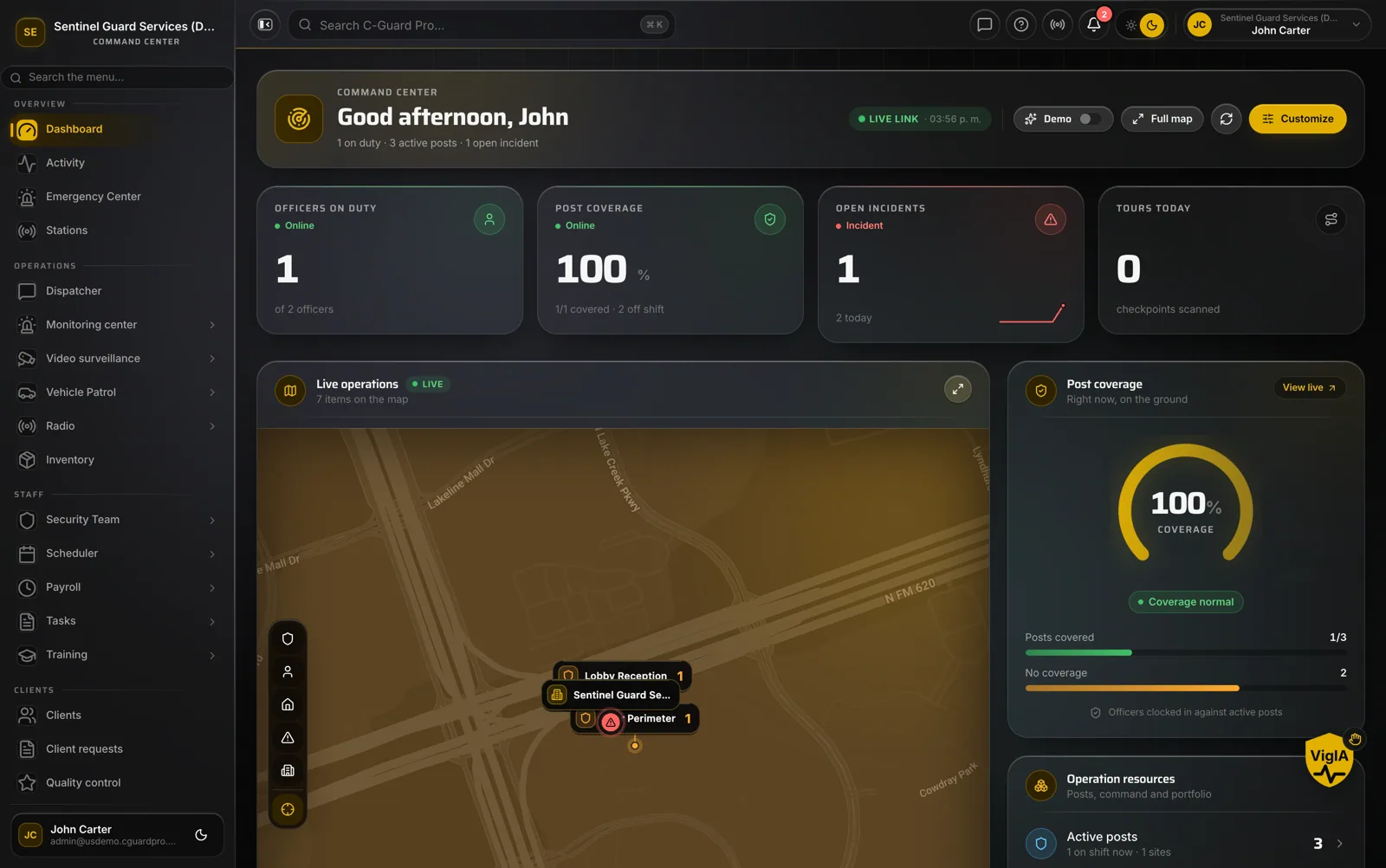
The management view matters too. Someone needs a single place that answers “what expires in the next ninety days and who is on it,” and that view needs to be true without anyone maintaining it by hand. That is the difference between a checklist that works and one that gets rebuilt every year after something goes wrong.
The quarterly walk-through
Once a quarter, spend an hour on this: confirm the address of record with the regulator, confirm the qualifier’s credential status, confirm the certificate of insurance on file for every active client matches the coverage you actually carry, and pull the list of everything expiring in the next two quarters. Then check one thing at random — pick an officer, pull their file, and see whether the record matches reality. If it does, your process works. If it does not, you just found the gap on a quiet Tuesday instead of during an audit.
Licensing is one of the few areas in this business where the failure is entirely preventable and entirely your fault when it happens. The checklist is not glamorous. It is just the thing that keeps your officers on post and your contracts intact.
If you want to see how credential tracking, scheduling and the officer mobile app fit together in one operation, explore CGuardPro or get in touch.