There is no national security guard license in the United States. There is no single agency, no common curriculum, and no automatic portability across state lines. Security guard license requirements are set state by state, sometimes supplemented by city or county rules, and they are revised on their own schedules without any obligation to resemble each other.
This matters enormously to a contract security company, because the mistake is rarely a deliberate one. It is a company that expands into an adjacent state and assumes the rules travel with them, or hires an experienced officer from out of state and assumes their credential is valid, or wins a contract in a city that has its own registration on top of the state’s and never learns about it until an inspector shows up.
This article is general orientation, not legal advice. Requirements vary by state and by local jurisdiction, and they change over time. Nothing here should be treated as a statement of what the law currently requires anywhere. Verify every specific with the regulator that governs the jurisdiction you operate in — in Texas, that is the Texas Department of Licensing and Regulation (TDLR) — and with your own attorney.
The common shape of security guard license requirements
Despite the variation, most state frameworks are assembled from the same components. Learning the shape is more useful than memorizing any one state’s specifics, because the shape tells you what questions to ask when you enter somewhere new.
Two separate licenses: the company and the individual
Nearly every regulated state distinguishes between the license held by the security business and the credential held by the individual officer. These are separate applications, separate fees, separate renewal cycles and separate enforcement.
The company license typically carries the heavier requirements: a designated qualifying individual with defined experience or examination, insurance or bonding at specified levels, a physical business location, and ongoing obligations around recordkeeping and employee registration. Some states also require branch office licensing if you operate from more than one location.
The individual credential is usually a registration or license issued to the officer, and in many states it is tied to sponsorship by a licensed employer — meaning it may not be freely portable between companies without a notification or transfer step.
An application with a background component
Fingerprint-based criminal history review, at the state level and often federally as well, is close to universal. States differ substantially in what disqualifies an applicant, whether disqualification is permanent or time-limited, and whether a waiver or appeal path exists.
Two operational points follow. First, the fingerprinting and results process takes time, and that time is not always predictable — build it into hiring rather than discovering it when a client wants an officer on post Monday. Second, an officer’s eligibility can change after hiring. Many states require reporting of subsequent arrests or convictions, and continuing to deploy an officer who has become ineligible is a serious exposure for the company.
Minimum qualifications
Age minimums, legal work authorization, and in some jurisdictions education, language or physical requirements. Armed roles almost always carry a higher age minimum and additional eligibility criteria than unarmed roles.
Pre-assignment and ongoing training
This is where states diverge the most. Some require a defined training course before an officer can work at all; some allow a provisional period during which training must be completed; some require annual or periodic refresher training; and some have comparatively minimal requirements for unarmed work.
Curriculum content differs too — legal authority and use of force, report writing, emergency procedures, first aid, de-escalation, and increasingly topics specific to certain assignment types. Whether the training must be delivered by an approved provider, and what documentation must be retained and for how long, also varies.
Do not assume a course accepted in one state satisfies another. Frequently it does not, even when the content is substantively similar.
An armed endorsement as a separate credential
Where a state permits armed private security, authorization to carry on duty is normally a distinct credential layered on top of the base one, with its own training, its own qualification requirement, its own renewal cycle and often its own firearm restrictions. Holding a personal carry permit is generally not the same thing as being authorized to carry as a security officer on duty, and conflating the two is one of the more dangerous misunderstandings in the industry.
Renewal, and the way it fails
Every credential expires. Renewal cycles differ in length, in whether continuing education is required, and in how much grace exists after expiration.
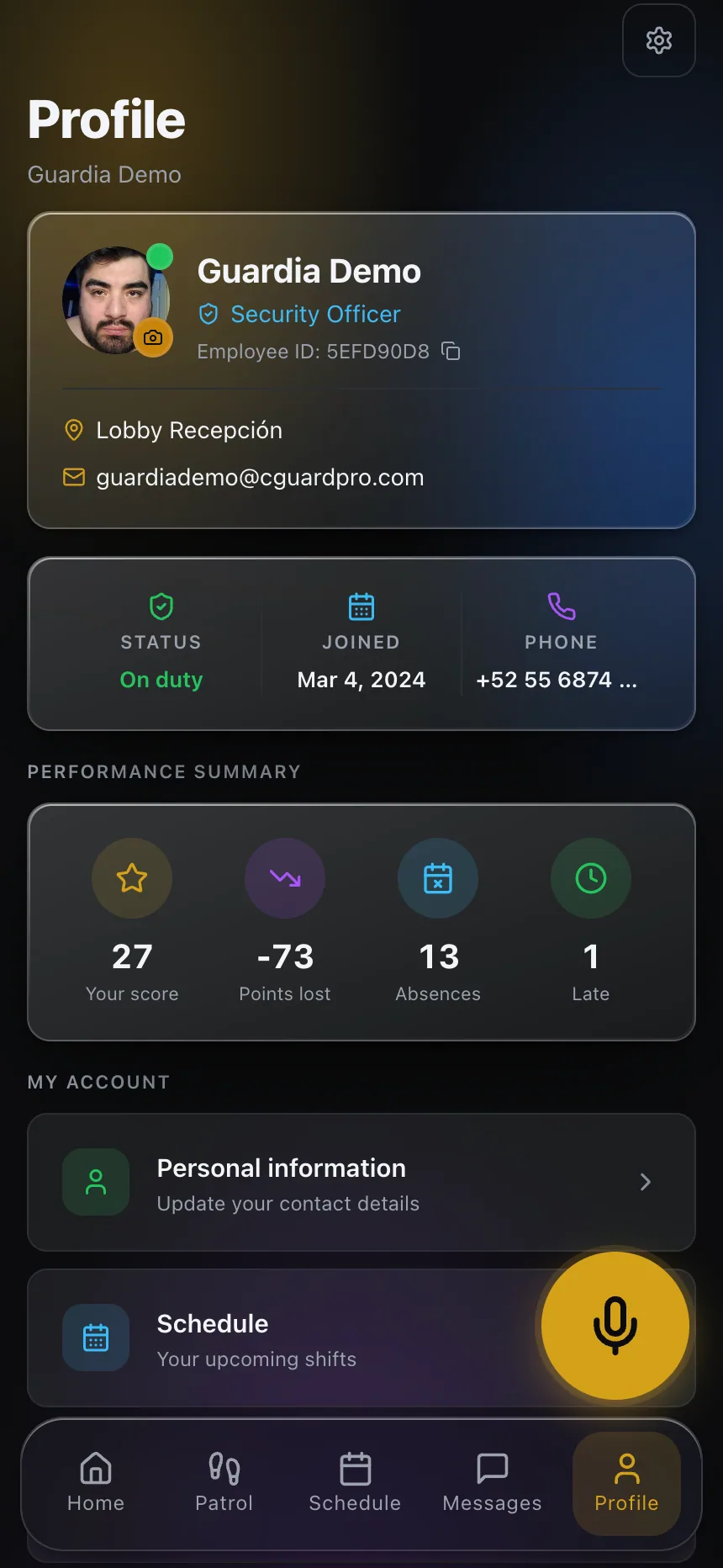
The failure mode is always the same and it is entirely administrative: an officer works a shift on an expired credential because the renewal reminder went to a personal email address that changed, or the supervisor filling a callout at 11 p.m. did not know. The officer is exposed, the company is exposed, and if there is an incident that night, the client’s insurer will find it.
The defense is unglamorous. Credential expiry dates need to live in the same system that assigns officers to posts, with warnings well in advance and a hard stop at the point of scheduling. Tying attendance and post assignment to a current credential is the only reliable way to prevent an expired officer from being scheduled during a scramble, because the scramble is exactly when nobody has time to check a spreadsheet.
Where states genuinely diverge
Whether unarmed guards are licensed at all. Some states regulate individual unarmed officers closely; others regulate primarily at the company level and require comparatively little of the individual.
Training volume and content. The gap between the lightest and heaviest states is very large.
Reciprocity. Some states recognize credentials or training from certain other states; many do not. Assume no portability until you have confirmed otherwise in writing.
Local layers. Certain cities and counties impose their own registration, permit or badge requirements on top of state licensing. These are easy to miss because they are not published where you look for state rules.
Uniform, insignia and vehicle rules. Restrictions designed to prevent confusion with law enforcement — colors, badge design, patch wording, vehicle markings and light bars — differ meaningfully and are actively enforced in some jurisdictions.
Detention authority and use-of-force expectations. What an officer may lawfully do is a matter of state law and is not uniform.
Recordkeeping obligations. What the company must retain, in what form, and for how long, and what an inspector may demand on site.
Practical compliance for a multi-state operation
Treat each state as a separate compliance program. Not a variation on your home state. Build a checklist per state from the regulator’s own published materials and re-verify it periodically, because rules change without notifying you.
Assign an owner. One named person responsible for licensing status, company and individual, with authority to stop a deployment. Diffuse responsibility means nobody checks.
Verify before deployment, not after hire. The credential must be confirmed valid for the state and the assignment type before an officer is scheduled.
Keep the documentation retrievable. An inspection or an audit asks for records at the time it asks. Training certificates in a filing cabinet at an office that is closed on Sunday are functionally missing.
Give the officer their own record. Officers who can see their credential status and expiry in the same mobile app they use for their shift are far more likely to renew on time than those who rely on the office to remind them.
When you enter a new state, budget the lead time. Company licensing, insurance, a qualifying individual, and individual registrations all take longer than a sales cycle. Companies that win work first and apply second end up subcontracting their own contract.
The underlying discipline is simple to state and hard to sustain: know exactly which credentials each officer holds, when each expires, and which jurisdiction each is valid in — and make it structurally impossible to put someone on post without that being true.
If you want to see how credential tracking and post assignment fit together in daily operations, explore CGuardPro or get in touch.