A client asks for an armed security officer in Texas on a post that has been unarmed for years. Maybe there was an incident, maybe a tenant is nervous, maybe the property is a cash business or a dispensary or a site where the last vendor’s unarmed officer was assaulted. The bill rate is higher, the contract is larger, and the temptation to say yes quickly is real.
Putting an armed officer on that post is not a staffing decision with a price adjustment. It changes the credential the officer must hold, the training and qualification behind it, the insurance you need, the supervision you owe, the documentation you must produce, and the exposure your company carries if something happens. Companies that treat it as an upsell rather than a different line of business tend to find that out at the worst possible moment.
This article is general orientation, not legal advice. Private security in Texas is regulated by the Texas Department of Licensing and Regulation (TDLR), requirements change over time, and specifics depend on the role and circumstances. Confirm current rules directly with TDLR and with your own attorney and insurance broker before deploying anyone armed. Nothing here should be relied on as a statement of what the law currently requires.
An armed security officer in Texas holds a different credential
In Texas, as in most regulated states, authorization to work armed as a security officer is a distinct credential with its own eligibility criteria, its own training and firearm qualification component, and its own renewal cycle — separate from the registration that covers unarmed work. TDLR defines the categories, the requirements and the process; confirm the current names and criteria with them rather than relying on what was true when you last hired.
Two misconceptions cause most of the trouble in the field.
A personal license to carry is not the same thing as being authorized to carry on duty as a security officer. They are different credentials issued for different purposes under different rules. An officer who holds one does not thereby hold the other.
Prior experience does not substitute for the credential. Former law enforcement and military applicants often assume their background carries over. Regulators generally do not work that way. Whatever an officer did before, the requirement is the requirement.
A third practical point: the credential is what makes the deployment lawful, and it can lapse. An armed officer working a post on an expired authorization is a problem of a different magnitude than an unarmed officer in the same situation, because the incident that exposes it will be a serious one.
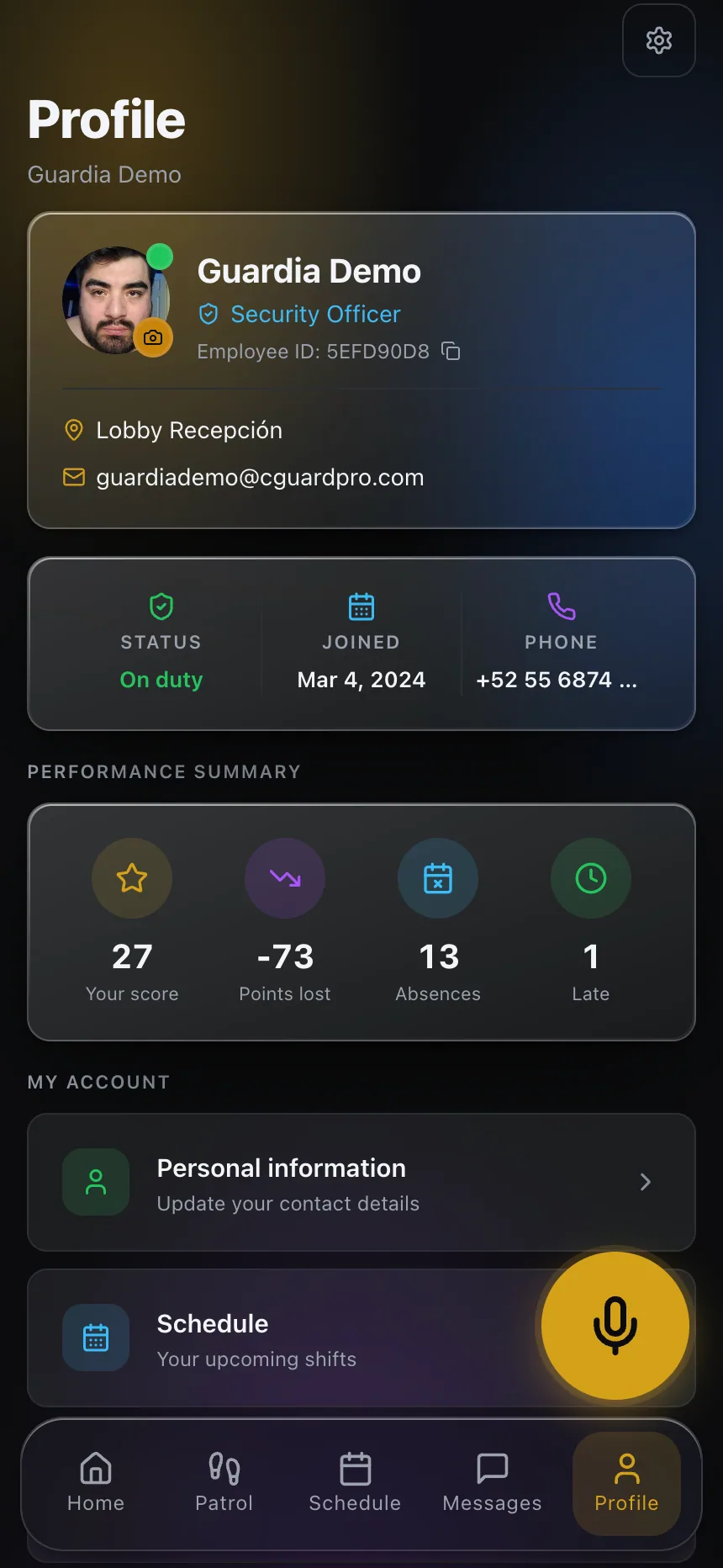
Which means credential expiry cannot live in a spreadsheet that somebody checks on Fridays. It has to be attached to the person in the same place where assignments are made, warning well ahead of expiry and blocking assignment to an armed post when it lapses — including at 11 p.m. when a supervisor is covering a callout and has no time to verify anything.
What changes operationally
Post orders become far more specific
Unarmed post orders can be general about response: observe, report, call. Armed post orders cannot be. They must define what the officer is there to do and, more importantly, what they are not there to do.
Written expectations that need to be explicit and unambiguous include the scope of patrol, whether the officer is expected to intervene physically at all, what the client wants when a crime is in progress, how detentions are handled and documented, when law enforcement is called, and the requirement to report every draw or display of a weapon regardless of outcome.
The reason to write this down precisely is that ambiguity resolves in the moment, at speed, by a single person, and afterward everyone will have an opinion about what should have happened. The post orders are what the officer had.
Supervision has to be real
An armed post requires a supervisory structure that actually functions at 3 a.m.: a named supervisor reachable in minutes, defined escalation, and documented site visits. If your field supervision consists of a phone that goes to voicemail after 6 p.m., you are not ready to staff armed work regardless of what the officer’s credential says.
Reporting standards rise
Every armed post should generate a complete, contemporaneous daily activity report, with any use-of-force or weapon-display event documented immediately and in detail, with time, location, participants, what was observed, what was said and what was done. Documentation created hours later, from memory, is weaker in every forum where it will eventually be examined.
The same applies to emergencies in the other direction. An armed officer who is being attacked needs to summon help without dialing — which is why a panic button that alerts dispatch and shows the officer’s location is standard equipment on armed posts rather than a nicety.
Screening and continued fitness
Whatever the regulator requires as a minimum, a company deploying armed officers should be doing more of its own screening, not less: reference checks that are actually made, a hard look at gaps in employment, and a real policy on what happens when a supervisor has a concern about an officer’s fitness for an armed assignment. That policy needs to be usable — a supervisor should be able to pull someone off an armed post pending review without needing an owner’s permission at midnight.
Insurance is a separate conversation
Armed operations affect general liability, and there are coverage questions specific to firearms exposure that are not answered by a standard policy. Some carriers exclude armed work entirely; some price it separately; some require specific hiring, training and supervision practices as a condition. Client contracts may specify limits and endorsements. Talk to your broker before you quote the work, not after you win it, because the coverage cost is part of the rate.
What changes commercially
The client’s expectations are usually wrong
Clients asking for armed coverage frequently have a mental model drawn from television. They expect intervention, pursuit and arrest. Real armed private security is overwhelmingly deterrence and presence, with a very narrow set of circumstances in which force is lawful and appropriate.
Setting that expectation before the contract is signed is a business necessity, not a disclaimer. A client who believes they bought intervention and receives observation will be dissatisfied even with flawless service — and a client who pressures officers toward intervention creates the exact conditions in which something goes badly wrong.
The rate math is different
An armed post costs more than an unarmed post for reasons beyond the officer’s pay: the credential and its maintenance, additional training, higher insurance, more supervision, tighter documentation, and a smaller labor pool that is harder to staff and harder to relieve. Pricing armed work as unarmed work plus a modest premium is how companies end up losing money on their largest contracts.
Staffing depth is the constraint nobody plans for
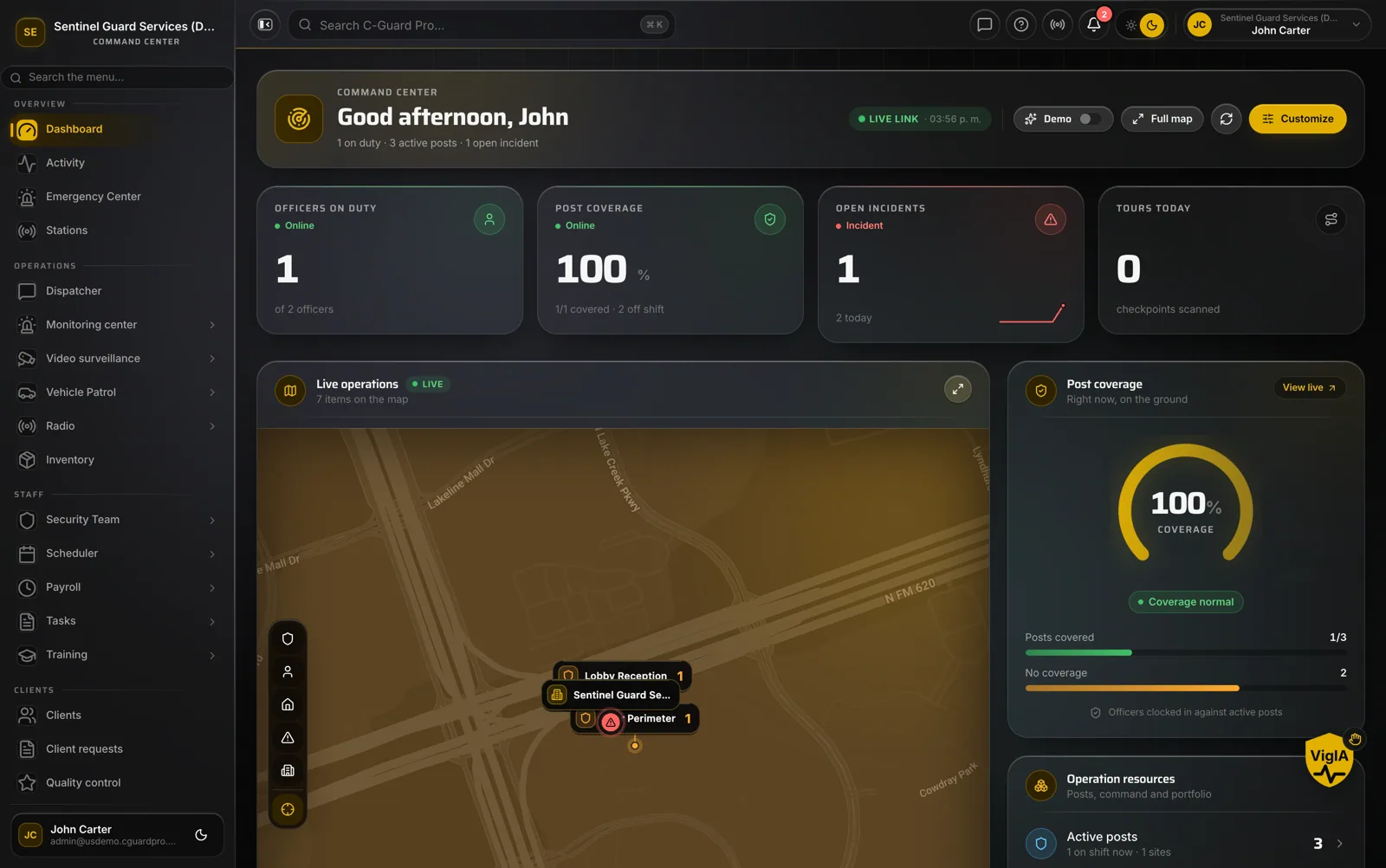
The credentialed pool is smaller. That means callouts are harder to cover, relief is harder to find, and an armed post that must be filled can quietly generate significant overtime. Before accepting an armed contract, ask a simple question: if the assigned officer calls out on a holiday, who exactly fills it? If the honest answer is “we would figure it out,” the contract is riskier than it looks.
Some clients should be told no
Not every request for armed coverage is appropriate, and not every property is one where introducing a firearm reduces risk. A site with heavy public foot traffic, an untrained client staff that expects officers to physically remove people, or a client unwilling to accept clear post orders about the limits of authority — these are situations where declining the work is the correct commercial decision. Saying so plainly is also, in practice, one of the more persuasive things a serious security company can say to a serious buyer.
The through line
Armed and unarmed are not two grades of the same service. They are different operations with different credentials, different documentation, different supervision and different exposure. The companies that run armed work well are the ones whose ordinary discipline was already tight — verified attendance, current credentials, complete reports, reachable supervision — because armed work does not create those habits, it only reveals whether they were there.
Confirm every specific with TDLR and your counsel before you act. Then make sure your own record would survive being examined.
If you want to see how credentials, assignments and documentation stay connected day to day, explore CGuardPro or get in touch.