Every security company has run the same session. Two hours in a training room, a slide about the five Ws, a handout on active voice, a worksheet where officers correct sentences about a fictional broken window, and everybody signs the attendance roster. Three weeks later the daily activity reports read exactly as they did before. Security report writing training almost always fails, and it does not fail because the content was wrong. It fails because it was delivered in the wrong place, to the wrong problem, with no feedback loop attached.
Why the classroom session does not transfer
The deficit usually is not grammar. Officers who write “0200 patrol all secure” are not confused about subject-verb agreement. They are making a judgment — mostly unconscious — about how much detail is worth writing, and that judgment was formed by watching what happens to reports after they are submitted. Which is usually nothing.
Skills learned out of context stay out of context. Correcting a sentence about a fictional broken window at 10 a.m. in a classroom is a different cognitive task from deciding, at 0343, alone, tired, whether to write down that the door’s latch plate was bent. Transfer between those two situations is poor, and one session does not build it.
Nobody sees their own writing. The single most common reason an officer writes vague entries is that they genuinely do not know they are vague. In their head the entry is complete — because their head contains the site, the door, the time and the context. They have never had anyone show them their own words and ask what a stranger would understand from them.
One event, no repetition. Writing is a habit. Habits change through repeated correction on real work, not through exposure to a principle.
What actually needs to improve
Before designing anything, be precise about the deficits. In practice there are five, and they are not equally common:
- Specificity. “Upstairs” instead of “northeast stairwell, Level 3.” “Later” instead of 0342.
- Fact versus conclusion. “Subject was intoxicated” instead of “slurred speech and unsteady gait observed.”
- Completeness of the outcome. The entry describes what was found and never says what the officer did or how it ended.
- Sequence. Events written out of order, or with gaps that make the timeline unreconstructable.
- Timeliness. Written at 0545 from memory rather than at the moment, which degrades all four of the above at once.
Pull thirty DARs from one account and tag every weak entry against that list. You will usually find that one or two deficits account for most of the problem, and that different officers have different ones. That is the case against a generic class and the case for targeted feedback.
The four-week coaching loop
This is a supervisor-run program. It costs roughly fifteen to twenty minutes per officer per week, it uses real work from real shifts, and it works one behavior at a time. Run it with a group of six to ten officers on the same account.
Week 0: calibrate the supervisors
Do this before touching an officer. Give three or four supervisors the same five real DARs (names removed) and have them each mark what needs improvement. Compare. You will find they disagree, sometimes wildly — one flags passive voice, another does not care about it and wants times, a third writes “good job” on a shift log with no outcome recorded anywhere.
Uncalibrated supervisors produce contradictory coaching, and officers respond to contradictory coaching by ignoring all of it. Agree on the standard first, in writing, using the five deficits above as the rubric.
Week 1: baseline and one rule — times and locations
Tell the group the standard for this week, and only this: every entry has a specific clock time and a specific location as named in the post orders. Nothing else changes.
Then read every officer’s work for the week and return feedback on the entry itself — not a general email, not a shift briefing. Written on the line, naming the line:
“0200 — Conducted patrol. All secure.” Which patrol, and where? Next time: the route and the checkpoint names, and the time you finished as well as started.
Specific, short, tied to something that officer wrote. Two or three comments per officer for the week. Not fifteen — a page covered in red teaches nothing except that the supervisor is unpleasable.
Week 2: fact versus conclusion
New rule, layered on: describe what you observed, not what you concluded. Introduce it with two examples from that account’s own files, one weak and one strong, both anonymized.
Weak: Homeless guy hanging around the loading dock. Told him to leave.
Strong: 2317 — Observed adult male, approx. 40s, gray hooded sweatshirt, dark pants, seated against the wall at the rear dumpster enclosure. Identified myself, advised him the property is private and that he needed to leave. He stated he was waiting for a ride. Complied and departed north on Marlow Street at 2323. No damage observed.
Officers recognize their own site instantly, and it lands in a way that a fictional example never does.
The exercise that works best this week is a rewrite. Give each officer one of their own entries from Week 1 and ask them to rewrite it to the new standard. Five minutes. Nothing teaches the difference between “aggressive” and “advanced one step with his hand raised” faster than being made to produce the second version of your own sentence.
Week 3: the outcome
New rule: every entry ends with what you did and how it resolved. This is the deficit that costs the most in real disputes and the one officers find easiest to fix once it is named. An open entry — a condition described and abandoned — is the most common defect in daily logs across the industry.
Also this week: the pass-down. Ask each officer to look at what they inherited at the start of their shift and say what they wished it had told them. That conversation changes behavior more reliably than any instruction from a supervisor, because it comes from the person who will read their work tomorrow.
Week 4: write it in the moment
The final habit, and the one that makes the other three stick: entries written when the thing happens, not reconstructed at the end of the tour.
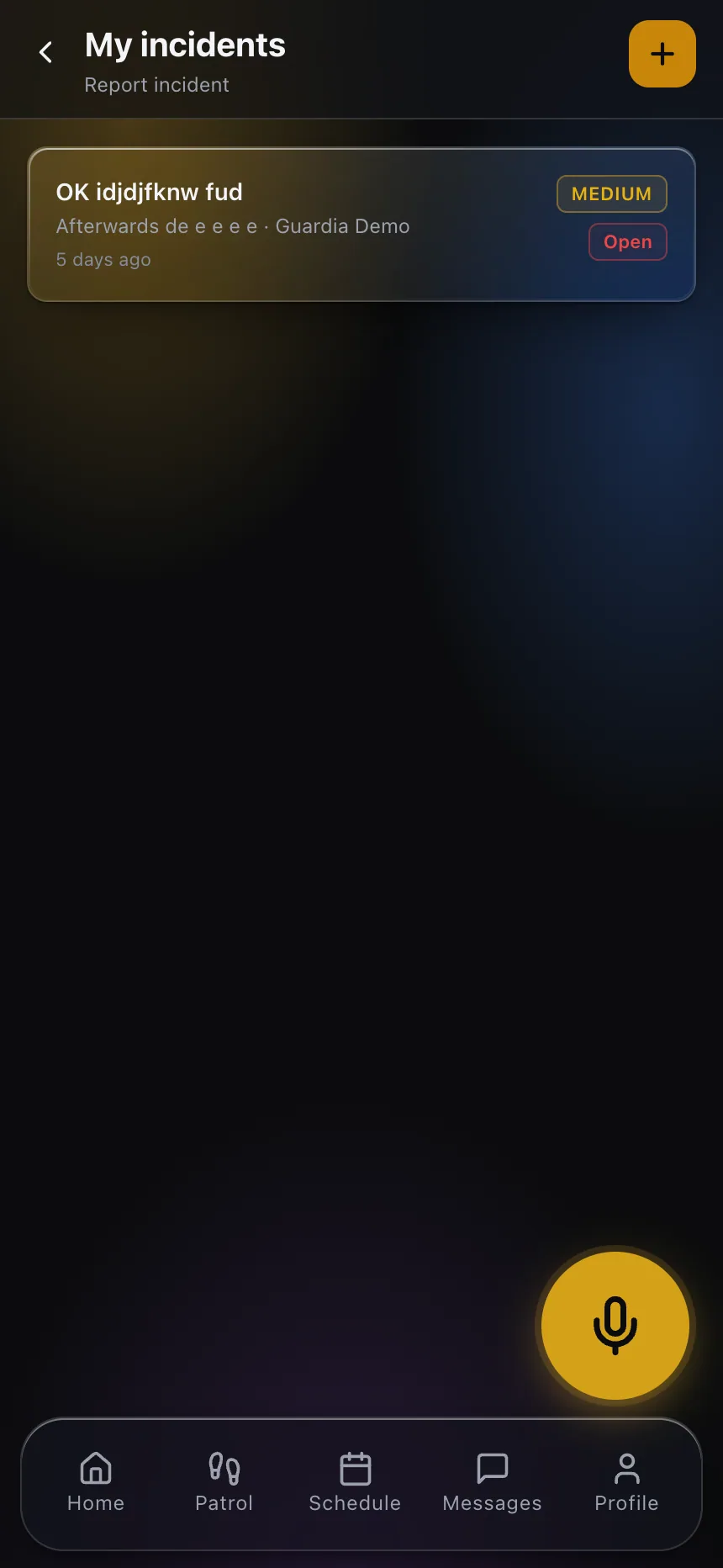
This is partly a discipline and largely a tooling question. An officer who has to walk back to a desk and open a binder will batch their writing; an officer who can write the entry on their phone at the door they just found unlocked, with the time and location captured automatically, will not. Remove the friction and the habit forms on its own.
Close the four weeks by pulling each officer’s Week 1 pages next to their Week 4 pages and showing them the pair. That comparison is the most motivating thing in the entire program, and it costs nothing.
What sustains it after the four weeks
Read what officers write. Not all of it — two or three shifts per officer per month, five minutes each. Officers can tell within a month whether anyone reads their work, and quality tracks that belief precisely. This is the entire maintenance program; everything else is optional.
Keep a model library. Six to ten genuinely excellent examples from your own accounts, kept where officers can read them. Real writing about real sites beats any template. Ask permission and use the author’s name — being held up as the standard is one of the cheapest forms of recognition available to a supervisor.
Make good writing visible in review. When an officer’s entry leads to a maintenance fix, a client thank-you or a resolved dispute, say so publicly and name the person. Officers write vaguely because vagueness has never had a consequence and specificity has never had a reward.
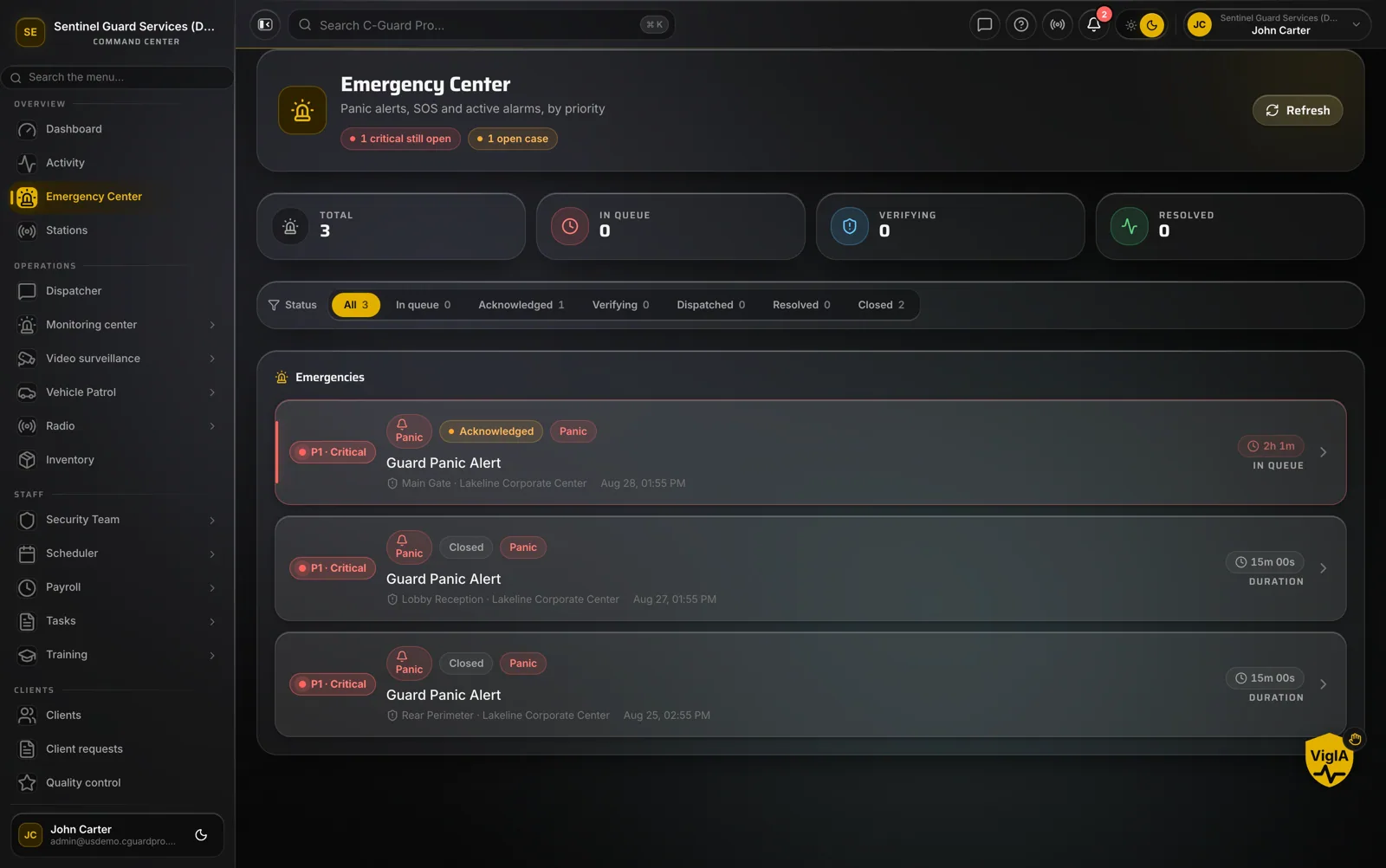
Watch the queue, not the binder. Feedback delivered a week later is barely feedback. Work that arrives as it is submitted lets a supervisor comment the same shift, while the officer still remembers the door.
The measure of success
Not attendance, not a quiz score, not a signed acknowledgment. The measure is whether something written three months from now, about an event nobody remembers, can be read by a stranger who then knows what happened. If you can pull ten random daily activity reports from any account and pass that test, the training worked. If you cannot, another classroom session will not change it — but four weeks of five-minute comments on real work will.
If you want to see how field-written entries reach a supervisor fast enough for the feedback to matter, explore CGuardPro or get in touch.