“Randomize the rounds” is one of those pieces of advice that everybody in the trade repeats and almost nobody implements. It sounds obviously correct: if the patrol is predictable, anyone watching the property can work around it. Yet random patrol schedules create real problems — for supervision, for the client relationship, and for the officer standing in a parking lot at 3 a.m. wondering when they are supposed to do the next lap. Before you change anything, it is worth being honest about what randomization does and does not buy.
Start with what the evidence actually supports
The rigorous, published research on patrol effectiveness comes overwhelmingly from policing, not from contract security, and it is about neighborhoods and vehicles rather than a fenced distribution center. Extrapolating it to a private site is an argument by analogy, not a finding. Anyone who tells you there is a settled body of evidence on optimal randomization for guard tours is selling something.
What the reasoning does support, and what practitioners consistently observe, is narrower and still useful:
Predictability is exploitable when someone is watching. This is not a research finding so much as a structural fact. A patrol on a fixed cadence creates known windows of absence. Anyone who observes the property for a few days can measure those windows. Whether anybody is actually doing that observation depends entirely on the site.
Deterrence depends on being seen, which requires some predictability. A patrol nobody ever notices deters nobody. Visible presence at the times people are around — shift change, tenant departure, closing — is a large share of what a client is buying.
Certainty of encounter matters more than frequency. Someone weighing whether to cut a fence cares about the chance of being interrupted, not the average number of laps per shift. Randomization raises perceived certainty by removing the safe window; it does not require more tours to do it.
Those three points pull in different directions, which is why the answer is never simply “randomize everything.”
When fixed schedules are the right answer
Fixed rounds get treated as the lazy option. Sometimes they are the correct one.
When the client is buying visible presence. A residential community, a retail center, a hospital campus. The value is that residents, tenants and staff see the officer at predictable moments and feel covered. Randomizing this away makes the service invisible and generates complaints that nothing is happening.
When the round is tied to an event. Lockup at closing, a dock sweep after the last truck, a stairwell check after the cleaning crew leaves. These are not patrols in the deterrence sense; they are scheduled tasks, and randomizing them means they get done at the wrong time or not at all.
When the site has one officer and a static post. If the officer must hold a lobby or a gate, tour timing is dictated by when they can leave it. Pretending otherwise produces a schedule nobody can follow.
When the contract specifies it. Some clients, and some insurance arrangements, require rounds at a stated interval. That is a commercial fact, not a security judgment. Comply, document, and if you think the interval is wrong, raise it as a recommendation in writing.
When predictability is a liability
Vacant and low-occupancy property. Construction sites, empty buildings, closed retail, storage yards. There is nobody around to be reassured, and there is often somebody around with time to observe. This is where randomization earns its keep.
Sites with a recurring loss pattern in one location. If copper keeps disappearing from the same compound, the pattern itself tells you someone has learned the schedule.
Anywhere the officer has told you the route feels stale. Officers know when they are running a metronome. They are usually the first to notice that the same vehicle is parked across the street at the same hour.
How to randomize without losing accountability
This is the actual hard part, and it is where most attempts collapse. If the schedule is unpredictable, how do you know a tour was missed? If there is no expected time, every time is on time.
The workable approach is to randomize within bounds, never without them.
Randomize the start, constrain the count and the gap
Instead of “a tour every two hours on the hour,” specify: a minimum number of tours per shift, a maximum permitted gap between tours, and a minimum gap so tours cannot be bunched together at the end. Within those constraints the officer — or the system — picks the start times. Now you have unpredictability from outside and a completely testable standard from inside. A shift with too few tours, or a gap that exceeded the maximum, is an exception you can act on.
Randomize sequence as well as timing
Changing when the tour happens but always walking the same order still leaves each individual point predictable relative to the tour start. Alternating direction, or splitting a large route into named segments run in varying order, changes the interval at each location rather than just at the front gate.
Do not let the officer be the only source of randomness
Human beings are poor random generators, and a tired officer will drift toward the same comfortable rhythm within a week. Either the system proposes the windows, or the field supervisor varies them, or you rotate a small set of pre-built patterns. Any of those beats “use your judgment.”
Keep the exceptions fixed
The event-driven rounds stay on the clock. Lockup happens at lockup. Only the discretionary patrols float. Mixing the two into one randomized pool is how a client discovers the doors were secured ninety minutes after closing.
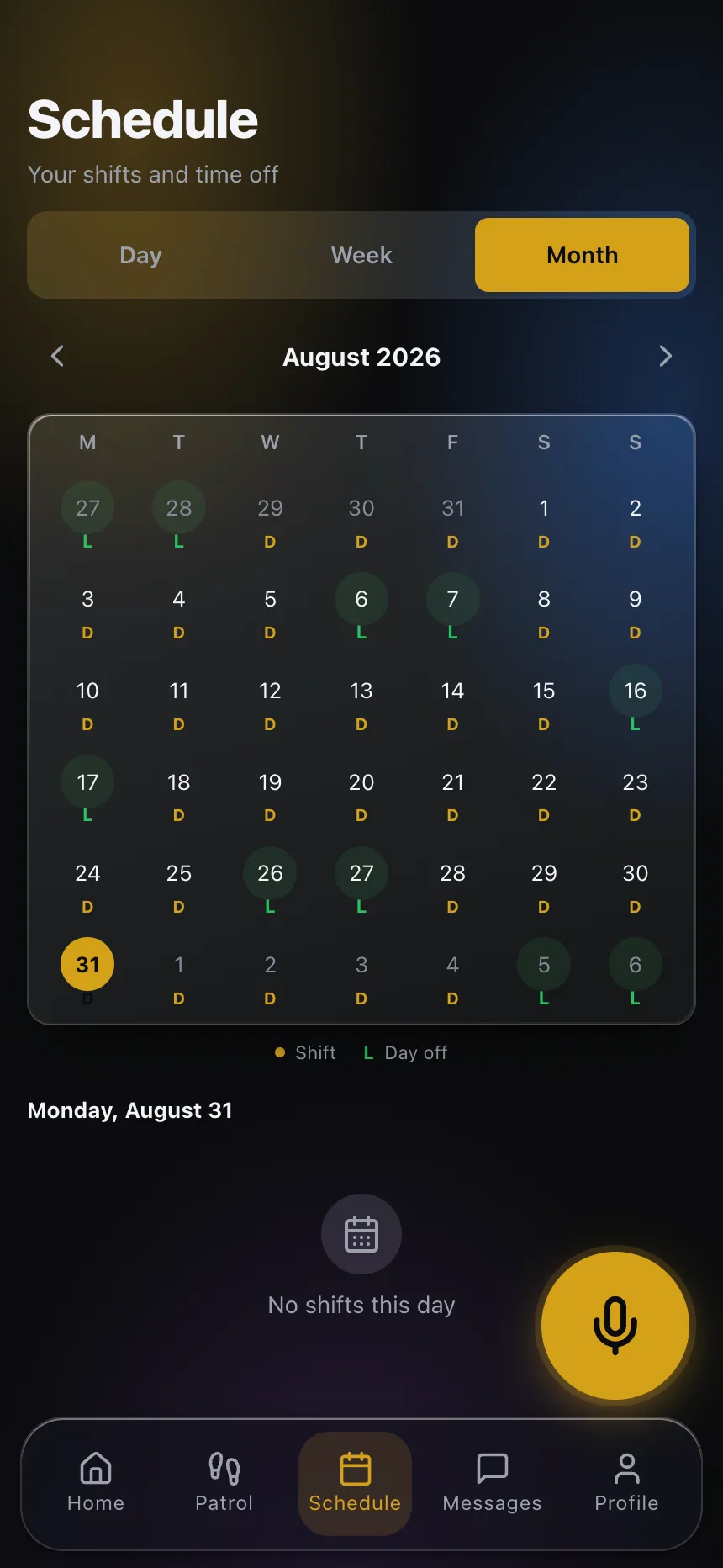
Make the standard legible in the schedule itself
If the requirement is four tours with no gap over a set length, that has to appear where the officer works — in the scheduling system and in the app, not in a post-order binder nobody opens. A standard the officer cannot see is a standard the officer cannot meet.
The client conversation, which decides everything
Randomization confuses clients if you introduce it silently. The property manager who has been told “hourly rounds” and then sees tours at 10:12, 11:47 and 12:31 concludes the officer is slacking, not that you implemented a deterrence strategy.
Explain it before you do it, in their terms:
- What they are getting instead of a fixed interval — the number of tours, the maximum gap, the coverage guarantees.
- Why fixed timing works against them on this particular property.
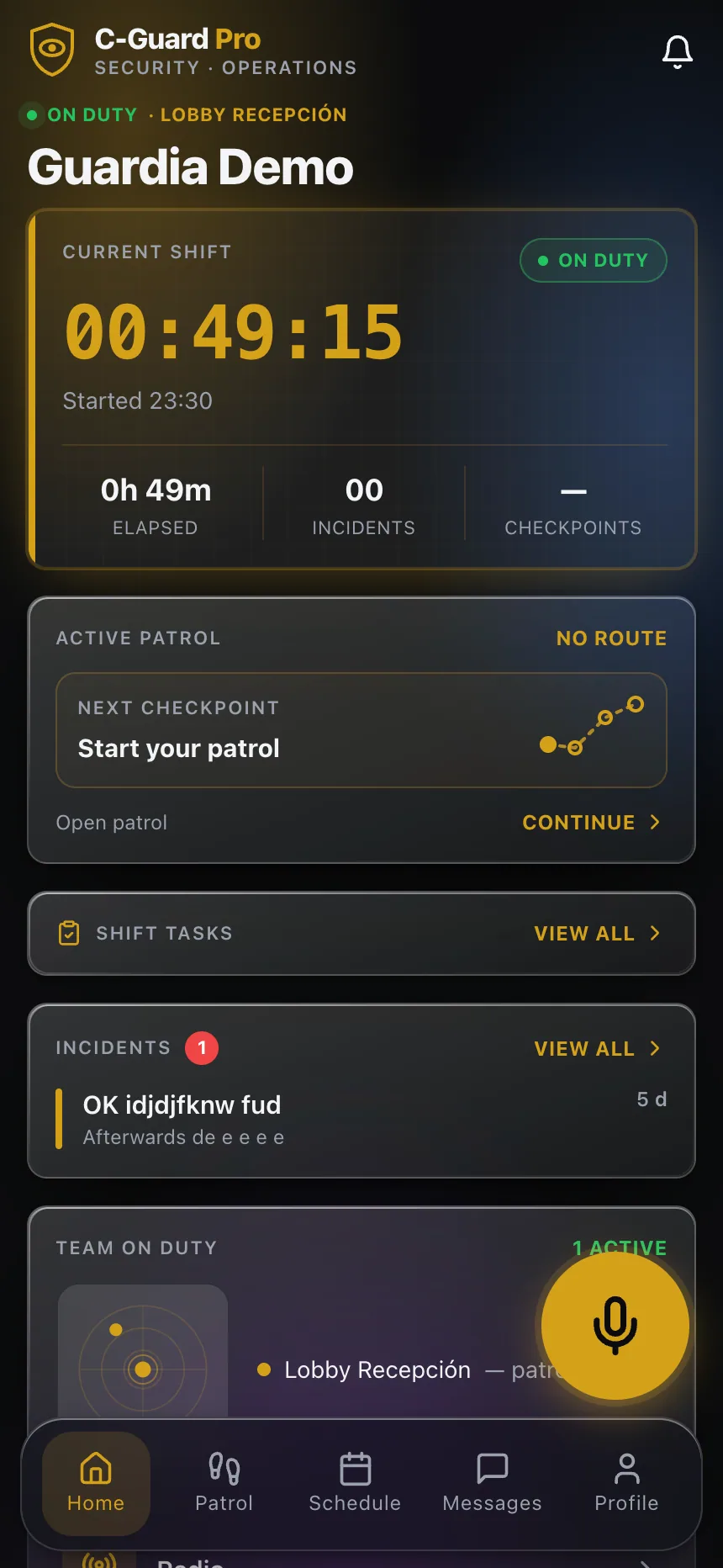
- Where they can verify it. This is the part that closes the objection. If the client can pull up completed tours themselves in their portal, unpredictable timing stops feeling like an excuse and starts feeling like a method.
Get the agreed standard written into the account file and the post orders. Otherwise the next account manager will “fix” it back to hourly rounds within a year.
The honest limits
Randomizing patrol timing does not stop a determined, informed adversary; it raises the cost of casual and opportunistic ones. It does nothing about a site with inadequate lighting, no fence, or one officer covering forty acres. It cannot compensate for a route that does not pass the place where things actually happen.
And it introduces a real supervision cost. Fixed schedules are easy to manage; bounded-random schedules require you to check counts and gaps rather than glance at a clock. If your operation is not reviewing tour records at all today, randomizing first will simply make it harder to notice that nothing is happening.
Fix the coverage, fix the review, then randomize. In that order.
If you want to see how tour standards, timing and completion records fit into one system, explore CGuardPro or get in touch.