Sooner or later every operations manager rolling out a tour system has the same argument with a vendor, a client, or a field supervisor: NFC vs QR checkpoints. It sounds like a technology decision. It is really a decision about where your checkpoints live, who has to touch them at 3 a.m. in the rain, and what you are willing to do when one of them goes missing on a Saturday night.
The mechanical difference, and why it matters more than the spec sheet
An NFC tag is a passive chip in a disc or a hard plastic housing. The officer’s phone has to come within an inch or so of it, and the phone’s radio powers the chip long enough to read a serial number. A QR checkpoint is a printed code the officer’s camera reads from a foot or two away.
That single difference — contact versus line of sight — drives almost everything else.
NFC does not care about light. It does not care about grime on the surface, a fogged lens, or an officer wearing gloves that will not work on a touchscreen. If the tag is under a layer of paint or behind a plastic cover, it usually still reads. Metal is the exception: a tag stuck directly on a steel door frame or an electrical cabinet will fail unless it is a tag specifically built with a ferrite backing for metal mounting. Plenty of companies have learned that after mounting forty tags on a warehouse dock.
QR does not care about metal, and it is trivially cheap to replace. It also fails in the dark unless the officer’s flashlight or phone light is on, which on a night perimeter route is one more thing to fumble. Direct sun on a glossy laminate can blow out the camera. A weathered code on a fence post that has been through two Texas summers will eventually stop scanning, usually gradually — first it takes three seconds, then ten, then the officer gives up and marks the point as unreachable.
Cost per checkpoint is the wrong frame
Vendors like to compare unit price. It is a distraction, because in a real deployment the tag is close to the cheapest thing in the equation.
What actually costs money is the labor to install and maintain checkpoints, and the disputes caused by ones that do not work. Consider a multi-building campus. The install visit is a supervisor walking the site with a client contact, deciding where each point belongs, mounting it, testing a scan, and photographing the location so a new officer can find it. That visit costs the same whether the point is NFC or QR. Replacing a damaged point costs a site visit too — unless it is a QR code, in which case you can email a PDF to the account manager, who prints and mounts it in the same spot in ten minutes.
That is the honest cost picture. NFC costs more per point and is far more durable, so you pay more up front and revisit less. QR costs almost nothing per point and is more fragile, so you pay less up front and expect to reprint. Which is cheaper depends entirely on how often your points get destroyed, and that is a property of the site, not the technology.
What happens when a checkpoint is damaged or removed
This is the question that separates people who have run tours from people who have read about them.
Checkpoints disappear. A contractor repaints a stairwell and paints over the code. A tenant peels a tag off a door because it looks untidy. A landscaping crew knocks a post over. Someone on your own force removes one because scanning it means walking to the far end of a dark lot at 2 a.m.
Two things determine how badly that hurts you:
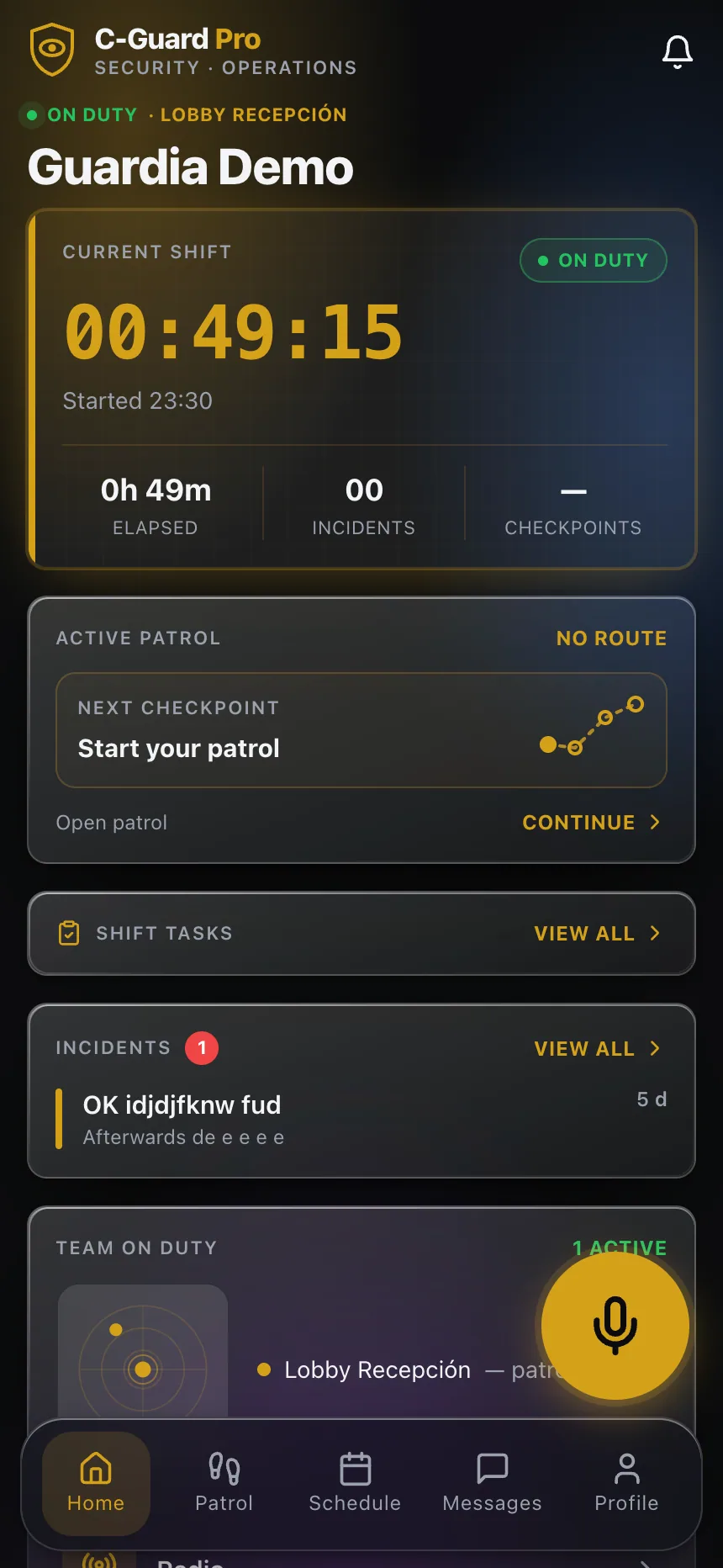
How quickly you find out. A missing checkpoint should surface as a missed point on a tour, not as a surprise when the client asks about a month of reports. If your system flags an incomplete tour and routes it to a supervisor the same shift, a dead checkpoint is a one-day problem. If nobody looks until the monthly report, it is a thirty-day gap in your evidence — and it will be the thirty days the client asks about.
How fast you can restore it. QR wins here, decisively. A code can be regenerated and printed on site. An NFC tag has to be ordered, shipped, programmed and mounted. For a site with a hostile environment or curious tenants, that lead time is the whole argument.
How the officer is supposed to behave in the meantime. This is the part most post orders skip. Write it down: if a checkpoint cannot be scanned, the officer still walks to the location, still observes, and files a note explaining what was found — code missing, code unreadable, area locked. That note is what preserves the record. Without it, an unscanned point looks identical whether the officer was diligent or asleep in the vehicle.
The failure mode nobody mentions: the checkpoint you can scan without going there
Both technologies share the same weakness. A checkpoint is a token, and tokens can be moved. An NFC tag can be pried off and carried. A QR code can be photographed and scanned off a screen.
If your evidence is only the scan, you have a system that proves a phone met a token. Pairing every scan with a GPS position and a timestamp recorded by the system rather than by the phone is what turns it into proof that a person was at a place at a time. It is not perfect — GPS drifts indoors and inside concrete stairwells — but a scan recorded fifteen miles from the site is unambiguous, and the mere existence of that check changes behavior. So does requiring a photo at specific points, which is harder to fake convincingly than a scan and doubles as a condition report.
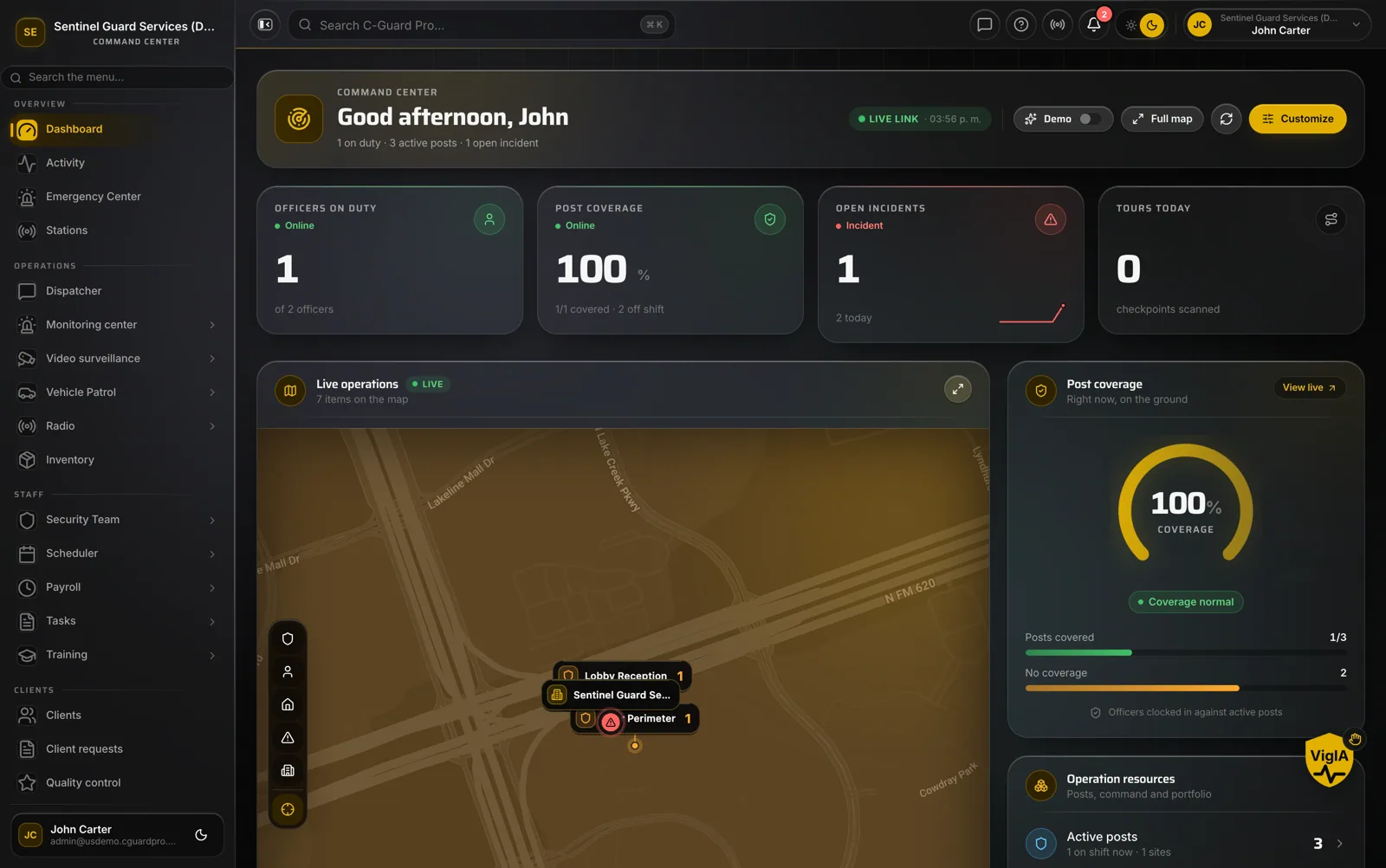
That is why we built CGuardPro’s tour system around QR checkpoints tied to position and to an identified officer in the guard mobile app, rather than treating the scan as the whole record. The tag is the cheap, replaceable part. The evidence is the combination.
Where each one genuinely belongs
A practical way to decide, point by point rather than site by site:
Choose NFC when
The location is dark, dirty, exposed, or handled roughly — trailer yards, gate posts, mechanical rooms, exterior fence lines in weather. Also when officers work with gloves on, or when the point sits somewhere a camera struggles: deep shade, direct glare, behind a scratched cover.
Choose QR when
The point is indoors or protected, the site changes often, or the client is likely to add and move points as tenants come and go. Also on any site where you want a new checkpoint live the same day a client asks for it, and on temporary or event coverage where you will pull everything down in a week.
Expect to mix
Most companies running more than a handful of sites end up with both, and there is nothing wrong with that. What matters is that a single tour route can include points of either kind, that the officer’s app treats them the same, and that the report the client sees does not expose the difference. The property manager does not care what physics read the checkpoint. They care that the northeast dock was covered at 2:40 a.m.
Decide the maintenance rhythm before you decide the technology
Whatever you pick, write two things into the account file: who re-walks the route to verify every point still scans, and how often. Quarterly is reasonable for a stable indoor site; monthly is not excessive for an exposed exterior route. Give the field supervisor the task during a normal ride-along rather than creating a special visit, and have them file the verification as a report so it exists as a record.
The companies that get burned by checkpoints are rarely the ones that chose wrong between NFC and QR. They are the ones that installed points once, never checked them again, and discovered the gap the same week the client discovered it.
If you want to see how tour checkpoints, GPS and officer identity fit together in one record, explore CGuardPro or get in touch.