Most contract security companies send something monthly. Fewer send something that gets read. The difference shows up at renewal, when a facilities director has to justify the line item to someone who has never met your officers and has only the reports to go on. A monthly security report is not an administrative obligation you satisfy on the third business day. It is the only sustained argument you make for your own value, delivered twelve times a year to the person who decides whether you keep the account.
Who the monthly security report is actually for
Write for two readers who never appear on the distribution list.
The first is your day-to-day contact’s boss. Your contact already knows what happened — they were on the phone with your supervisor when it happened. Their boss knows nothing except that a security invoice arrives monthly. When the budget conversation comes, your contact will forward your report rather than write their own summary, so the report has to work for someone with no context and about four minutes.
The second is whoever replaces your contact. Turnover on the client side is the single most common way a good account goes bad. A new facilities director inherits a vendor they did not choose, no history, and a mandate to look at costs. Twelve months of clear reports in the shared file is the difference between “this vendor is embedded and doing real work” and “this is a cost line with no story attached.”
Lead with what changed, not with what happened
The default structure — a chronological list of everything logged this month — is the least useful arrangement of the same facts. Nobody reads a month of activity in sequence. They skim for the parts that concern them, fail to find them, and file it.
Open instead with a short section that answers three questions in plain language. What is the current state of security at this property? What changed this month compared with last? What do we need from you?
That third question is the one companies leave out, and it is the one that turns a report into a relationship. Clients rarely act on a report that asks nothing of them. A monthly security report that ends with two specific, small requests — approve the replacement of the failed reader at the east dock, confirm the new after-hours contractor list — establishes that you are managing the property, not just staffing it.
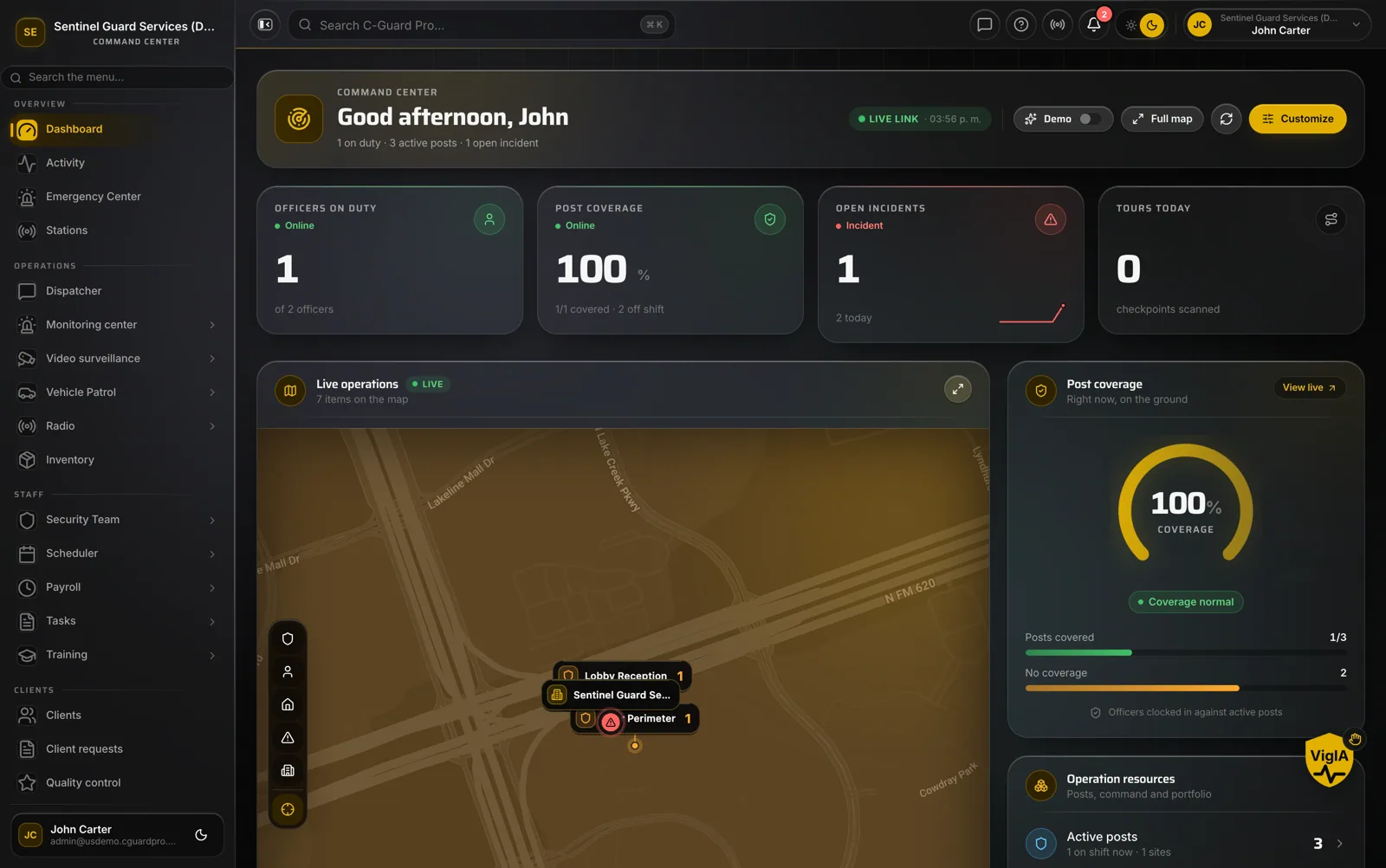
Coverage: prove you were there, without drowning them
The client is buying hours at a post. The first thing the report should establish is that the hours were delivered, and that when they were not, you know it and handled it.
Report coverage in terms the client understands: posts staffed, shifts covered, callouts and how each was filled, any period of uncovered time and the reason. Be specific about the misses. A report that never mentions a callout is not credible to anyone who has run a facility, and the client’s own staff usually noticed anyway. A report that says “third shift Saturday the 14th, officer called out at 2140, relief on post by 2245, gap covered by the roving supervisor” reads as an operation in control of itself.
Patrol and tour data belongs here too, but as evidence rather than as the point. Scan and checkpoint records from a QR guard tour system let you state plainly that the interior rounds ran at the required frequency, and let you show which checkpoints were missed and why. Do not paste in the raw scan log; give the sentence the log supports and offer the detail on request.
Presenting incidents without making the site sound out of control
This is where good reports go wrong in both directions. Underreport and you look like you are hiding things — until the day something serious happens and the client asks why the previous eleven months looked spotless. Dump every logged event with equal weight and the client concludes their property is a disaster and starts wondering whether the security is causing it.
The fix is classification with a stated meaning. Separate routine field activity from actual incidents, and separate incidents by whether they required a response beyond the officer. Then say out loud what the categories mean. A property with a lot of access control corrections — doors found unsecured, contractors without badges — is not a dangerous property; it is a property with a badging process problem, and framing it that way turns a complaint into a joint project.
For anything significant, give the client a short narrative in a fixed shape: what happened, when, what the officer did, who was notified, what the outcome was, and what changed as a result. That last element is the one that matters. An incident with no follow-up action reads as an accident. An incident followed by “lighting survey requested at the north lot; walk scheduled with facilities” reads as a security program.
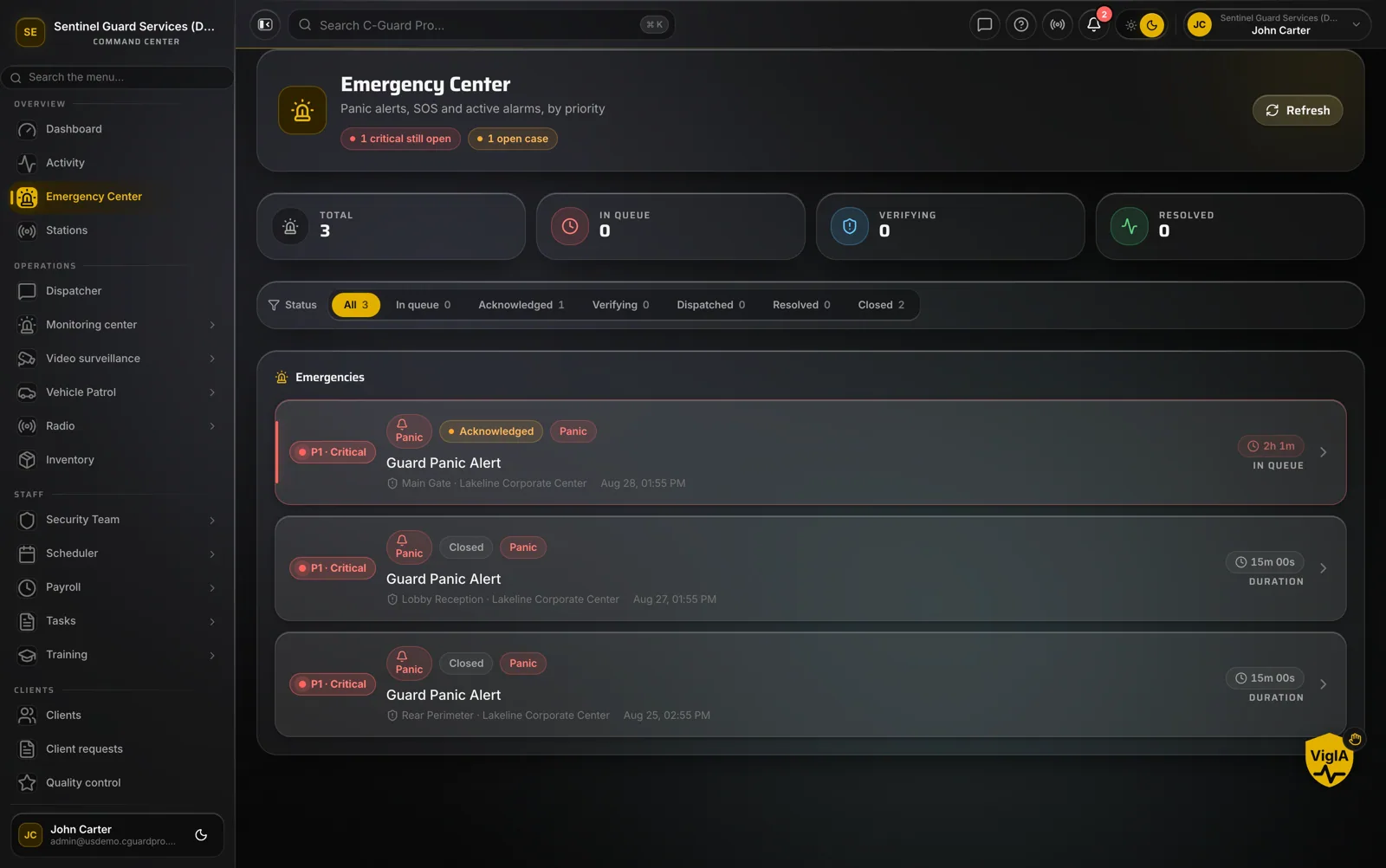
Where the underlying records come from your daily activity reports, the monthly summary should reconcile with them exactly. Nothing damages credibility faster than a client who has been reading the daily reports and finds the month-end numbers do not match.
Trends, told honestly
Clients like trend sections and companies routinely fake them. Two months is not a trend, and a change in reported events very often reflects a change in reporting behavior rather than a change in the property. A new officer who documents thoroughly will produce more entries than a veteran who did not, and presenting that as a rise in activity is misleading in a way that will eventually be found out.
Say what you actually know. If the count of after-hours access events at a specific door rose across several months and you can point to a cause, that is a finding worth acting on. If the change is small, seasonal, or explainable by a staffing change, say that too. A report that occasionally says “no meaningful change this month” is more trustworthy than one that manufactures a narrative every time.
What to include that most reports leave out
Personnel continuity. Who is regularly assigned, what changed, and what training or site-specific certification the team completed. Clients care enormously about turnover and rarely see anything about it until they notice unfamiliar faces. Getting ahead of it is free.
Post orders status. When were they last reviewed, what changed, what still needs the client’s decision. Post orders drift, and an annual line saying so protects both sides.
Equipment and property conditions. Cameras down, lights out, gates failing, doors that will not latch. Your officers see these first. Collecting them into one recurring section makes you the client’s early-warning system for the building itself — which is often the most tangible value they get.
Open items from last month. Carry them forward until closed. Nothing signals a serious vendor like a short list of items that survives from report to report until it is resolved.
Format and delivery
Keep it short enough to read in one sitting and attach the detail rather than embedding it. A summary the reader can finish, with appendices they can open if they want, beats a comprehensive document nobody opens.
Deliver the same way every month, on the same date, to the same list, with the same section order. Predictability is a feature — a reader who knows the incident section is always third will find it in seconds. And give the client continuous access rather than only a monthly drop; a client portal where they can see reports and incidents as they happen changes the monthly document from a revelation into a confirmation, which is exactly what you want it to be. Nothing in the month-end report should surprise a client who has been paying attention.
Then talk about it
The report is not the meeting. Send it, then spend fifteen minutes on the phone or on site walking through the two or three things that matter. The best account managers use the report as the agenda and the meeting as the place where the client tells them what is actually coming — a construction project, a layoff, a change in hours — which is how you keep the contract aligned with the property’s real risk.
Do that consistently for a year and renewal stops being a competitive event. The client already has the record of what you did, in their own files, in their own words about your work.
If you want to see how field records, incidents and client-facing reporting fit together in one operation, explore CGuardPro or get in touch.