A client will forgive a missed patrol. A client will forgive a sloppy report, once. What a client will not forgive is finding out that a key to their building has been unaccounted for since Tuesday and nobody told them. Key control procedures are the least glamorous part of running a guard force and the fastest way to lose an account, because they are the one area where your failure directly creates the client’s exposure. Everything else you do is about detecting problems. Key control is about not being the problem.
Why key control outranks patrols in the trust hierarchy
Think about what the client actually handed you. When a property manager gives your officer a master key, a fob, an alarm code and a gate remote, they have transferred the ability to enter their property at will to a group of people they have never met, hired by a company they selected on a bid. The entire relationship rests on the assumption that you know where those things are at all times.
That is a much bigger act of trust than hiring you to walk a lot. And it is the one they will audit. Insurance carriers ask about it. Corporate security departments ask about it during vendor reviews. A new property manager taking over a portfolio will absolutely ask your account manager to produce a key inventory, and the quality of the answer sets the tone for the entire relationship.
The uncomfortable truth is that most companies cannot produce it quickly. They can produce a binder. Whether the binder matches reality is a different question, and it is the question the client is really asking.
The three failure modes
Almost every key control incident falls into one of three patterns.
Silent transfer. A key moves from officer to officer at shift change with no record. Six handoffs later, nobody knows who had it when it went missing, so nobody can be held responsible and no meaningful investigation is possible.
Unauthorized duplication. Rare, but catastrophic when it happens, and essentially undetectable without physical key controls (restricted keyways, stamped numbering) and a matching inventory. This is the failure that ends contracts and triggers litigation.
Undisclosed loss. An officer loses a key, is afraid to report it, and hopes it turns up. The delay between loss and disclosure is where the real damage occurs, because the client’s rekey decision depends entirely on how long the key was in the wild and where.
Notice that two of the three are reporting failures, not security failures. That is the design insight: your key control system should be built primarily to make reporting easy and delay impossible.
Build the custody log around the object, not the shift
The common approach is a key log at the post — a sheet where officers sign keys in and out. It is better than nothing and it has a structural weakness: it is organized by shift, so answering “where is key 14 right now” requires reading forward through pages until you find the last unclosed line.
Organize by the object instead. Every controlled item — key, fob, master, gate remote, alarm code card, padlock key, elevator key — gets a unique identifier, and its record shows its current holder and its full custody chain. The question “who has key 14” should be a lookup, not a reconstruction.
The custody record needs:
- A unique ID stamped or tagged on the physical item, matching the record
- The client site and what the key opens, described plainly
- Current custody: an officer, a lockbox, a supervisor, the office safe
- Every transfer with time, from whom, to whom
- Authorization: who is permitted to hold this item at all
That last line is the one that gets skipped and matters most. Not every officer should be able to hold every key. A relief officer covering one shift at a site does not need the master that opens the tenant suites. Defining the authorization level per item means an unauthorized handoff is a rule violation you can detect, rather than a judgment call made at 10 p.m. by whoever is standing there.
Shift transfer is the whole game
Key control lives or dies at the seam between shifts. Everything else is bookkeeping.
Make the transfer a two-sided confirmation. The outgoing officer records that the item was passed; the incoming officer confirms receipt. One-sided records are worthless in a dispute, because the person who signed can always be accused of signing for keys he never handed over.
Two-sided confirmation is easy to describe and historically hard to enforce, which is why the paper version failed. On paper, both officers sign the same sheet in the same room and one person can complete both lines. When each officer confirms from their own phone, under their own login, with a timestamp, that shortcut closes.
Pair the transfer with a physical count. At every shift change, the incoming officer counts the ring against the list. Not a glance — a count. Sixty seconds at each of two daily transfers means a missing key is discovered within hours rather than whenever someone next needs that door, which might be a month.
Lost-key response: a written sequence, decided in advance
The moment an officer realizes a key is missing is the moment your process either works or collapses. It collapses when the officer has to decide what to do, because the incentives at that moment all point toward waiting.
Remove the decision. Write the sequence, train it, and make the first step immediate.
Step one: report immediately, no penalty for speed. State this explicitly in training and mean it. The officer who reports a lost key within ten minutes has done their job correctly. The disciplinary posture should attach to concealment and to negligence, never to prompt reporting. If your culture punishes the report, you will get concealment, and concealment is what turns a rekey into a lawsuit.
Step two: contain the search. Retrace the shift with a time boundary — the key was confirmed present at the transfer count, so the loss window is bounded. Search the vehicle, the post, the route. Document what was searched.
Step three: assess exposure honestly. What does the key open? Was it identifiable — tagged with the property address or a company logo? An untagged key lost in a fenced construction site is a different risk from a tagged master lost in a public parking garage. Never tag keys with the site address; tag them with your internal ID only. This is one of the cheapest controls in the trade and it is routinely ignored.
Step four: notify the client, on a clock. Set an internal maximum — hours, not days — from confirmed loss to client notification, and hold supervisors to it. The client owns the rekey decision. It is not your call to make, and delaying the notification to “see if it turns up” is exactly the behavior that ends contracts.
Step five: document everything in the incident record. Times, actions, who was notified, what was decided. If a rekey follows, the client will want the timeline, and their insurer might too.
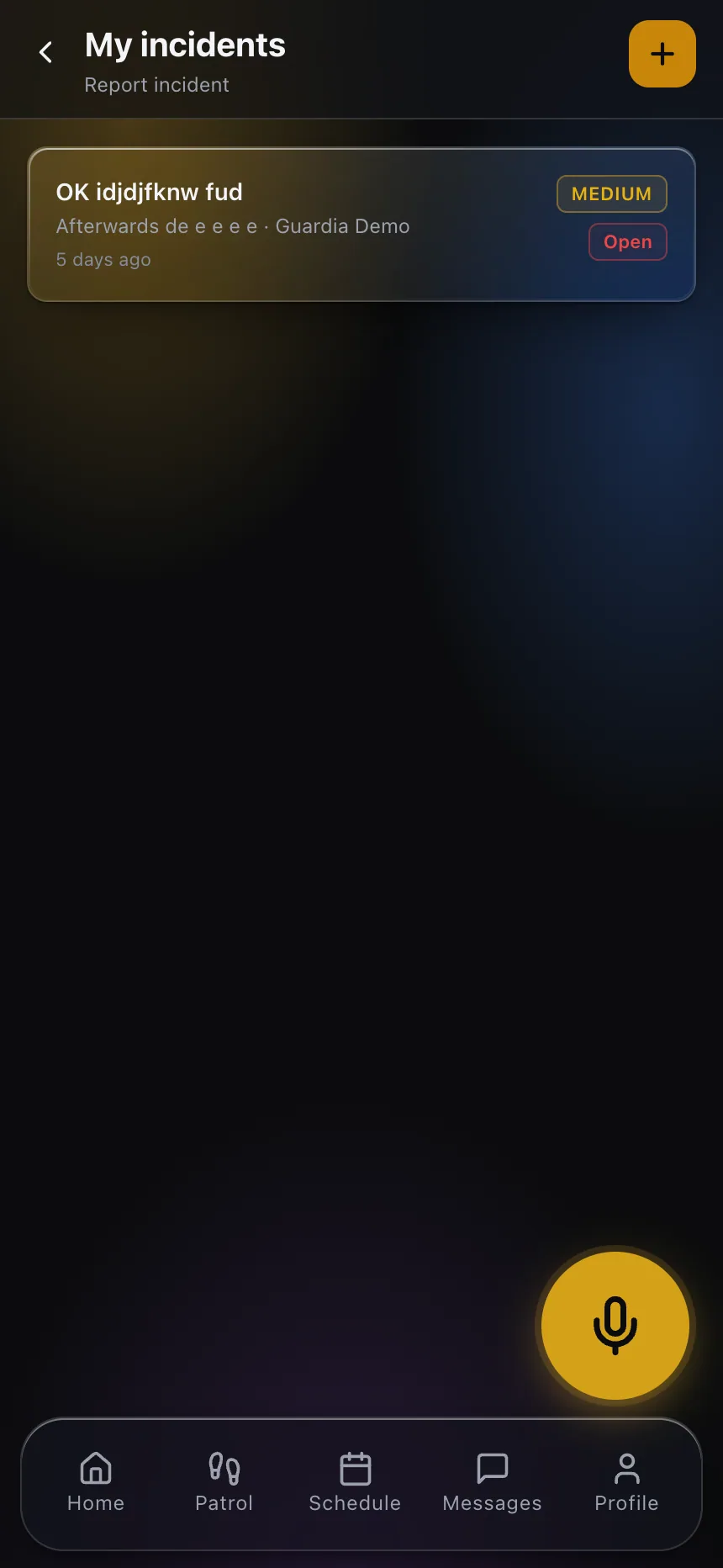
Handle this in your normal incident channel rather than as a special case. If lost keys go into a separate process that only supervisors know about, it will be used inconsistently. When a lost key is logged the same way as any other serious incident — with photos, times and a notification chain — it inherits the discipline of a system officers already use every shift. The same daily activity reporting habit that captures a propped door captures a missing key, and both land in front of a supervisor immediately.
Lockboxes, and what they solve
Many operations move to lockboxes at the site — a wall-mounted container, combination or electronic, that holds the site keys so they never leave the property. Done properly this is a significant improvement, because it eliminates the highest-risk moments: keys in a personal vehicle, keys off-site, keys in an officer’s pocket at the end of a shift.
It does not eliminate custody logging. It relocates it. Now you are tracking who opened the box and when, and if the box is a mechanical combination, you are tracking who knows the combination — which means a code rotation schedule tied to personnel changes. A lockbox whose combination has not changed since installation, at a site with two years of turnover, is a lockbox that is protecting nobody.
Electronic boxes with individual codes and an audit trail are better. Verify that the audit trail is actually retrievable and that someone reviews it, or it is just a more expensive lock.
Make the record something the client can see
The strongest position with a client is not “we have never lost a key.” Everyone loses a key eventually. The strongest position is being able to show, on demand, exactly what you hold, who holds it, and every transfer in its history.
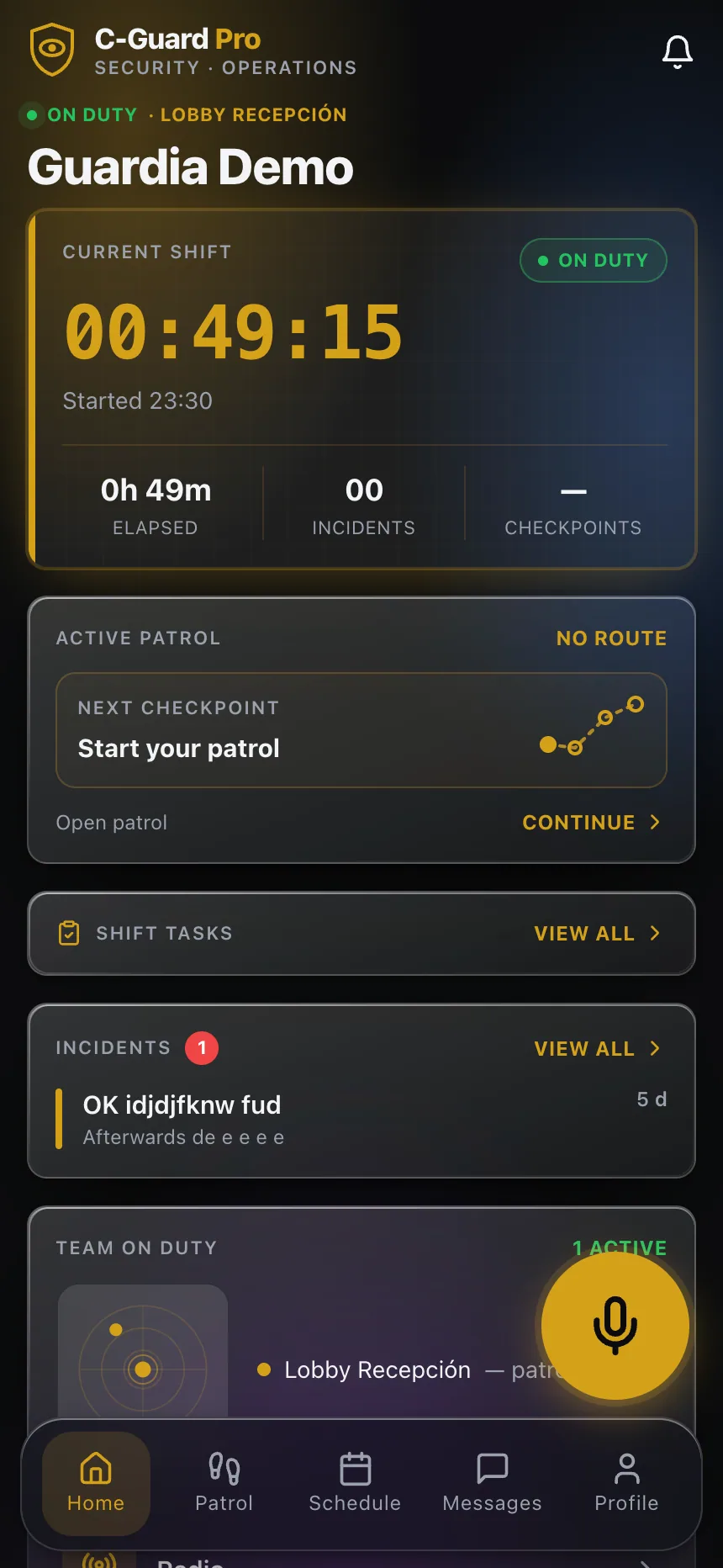
When a key inventory is a live record rather than a binder, an account review becomes a five-minute conversation instead of a week of reconstruction. And when a client can see through a client portal that every shift transfer at their site included a confirmed key count, you have converted the least visible part of your service into the most reassuring one.
Start with an amnesty inventory. Announce that for two weeks, anyone can hand in or declare any key with no consequence. You will get keys back that you did not know existed, and you will find items on your list that no longer exist anywhere. That reconciliation is painful and it is the only honest starting point — every control you build on top of an inaccurate inventory inherits the inaccuracy.
If you want to see how custody records, shift transfers and incident reporting work together in one operation, explore CGuardPro or get in touch.