Most guard tour reports are sent, filed, and never opened. The account manager attaches a PDF, the property manager glances at the subject line, and the whole exercise becomes a monthly ritual that proves nothing to anyone. Then renewal comes around, procurement asks what they are paying for, and the only artifact you can produce is nine hundred rows of scan timestamps.
That is not a reporting problem. It is a deliverable problem.
Why the raw scan log fails
A scan log is a machine record. It answers “did the tag get read” for every checkpoint on every tour. It is genuinely useful — to you. Your field supervisor should live in it. But handing it to a client asks them to do three jobs they were never hired for: figure out what normal looks like, spot the deviations, and decide whether the deviations matter.
They will not do those jobs. They will scan the first page, see a wall of green, and conclude either that everything is fine or that the report is theater. Both conclusions hurt you. The first means your work is invisible, which makes your rate look arbitrary. The second means the next report gets ignored entirely.
There is a second, subtler problem. A perfect log is boring, and boring is fragile. A client who has received twelve months of flawless reports has been quietly trained to believe the site does not need coverage. Nothing ever happens there. The report itself becomes the argument for cutting your hours.
What a property manager is actually trying to find out
Sit with the people who receive your reports and you will find they are answering a small number of questions, usually for someone above them.
Was the property covered when I said it would be? Not “were 24 of 24 points scanned” — was there someone here overnight, on the weekend, during the window when the building is empty and the insurance carrier assumes it is watched.
Did anything happen that I need to know about or act on? Broken lighting, a propped door, a homeless encampment forming at the back fence, a tenant’s contractor leaving equipment out. Most of this is not a security incident. It is a maintenance and liability list that only your officers are positioned to produce.
Is there a pattern I should do something about? The same door found unsecured every Tuesday night. Three vehicle break-ins in the same garage level in six weeks. This is the highest-value thing you can give a client and almost nobody gives it.
If something goes wrong, will this record protect me? They will not say this out loud. But when a slip-and-fall claim or a theft allegation lands, they want to reach for a document that is dated, specific, and credible.
Every one of those questions is answerable from tour data. None of them is answered by a scan log.
The shape of a report that gets read
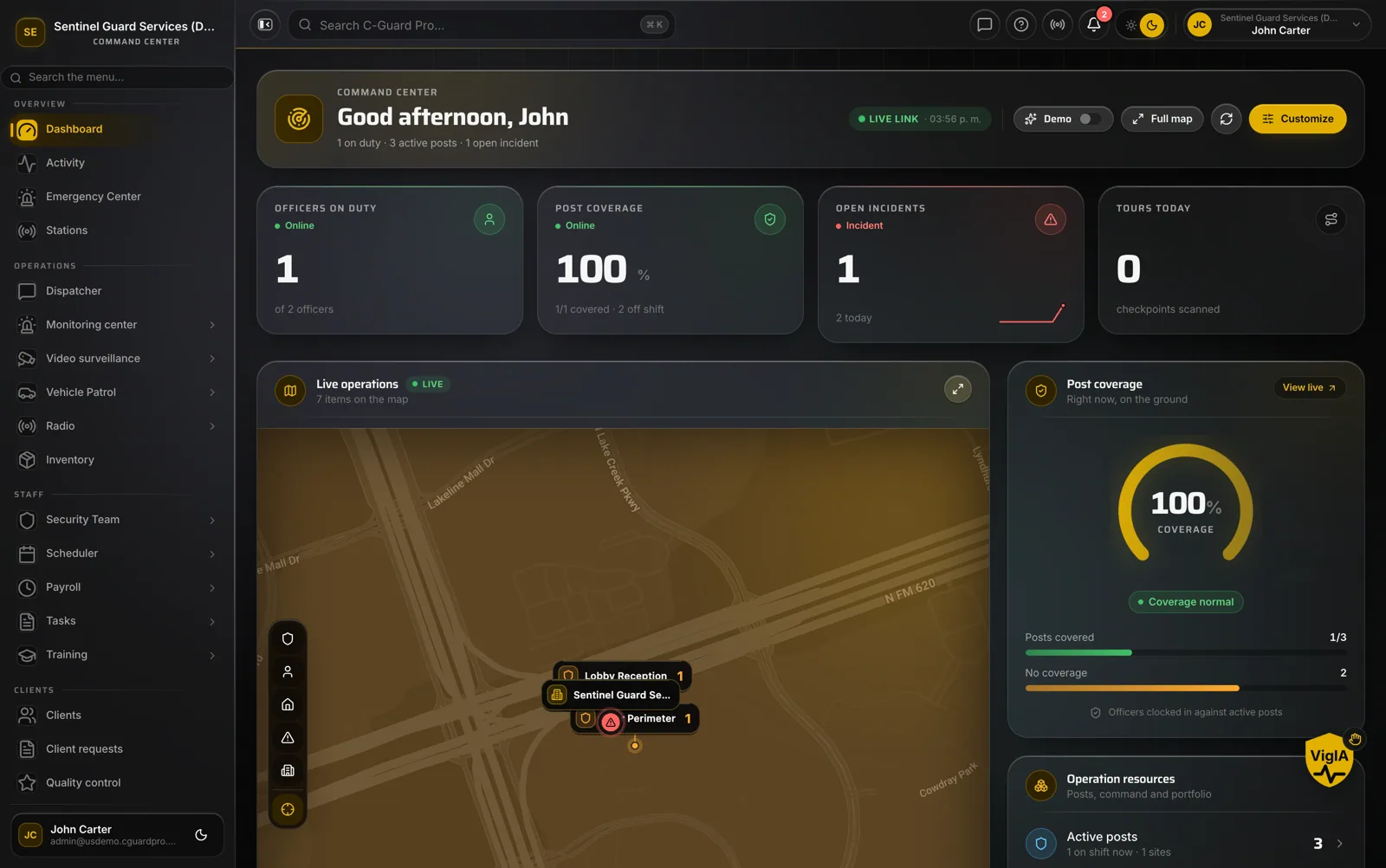
One page that a busy person can absorb standing up
Coverage for the period, stated plainly: shifts staffed, tours completed against tours scheduled, and — this is the part people omit — the exceptions, named. “Two tours were shortened on the 14th and 15th; the officer was holding the lobby during an alarm response, documented below.” Naming your own exceptions is the single strongest credibility move available to you. It tells the client the report is a record rather than a marketing document, and it makes the clean months believable.
The findings, not the scans
A short list of what your officers observed and did. Lights out and where. Doors found unsecured. Vehicles reported. Property damage noticed before the client’s own staff saw it. Each with a date, a location, and if there is a photo, the photo.
This is the section that defends your rate, because it is the only section that shows work a camera could not have done. A remote monitoring service does not rattle a padlock or notice that the exit sign on level three has been dark for a week. Your officers do, and if you do not write it down, the client credits it to nobody.
Trend, in words
Two or three sentences. “The northeast gate has been found open at the start of night shift on four occasions this month, always following a landscaping visit. We recommend the vendor be given a lockup instruction.” That paragraph converts you from a vendor supplying bodies into a partner supplying judgment. It is also, bluntly, the thing that survives a competitive bid.
The detail, available but not thrown at them
Keep the full log. Attach it, link it, put it behind a portal. The point is that it exists and can be produced on demand, not that it leads the document. A client who wants to verify a specific night should be able to reach the underlying record in seconds — and a client who never opens it should still feel the report is complete.
Where the data has to come from
None of this works if the report is assembled by hand at month end from an officer’s memory and a paper sheet. The narrative sections are only credible if the underlying observations were captured in the moment, at the location, by the officer who saw the thing.
That means the field record has to be structured enough to roll up. A daily activity report written as a wall of free text is better than nothing, but it cannot be counted. If “light out, garage level 3” is a typed entry with a location, a timestamp and a photo, it becomes a line item in the monthly summary automatically. If it is a sentence buried in a paragraph, someone has to read thirty DARs to find it, and nobody will.
The same applies to tours. Completion, timing and exceptions should be derived from the tour records themselves, not retyped. Retyped numbers are the ones that turn out to be wrong in front of a client.
Cadence and delivery
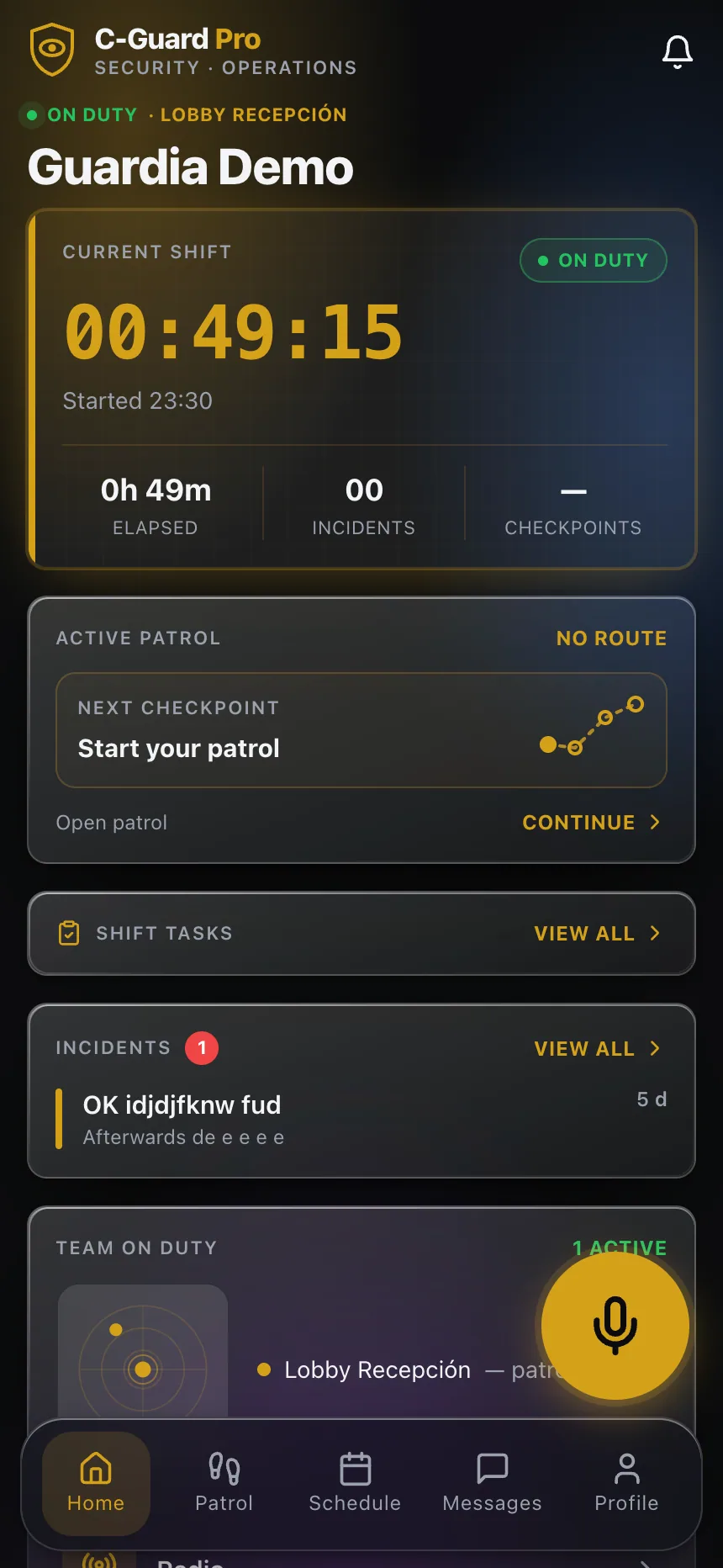
Monthly is for the relationship. Same-shift is for the incident. Do not let anything urgent wait for the monthly report. If an officer finds a fire door chained shut, the client hears about it that night, and the monthly report references it as already handled. A monthly report that surfaces a serious finding for the first time is a report that documents your delay.
Give them a place to look instead of only a file to receive. Email attachments get lost, forwarded to people who should not have them, and never revisited. A client portal where the property manager can pull up last Thursday’s tour without calling you does two things: it removes the account manager from routine verification work, and it makes the record feel available rather than curated.
Review it live, at least quarterly. Twenty minutes on site or on a call, walking the trend section together. This is where you find out that the thing you have been reporting for three months is not actually the thing they care about — and where they tell you about the new building nobody mentioned.
The renewal argument you are really building
Everything above is one long answer to a question that gets asked once a year, usually by someone who has never met your officers: why are we paying this rate?
A stack of scan logs does not answer it. A file of monthly reports that each name a real finding, track a real pattern, and honestly disclose the nights when coverage slipped — that answers it. It shows a service being managed rather than merely staffed, and it makes the difference between your company and the low bidder legible to a person reading a spreadsheet in a different building.
Write your guard tour reports for that person. They are the one who decides.
If you want to see how tour data, officer observations and client-facing reporting connect in one system, explore CGuardPro or get in touch.