There is a version of quality assurance that guard companies do because a client asked for it. A supervisor drives out once a month, fills in a form with a column of checkmarks, everything scores well, the form goes in a folder, and nothing changes. The officers know it is theater. The client eventually notices it is theater, usually at the same moment they notice something went wrong that a real inspection would have caught.
A guard post inspection program only earns its cost when it changes something: a training gap closed, a broken gate fixed, an officer coached before they became a complaint, a post order corrected because it described a door that no longer exists. Everything else is paperwork.
Inspect four things, not one
Most inspection forms only look at the officer. That is a narrow view of what “quality” means on a post, and it puts the entire burden of a site’s condition on the person standing in it. A useful inspection covers four separate subjects.
The officer. Appearance, alertness, professionalism, whether they are where they should be, whether their equipment is on them and functional.
The officer’s knowledge. Not whether they have read the post orders — whether they can answer a question from them cold. This is the single most diagnostic part of an inspection and the part most often skipped, because it is awkward to quiz an adult.
The site. Lighting, doors, gates, locks, fencing, cameras, signage, alarm panels, the physical conditions the officer has to work inside. Many of these are the client’s responsibility, and finding them is a service you provide.
The documentation. Are the tours being completed, on time and on route? Are the reports being written, and do they say anything? Is the log at the desk current? Does the post order binder match reality?
Splitting the score into those four buckets does something useful: it tells you whether a weak post is an officer problem, a training problem, a site problem or a documentation problem. A single overall number tells you nothing you can act on.
How often is often enough
There is no correct universal cadence, and any consultant who gives you one without asking about your accounts is selling a template. Frequency should be a function of risk and change.
Risk is straightforward: armed posts, high-crime locations, sites with recent incidents, sites where the client’s own exposure is high (hospitals, schools, utilities, sites with active labor disputes) warrant more attention than a quiet daytime lobby.
Change is the factor people forget. A post with a brand-new officer needs frequent visits regardless of risk. A post that just changed post orders needs a verification visit. A post that just lost a long-tenured officer to a competitor needs eyes on it. A stable post with a two-year officer and no incidents can go longer between visits than the calendar-based cadence would suggest.
Two rules make almost any cadence work better. First, inspect every shift, not every post. A site inspected only during daylight is an uninspected site if it runs 24 hours. The graveyard shift is where the real variance lives, and it is the shift that almost never gets visited because supervisors have families and daytime is easier. Build night inspections into the rotation deliberately or they will not happen.
Second, vary the timing. Inspections that always land on Tuesday at 10 a.m. measure how a post looks on Tuesday at 10 a.m. That is not useless — appearance and knowledge still get tested — but it is not the whole picture. A mix of announced and unannounced visits produces a truer signal without turning the program into an ambush.
Scoring that drives improvement instead of resentment
This is where inspection programs go wrong, and it is worth being precise about why.
If you score officers on a scale and treat the number as a performance grade, three things happen. Supervisors inflate scores to avoid confrontation with people they see every week. Officers experience the visit as a hunt for faults. And the score stops carrying information, because everyone is at the top of the scale except the person the supervisor is annoyed with.
A few design choices avoid most of that.
Score conditions, not people, wherever you can. “Parking structure lighting: two fixtures out” is a fact about the site. “Post orders: current, matches physical layout” is a fact about your documentation. Separating these from the officer’s own performance immediately lowers the temperature of the visit, and it usually turns out that most findings are not the officer’s fault at all.
Make findings binary and specific rather than a five-point opinion. “Uniform: compliant / non-compliant, with note” is auditable and hard to argue with. “Professionalism: 4 out of 5” is a mood.
Every finding gets an owner and a due date, or it is not a finding. A finding with no follow-up teaches the officer that reporting problems is pointless. This is the mechanism that separates a QA program from a compliance ritual: findings become open items, open items get assigned, and the next inspection starts by reviewing the last one’s open items.
Publish the good ones. If the only time an inspection result reaches an officer is when something was wrong, you have built a punishment system. A clean inspection should generate a short note to the officer and, on a good account, to the client. It costs nothing and it changes how the visit feels.
Verifying what an inspection cannot see
An inspection is a snapshot. The supervisor is on site for twenty minutes of a twelve-hour shift, and the officer knows they are being watched the entire time. That limits what the visit can tell you, and it is why inspection has to sit on top of continuous evidence rather than replace it.
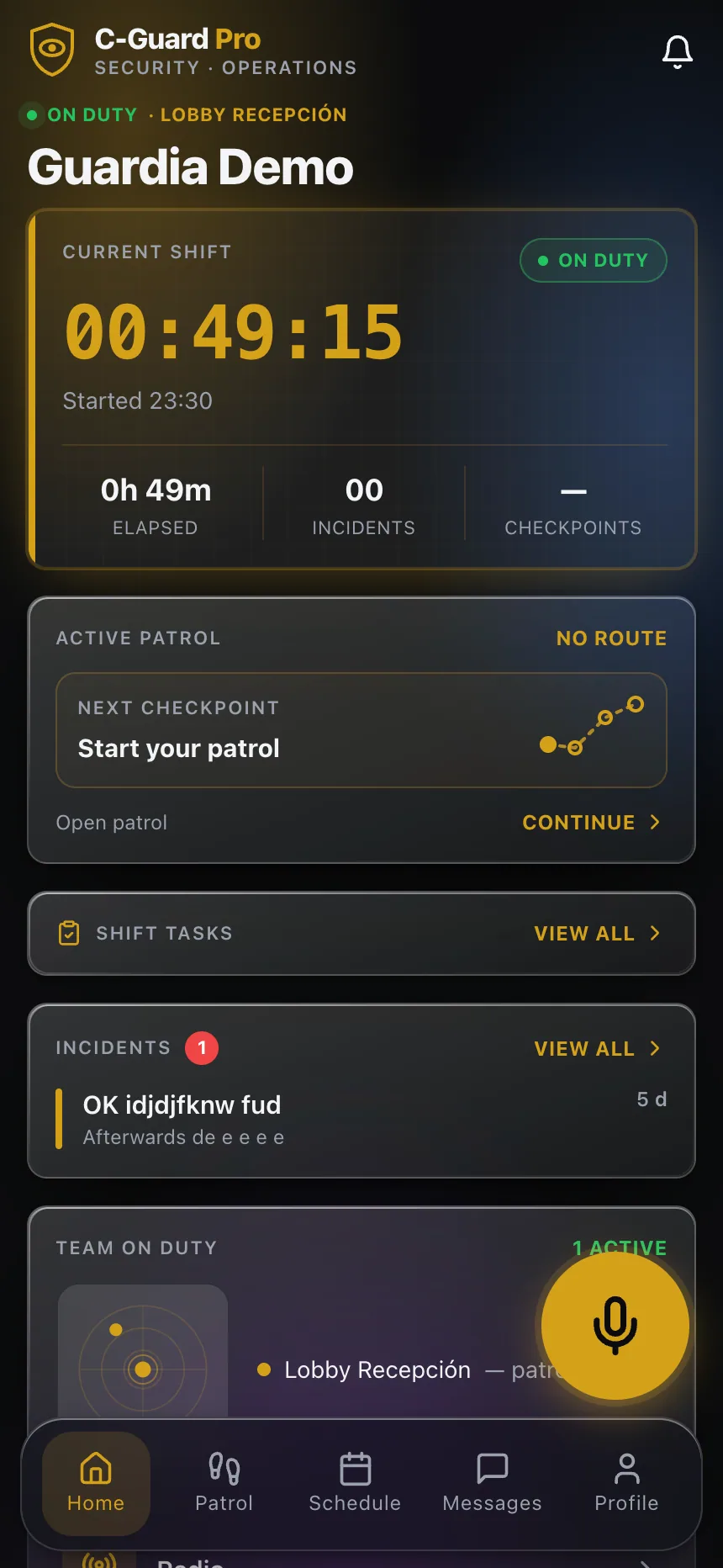
The continuous layer is the ordinary work product: tour scans that show whether the route is being walked and when, clock-in and clock-out records that show whether shifts start on time and from the right place, and reports that show whether anything is being observed. A supervisor who reviews that data before driving out arrives with real questions instead of a blank form. “Your 3 a.m. tour has been skipped four times this month — walk me through what’s happening on that shift” is a completely different conversation from “everything looks fine here.”
The findings that matter most are about your own documents
Run a real inspection program for a quarter and you will discover something uncomfortable: a large share of findings are not about officers at all. They are about post orders that describe a door that was sealed two years ago, an emergency contact who left the client company, a call tree with a disconnected number, a tour route that includes a checkpoint nobody can physically reach anymore.
Those are your failures, not the officer’s, and they are the ones that cause real damage in an emergency. An officer following outdated post orders at 3 a.m. is doing exactly what you told them to do, and it will not matter afterward that the instructions were old.
Build a step into every inspection where the supervisor verifies one section of the post orders against reality. One section, not the whole binder — that is achievable in a twenty-minute visit and it means the entire document gets validated over the course of a year.
Closing the loop with the client
Inspection findings about the site — lighting, fencing, broken locks, camera coverage — are among the most valuable things a guard company produces, and most companies waste them by keeping them internal.
Send them. A short, factual monthly summary of what your supervisor found at the property, what you corrected, and what needs the client’s action turns your inspection program into visible value instead of an internal cost. It also creates a record that you reported a hazardous condition, which matters a great deal if something later happens at that condition. A client portal where the client can see the findings and their status keeps that conversation ongoing rather than annual.
The test of a QA program is not whether inspections happen. It is whether, six months in, you can point at a list of things that are different because of them.
If you want to see how post inspections, tour data and findings live in one operation, explore CGuardPro or get in touch.