Ask an account manager where client complaints come from and you will hear about no-shows, sloppy uniforms, and officers on their phones. Dig into the actual complaints and a surprising number are quieter than that: the gate stayed open because nobody told the relief the contractor was still inside, the same broken camera got reported three nights running because nobody knew it was already ticketed, a delivery was turned away at 0500 because the officer had never heard of the vendor. None of those are discipline problems. They are handoff problems. The shift pass down is the one routine on a 24-hour post where information either survives or dies, and most guard forces treat it as a formality.
What the shift pass down actually is
A pass-down is not a summary of the shift. A DAR does that. A pass-down is a transfer of live state — the things that are still true at the moment the relief takes the post, and the things the incoming officer will be judged on if they get them wrong.
That distinction matters because it changes what belongs in it. “Conducted six patrols, all clear” is DAR content. It has no consequence for the next twelve hours. “Loading dock roll-up door will not latch; propped with a wheel chock until facilities gets here Monday; do not report it again, ticket 4471 is open” is pass-down content. It tells the incoming officer what to expect, what has already been escalated, and what action not to duplicate.
Why “nothing to report” is a failure of format, not effort
“Nothing to report” is almost never true. On a quiet swing shift there is still a state: which doors are unlocked, which vehicles are still in the lot, whether the client’s alarm tech ever showed, whether the previous officer had a difficult contact with a tenant who may come back. When an officer writes NTR, they are usually not lying. They are answering an unanswerable question. “Anything to pass down?” is too open-ended for someone who is tired, wants to go home, and does not know what the next person needs.
The fix is to stop asking an open question. Replace it with a short set of specific ones the officer answers every time, in the same order. When the prompt is concrete, the answer becomes concrete.
Three categories that belong in every handoff
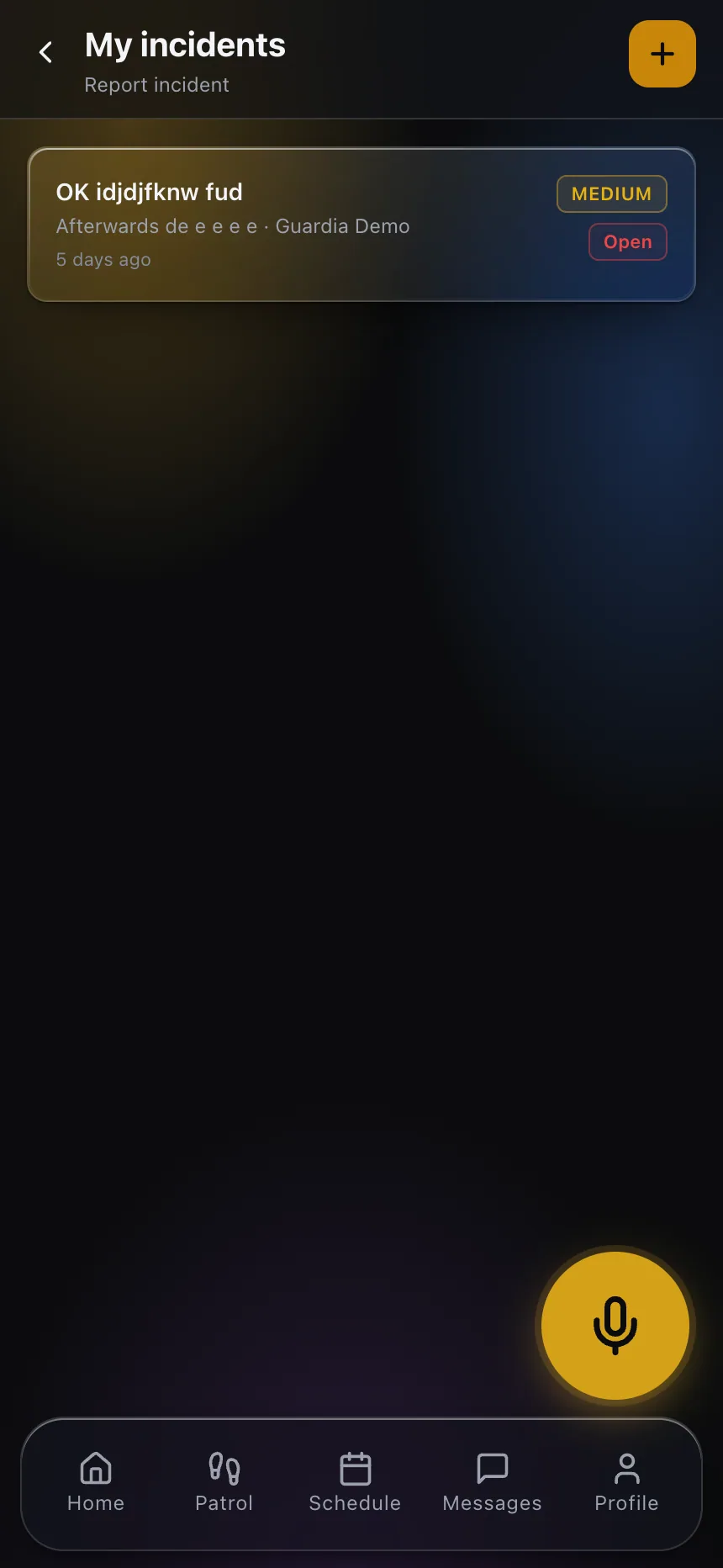
Open items. Anything started and not finished. A propped door, a contractor still on site, a vehicle with a hold on it, an unresolved key, an incident report that is written but not yet acknowledged by the client. Each open item needs a state, a reason, and an owner. “Still open” without a reason invites the next officer to reopen a closed loop.
Deviations from post orders. Anything the incoming officer would otherwise flag as wrong. The lobby doors unlocked two hours early because of an event; the north gate on manual because the reader is down; the client’s own security manager gave verbal approval for something the written orders forbid. Deviations are the single highest-value line in any pass-down because they prevent the relief from either “correcting” an authorized exception or quietly inheriting an unauthorized one.
People. Who is on site who is not usually on site, and who left angry. Contractors after hours, an employee who came back for their laptop, a tenant who argued about a parking enforcement decision and said they would take it up with management. The incoming officer meeting that person cold is how a small friction becomes a client escalation.
The mechanics: overlap, location, and who signs
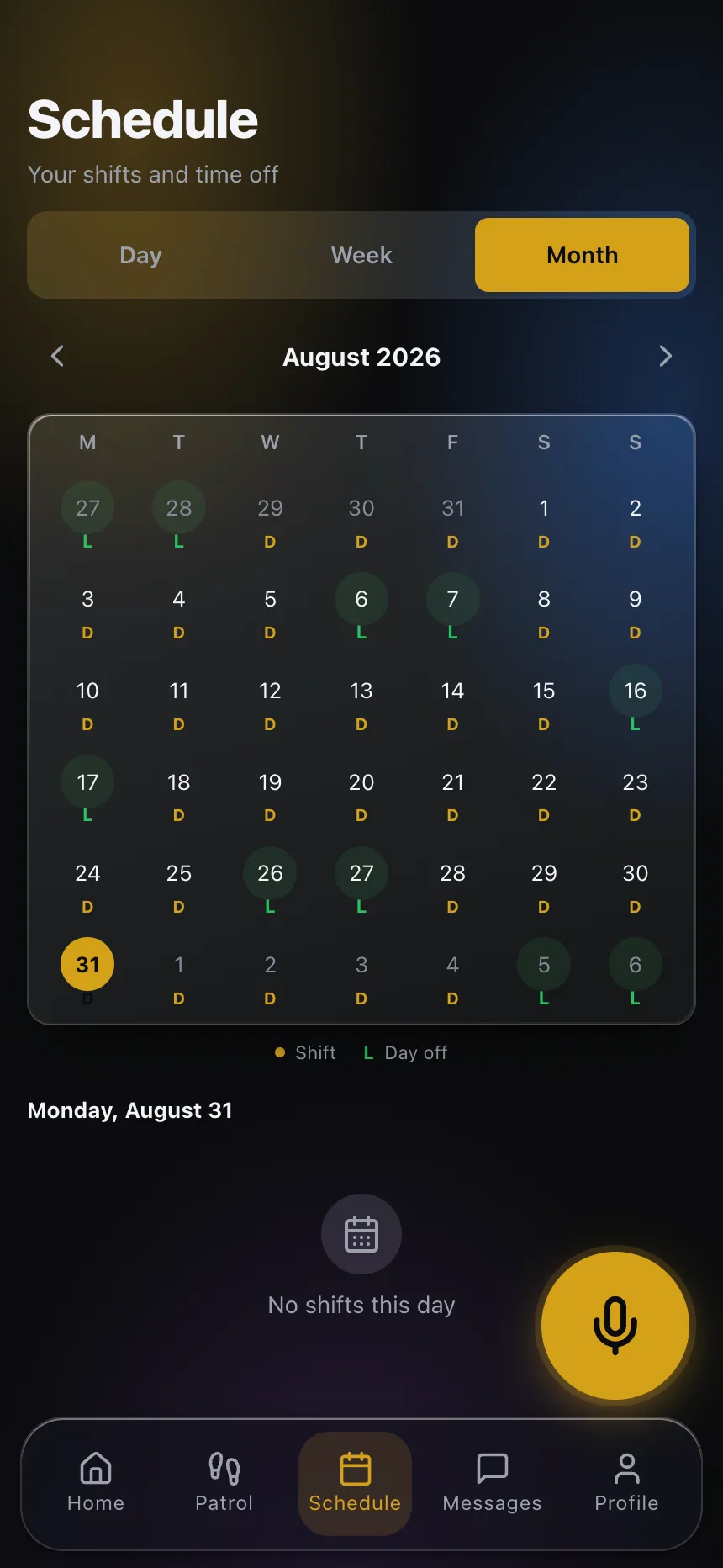
Good pass-downs need a few minutes of overlap that both officers are actually paid for. If the schedule has the outgoing officer clocking out at the exact minute the relief clocks in, you have designed the handoff out of existence — and you have told both of them, in the only language that matters, that the company does not consider it work. If you want a real handoff, build the overlap into the schedule and let the timekeeping reflect it. That is a scheduling decision before it is a training decision, and it is worth modeling in whatever scheduling system you use so the overlap survives contact with a callout.
Do the handoff at the post, not in the parking lot. Half the value of a pass-down is physical: walking to the propped door, pointing at the vehicle, showing where the temporary key is staged. A verbal recap at the car door loses that and loses the ability to verify — the outgoing officer says the panel is reset, the incoming officer looks at the panel.
Both officers should acknowledge the record. Not because anyone doubts the outgoing officer, but because acknowledgment is what converts “I told them” into “they received it.” When a client asks why the relief did not know about the open door, the difference between those two sentences is the entire conversation.
Writing it so the next officer actually reads it
A pass-down that runs three screens will not be read at 2300 by someone about to start a twelve. Write for the reader who has ninety seconds.
Lead with anything that requires action in the first hour. Put status in front of narrative — “OPEN: dock door, chocked, ticket 4471” beats a paragraph that arrives at the same fact in the fourth sentence. Use the same words every shift for the same things, so that the third-shift officer reading it fast can pattern-match rather than parse. And name things the way the site names them: if the client calls it the annex, do not call it Building C because that is what the post orders say. The relief has to find the place, not decode it.
Attach evidence rather than describing it. A photo of the chocked door, timestamped, ends the argument about whether it was already like that at turnover. This is where a digital record earns its keep over a paper binder: the photo lives with the entry, and the entry carries its own time and place. The same discipline that makes daily activity reports defensible makes pass-downs usable.
When the handoff is remote, or the relief is late
Not every handoff happens face to face. Split posts, roving assignments, and late reliefs all produce handoffs where the two officers never overlap. Those are the ones that fail, so they need the strongest structure.
If the relief is late, the outgoing officer should file the pass-down before leaving regardless — written, in the system, timestamped — and dispatch should confirm the incoming officer read it before the post is considered covered. If the two officers can talk, a short radio call over the written record beats a call instead of it; voice fills in tone and nuance, text survives the week.
Supervisors: audit the handoff, not just the report
Most field supervisors read DARs and never read pass-downs. That is backwards, because pass-down quality predicts DAR quality and predicts client satisfaction, while DAR quality mostly predicts typing speed.
A useful audit is narrow. Pick a post, read a week of handoffs in sequence, and look for one thing: does an open item ever appear, get carried, and then get closed — or do items simply vanish? Items that vanish are the tell. They mean the pass-down is being written for the file rather than for the next officer, and that whatever caused the item is still on the site waiting to become an incident.
Making it stick
Pass-downs decay unless someone reinforces them. Put the three categories on the post orders, not in a training deck nobody opens after week one. Have supervisors ask about the last handoff during a ride-along the way they ask about the last patrol. And close the loop visibly: when a pass-down prevents something — the relief catches the propped door, the vendor gets through at 0500 because the note was there — say so out loud, on the account. Officers write better handoffs when they have evidence that someone downstream reads them.
The shift pass down is cheap to fix and expensive to ignore. It costs a few minutes of paid overlap and a fixed set of questions. What it buys is a post where information survives the change of shift, which is the whole reason the client is paying for coverage in the first place.
If you want to see how structured handoffs, reports and shift records fit together in one operation, explore CGuardPro or get in touch.