The contract is signed and the celebration lasts about a day. Then reality: a start date, a client who has just fired somebody else and is nervous about it, a set of posts nobody on your team has ever stood, and a window of a few weeks in which the client forms a permanent opinion of your company.
Security client onboarding is not administrative work that happens after the sale. It is the period that decides whether this account renews, expands, or quietly goes back to market next year. Accounts are almost never lost in month eighteen for something that happened in month eighteen. They are lost for something that was never set up correctly in week one.
The clock starts at award, not at start date
The most common onboarding failure is compressing everything into the twenty-four hours before the first shift. Work backward from the start date instead, and treat the pre-start period as a project with owners and dates.
The site survey
Walk the property with the client, in daylight and again at the hour your officers will actually work it. These are different properties. A parking structure at two in the afternoon and at two in the morning share an address and nothing else.
What to capture: every post location and what is visible from it. Access points, gates and their controls. Lighting, and where it fails. Camera coverage and blind spots. Alarm panels, fire panels, shutoffs, elevator controls, AED and first aid. Keys and key control. Restrooms and break areas — a post with no reasonable access to either is a post with a retention problem. Parking for officers. Cell coverage dead zones, which matter enormously and are almost never checked.
Also capture the human map: which client employees have authority to direct officers and which do not, who the tenants are, and which recurring situations the last vendor mishandled. That last question, asked directly, is the most useful thing you will learn all week.
Post orders written, not copied
Post orders drafted from a template with the site name replaced are worse than useless — officers learn quickly that the binder does not describe their post and stop consulting it.
Write from the survey. Duties by hour. Tour routes and frequency. Access and badge rules with the exceptions stated. Reporting requirements. Escalation contacts with authority noted. The emergency annex, one page per scenario, with this site’s panel locations and this site’s gate.
Then have the client formally approve them before the first shift. Approval matters for two reasons: it forces the client to actually read what they are buying, and it establishes post orders as the operative definition of scope — which is what protects both sides when duties start drifting later.
Officer selection and the incumbent question
Pick officers deliberately for a new account. The temptation is to fill it with whoever has availability, which is how a new client’s first impression ends up being your least engaged officer.
Address the incumbent staff question honestly and early. Clients often like the people and dislike the company. Interviewing and considering incumbents preserves site knowledge and reassures the client, provided you hold your own hiring standard and are clear that not everyone will be retained. If you do not intend to consider them, say so plainly rather than letting the client assume.
Then orient officers on site, before the first shift, walking the routes with the post orders in hand. An officer who has walked the property once in daylight is a fundamentally different officer at 0200 than one who arrived cold.
Systems set up before day one
Schedules built with named officers and identified relief. Checkpoints placed and tested. Client contacts loaded. Reporting configured to deliver to the right people at the right time. Access, badges and keys provisioned.
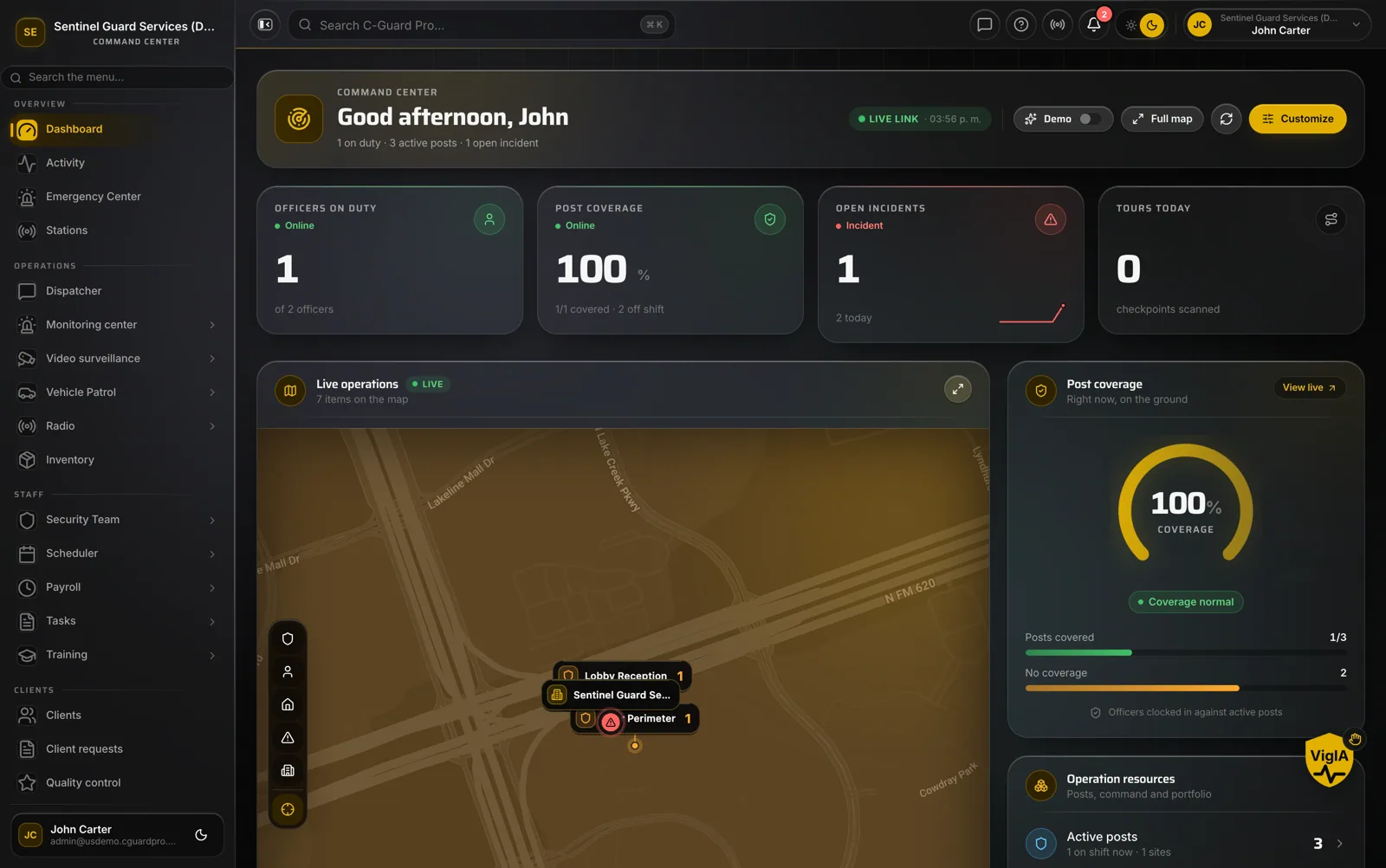
Test everything at the site, not from the office. Checkpoints in a stairwell, a mechanical room or a below-grade garage behave differently than checkpoints in a lobby, and you want to discover that before an officer is standing there at midnight. If tours run on scanned checkpoints, physically walk the route and scan every tag. If schedules and callouts run through scheduling, have the relief pool identified and confirmed before you need it.
Days 1 through 7: presence
The first week is the one the client remembers. Two rules.
Be physically present. The account manager or a supervisor should be on site for the first shift of every post type — day, evening, overnight. Not a visit; the whole shift. You will find things the survey missed, every time.
Over-communicate. Daily contact with the client contact for the first week, brief and specific. What happened, what was found, what is being fixed. Clients expect turbulence during a transition. What they cannot tolerate is silence, because silence during a transition reads as absence.
Expect to find: a door that does not lock, a route that takes longer than planned, a client employee giving instructions who has no authority to, a post orders detail that is simply wrong, and at least one officer who is not the right fit. Fixing all of these in week one is normal and impressive. Discovering them in month three is not.
Days 8 through 21: stabilizing
The visible problems are handled; now the quiet ones surface.
Get the reporting right. The first week of daily activity reports will be uneven. Read every one. Coach on specificity — times, names, locations, what was actually done. This is the window where reporting habits set, and habits formed in week two persist for the life of the account.
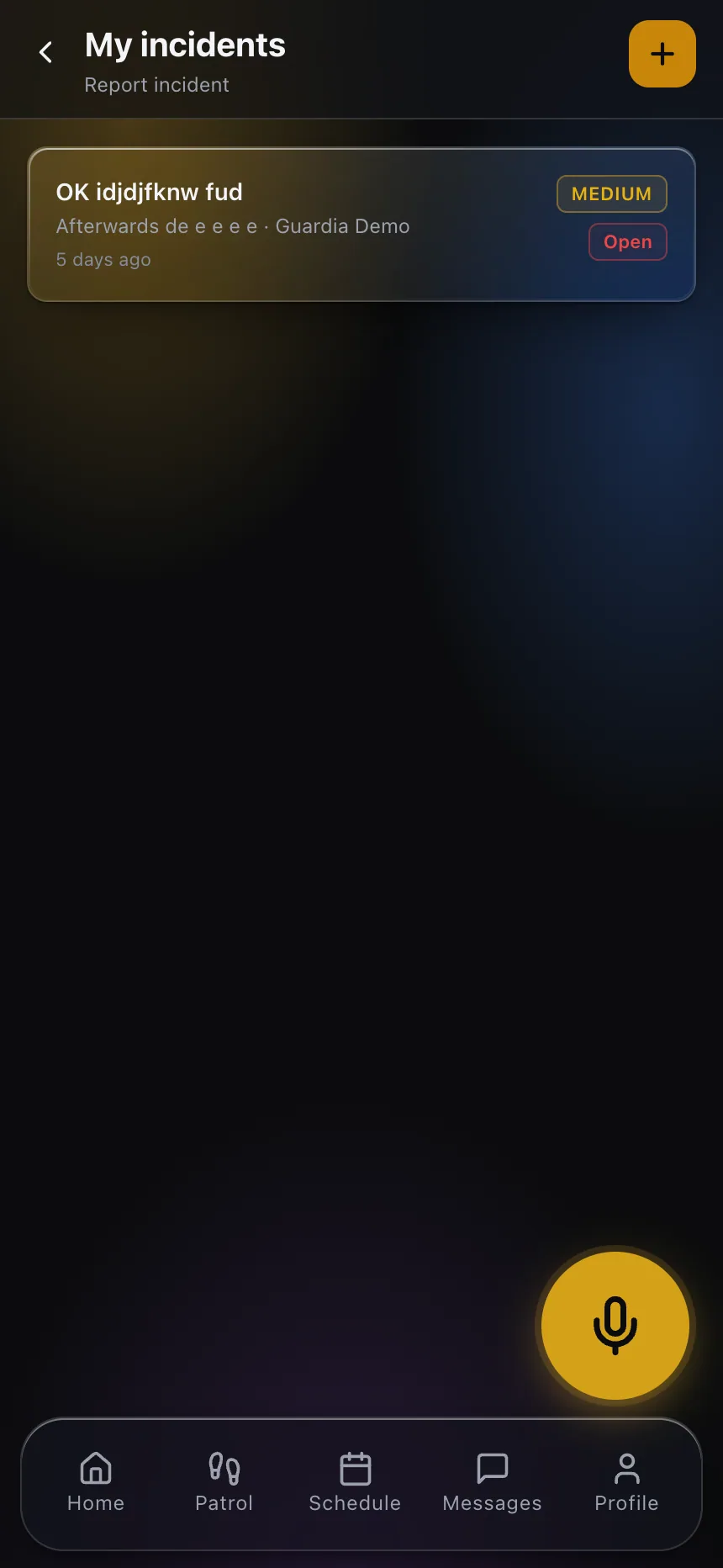
Make sure the incident path works end to end before it is needed for something serious. Have an officer file a routine incident report and follow it: did it reach the supervisor, did the client contact get notified within the promised window, did the record end up somewhere both sides can find it. Test this with something minor, deliberately, rather than discovering the notification chain is broken during a real event.
Watch the schedule. Note every callout, every hour filled at premium, every gap. A new account’s coverage pattern in weeks two and three tells you whether the staffing plan was realistic. If a post is already running on overtime, that is not a bad month — it is a design flaw, and it is cheaper to fix now than after the officers on it have burned out.
Turn on client visibility. Show the client contact how to see their own site’s activity and let them use it. Some clients look daily, most look occasionally, and a few never do — but the ones who do become far easier to keep, because they stop wondering what they are paying for. A client portal that shows tours, reports and incidents as they happen replaces a monthly PDF that arrives after anyone cared.
Confirm scope in writing. By the end of week three, whatever the officers are actually doing has diverged from the post orders. Reconcile it. Either the post orders get updated or the extra duties get priced.
Days 22 through 30: the first review
Sit down with the client before day thirty. Not a check-in call — a scheduled meeting with an agenda.
Cover coverage delivered against coverage promised, incidents and how each was handled, what the survey did not anticipate, changes made and changes recommended, and the officers by name so the client can tell you who is working out.
Then ask two direct questions and write down the answers.
What is not working? Ask it plainly and wait through the silence. Clients will tell you at thirty days what they will not tell you at ninety, because at ninety they have already decided it is how things are.
What did the previous vendor do that we are not doing? Almost always there is something small and specific — a report format, an escalation habit, a courtesy nobody wrote down. It costs little to adopt and it earns disproportionate goodwill.
Close the meeting by setting the ongoing cadence: how often you will meet, what they will receive and when, who to call for what. Onboarding does not end so much as hand off to a routine, and the handoff should be explicit.
What onboarding is actually buying
Three things you cannot buy later.
Site knowledge, which is the entire value proposition of a post officer and takes weeks to build. Every early turnover resets it.
A shared definition of scope, established by approved post orders, which is what prevents the slow accumulation of unpriced duties.
A relationship with a named person on the client side who trusts a named person on yours. That relationship is what carries the account through the first serious incident, the first officer who has to be removed, and the first rate increase.
Every one of those is built in the first month or not at all. The rate got you the contract. Onboarding decides whether you keep it.
If you want to see how post orders, tours, reports and client visibility get set up together before a start date, explore CGuardPro or get in touch.